Enhance your marketing savvy
Keep every door open

Charting a course ahead is always simpler when knowing where you’ve been, and the commodity markets tend to follow a similar pattern. It’s one thing to say, “I can’t wait to see this year in my rearview mirror!”, yet it’s not advisable to ignore the lessons of the previous 12 months, despite the perceived benefits of a short memory.
History is a wonderful teacher, and with the approach of a new year, it’s time to pause and reflect on 2025 before envisioning how 2026 might unfold. At this point last year, most farmers in Ontario were still feeling the effects of domestic trade issues, including labour disputes affecting rail transportation and port shipments, as well as a wetter-than-normal growing season for most of southern Ontario.
In the past 12 months, the overall focus has shifted to one more dominated by U.S. and global market concerns. It’s hard to ignore the effects of trade and tariffs, especially living next door to the
U.S. and hearing or reading about its “challenges”, and trying to determine how Ontario growers may be affected. We’ve seen significant changes in U.S. trade policies, with some profound effects on U.S. marketing and responses from Washington.
On a local level, 2025 saw some of the worst growing conditions in more than 20 years, with excessive and prolonged dry weather across different parts of the province.
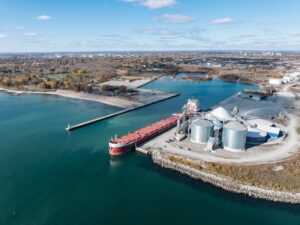
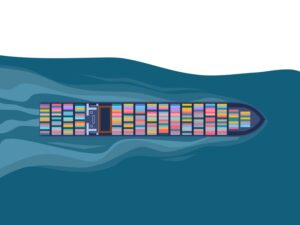
But for the growers I deal with, it’s important to note that we’re not well-positioned to simply assume trade relations that the U.S. holds or has held with other countries. We have a unique scenario in that our exports are shipped through the St. Lawrence Seaway, and we’re not able to load vessels in Ontario for ocean-going transport without being topped off in Montreal.
It’s not a criticism of that particular system; it works very well to meet our trade needs, with the commodities we grow here. But the most prominent conversation I’ve had in the past five months drives this notion that if China isn’t buying commodities from the U.S., they’ll want to buy from Canada. If we were in B.C. and had access to the Port of Vancouver, that’d be a huge advantage for soybean growers exporting their harvests to Asia. The truth is, Ontario is the farthest away from China from a shipping standpoint. We may still have a strategic advantage for some products but from a logistical perspective, we’re not set up for that in Ontario, at least not for something like soybeans.
MORE HISTORICAL REMINDERS
Politics is playing a greater role in the movement of commodities, affecting the closely guarded supply-and-demand economics standards involved in the movement of grains and oilseeds. In March 2022, the Canadian Agri-Food Policy Institute (CAPI) issued a report titled “Agri-Food Productivity and Trade: Policy Gaps and Possibilities”, coinciding with Russia’s invasion of Ukraine. One recommendation made by the study’s authors was “The distortions in agri-food trade are increasingly being used as a geo-economic weapon in which open-economy exporters like Canada are vulnerable.”
In retrospect, when that conflict began, Russia was politically cut off from most countries, and we’ve seen a similar reaction to the U.S. in 2025, even if it’s for different reasons.
In spite of political pressures, countries may discount the price of commodities and when that happens, buyers will make their decisions based on those prices. In the case of Russia, several buyers voted to pay cheaper grain prices, especially if supplies from their usual chain partners were reduced by a poor growing season. Politically, they might have wanted to avoid dealing with an “undesirable” source, but most times when something is cheaper, a buyer will act accordingly.
LOOKING AHEAD
If we come around full circle for 2026, the question will be whether the U.S. will have to significantly discount its grain to attract buyers on the world market. We’re seeing this late in 2025, as American suppliers are offering soybeans to China at a discount, yet China is sending a clear signal by paying a premium to purchase soybeans from South America.
Interestingly, after its conflict with Ukraine began in 2022, Russia ended up selling its wheat for about $100 (U.S.) per tonne on the world market just to get rid of it. Instead of the supply in the market becoming tighter and more expensive, prices dropped as both countries involved in the conflict continued producing vast quantities of grain. Despite the challenges of growing and shipping grain out of the region with a war raging around them, the two regions continued with relatively robust production levels and the expected price hikes never developed.
In late 2025, some are hoping a similar tightening in the marketplace will push soybean prices higher because the U.S. isn’t selling to certain countries, despite the lessons of the Russia-Ukraine conflict. And that’s what I’m worried about—that it looks as though the U.S., our neighbour, is going to have a massive surplus of grain, which can go both ways for Canada and Ontario, in particular. We could have other countries buying from us, paying a premium like South America. Or we could see the U.S. continue to discount its price low enough to finally get rid of that grain, which means the world price gets effectively lower.
THE PROVINCIAL PROVISON
The big benefit is that Ontario growers were not at large risk with our trade; we won’t have the same trade disruptions. In the end, I’m not worried about getting rid of the physical product. We’re talking to individual farmers and learning what they care about, and what they really care about most is getting rid of the physical grain. And from where I stand, the demand for our physical product through these trade disruptions still looks strong, and I’m comfortable that we’ll at least have demand for all of our grain.
It’s not to say that political conditions haven’t had any impact; they have caused some uncertainty in the market, and that makes people market a little of their crops that much sooner. No one likes market uncertainty because it’s a higher risk, and for some, it has them leaning towards taking that risk off the table, and they’re not wrong if they do that.
But risk halfway around the world is a little harder to understand and react to, which can lead to growers making fewer decisions. That creates risk that we may not be familiar with, which means we might find marketing for those reasons to be a difficult choice.
REPEAT THE SAME MESSAGE
Focusing back on demand for the physical grain, it’s best to watch what’s happening in the cash market to more accurately forecast what might happen in the futures market. If we’ve seen demand for the physical product all the way through harvest towards the end of 2025, it’s going to provide more optimism for 2026 because it means the world is buying and moving the grain. That means we’re disrupting trade, which means other customers are buying cheaper grain from the U.S. instead of us because they’re being offered it.
As for finding newer ways to drive demand and cushion any negative effects of U.S. political pressures, there are suggestions that Canadian commodity markets might benefit by detaching from the Chicago Board of Trade (CBoT) and distancing ourselves from any turmoil caused by our proximity to the U.S. Or that a trade agreement on soybeans between Canada and Indonesia in late September might generate higher demand and production, particularly for Ontario growers. But neither scenario is likely to unfold.
For starters, CBoT, despite its occasional frustrating qualities, provides liquidity in the market, which translates to stability. As a trader in Ontario, there will be times during the year when we’ll struggle to get bids for physical grain, and we need CBoT to provide a way for us to do that.
Late in 2025, Americans had a surplus, particularly with soybeans, so it’s easy for us (in Ontario) to look at that situation and say we don’t need them or a marketing authority like CBoT. But there are benefits of having the ability to trade with them or at least use their liquidity in the market to help us during times when our local demand is potentially not as strong.
We know that the fewer options we give ourselves to market something, the greater the risk because we’re likely to be stuck with fewer options at different times. The more options we have to sell everything, the more likely it’ll be positive in the long run.
THE INESCAPABLE FACT OF THE U.S.
We want to look at all opportunities that are out there, but the U.S. is always going to be our neighbour, and the more balanced we are, the better we’re going to be from a marketing standpoint. It’s nice to believe you could have one big customer that wants all of your products because it means you’re dealing with only one interest. But when that one buyer doesn’t want it anymore, it’s the worst position to be in, and the U.S.-China impasse is a good example of that. From a marketing standpoint, diversifying or having a few more buyers is definitely the preferred option.
And the customer who’s closest to you is usually your best marketing partner.
If I have someone around the corner who wants to buy grain, they usually have a competitive advantage over someone who’s farther away. And that individual usually has to pay the difference between getting it from “here” to “there”. That’s Marketing 101, where the people who are successful in marketing are the ones who actually have the most product closer to where they need it.
As for the Indonesian trade deal, the cost of moving commodities around the world remains a limiting factor. Remember the comments about loading ships in Ontario and topping them up in Montreal. Life would be so much simpler if we could transport soybeans from Ontario to the West Coast cost-effectively. But that isn’t possible with the transportation system currently in place, regardless of how our producers in Ontario might be able to boost soybean production.
The other consideration is that I trade in physical grain from farmers and sell it to those who use it, unlike traders or brokers who forecast how prices are expected to react to different market influences. Given what I do, I have faith that there’ll be some positives in the long term from this shifting global trade situation.
One of the strengths of Canada is that we’re really good at working and maintaining relationships, and that gives me hope for the future. With the Indonesian trade deal, I question whether it can happen as fast as a year or two; sometimes it can take longer to get those new trade routes established and functioning.
But we’re going to benefit in the long run because that sums up what or who we are in this country.
Jeff Robinson is the grain merchandiser at Guelph-area Woodrill Farms. The opinions expressed in this article are those of the author. •