Learning opportunities this winter
An exciting winter season of conferences, workshops, and more
As usual, those who organize the winter learning opportunities for Ontario’s grain farmers have been hard at work since last year’s events, making sure the upcoming versions are the best ever. Whether it’s the big yearly conferences or the smaller events and workshops, here’s a look at what’s fresh, what’s different, and what’s not to miss.

First, the ‘big three’ – the SouthWest Agricultural Conference (SWAC), the Midwest Agricultural Conference (MWAC) and the Eastern Ontario Crop Conference (EOCC). They are all in-person events, but all sessions will be recorded and posted to the Ontario Agricultural Conferences (OAgC) web platform until March 31, 2026. The popular and interactive TEC Talk Tuesday sessions will also be posted until that date, explains registration lead Mary-Margaret Mcdonald. In addition, as SWAC and MWAC are happening, OAgC will live-stream selected sessions.
Dr. Alberta Tenuta, SWAC co-chair and the extension plant pathologist at the Ontario Ministry of Agriculture, Food and Agri-Business (OMAFA), says the goal each year for each conference is to make them better than the past. That’s from a participant’s standpoint, as well as from the organizational and speaker’s standpoints.
“We have a reputation in Ontario for providing the best conference experience for our speakers, and they say they get the best questions,” Tenuta explains. “The general theme for all the conferences this season is ‘Planking Knowledge, Growing Prosperity,’ focusing on the importance of collaboration in achieving success. There is something for everyone at each conference, and each one has the local flavour and topics that are key to long-term prosperity and sustainability of growers in each region.”
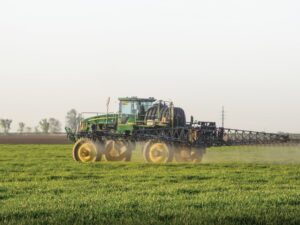
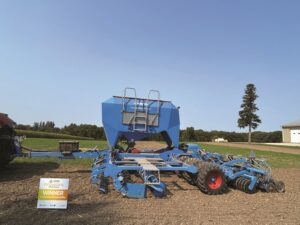
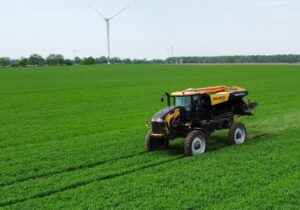
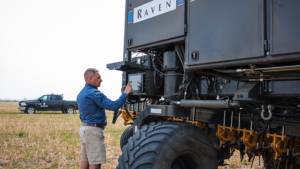
SWAC is held at the University of Guelph, Ridgetown Campus. Farmers have the choice of attending one or both days, with 30 sessions available in all. Tenuta expects the sprayer technology workshops to be very popular, and they require preregistration.
The keynote speaker on January 6 will be Terry O’Reilly, creator of the very popular ‘Under the Influence’ program, which has aired for many years on CBC Radio. O’Reilly will highlight the power of crafting engaging stories that build connection and trust between farmers and the public. At the keynote on January 7, Alberta psychologist Dr. Jody Carrington will motivate listeners to recharge their batteries and reignite their passion for agriculture and everything else.
If you want to attend MWAC, it’s on January 16, 2026, at the RIM Park Manulife Sportsplex in Waterloo. As always, its six sessions will feature the best experts presenting the latest insights on crop management tools that help farmers meet current and future challenges.
Shortly after, on January 27, is the EOCC, held in Kemptville, with 14 sessions available throughout the day. “We’re at a new venue this year, Southgate Church,” says Laura Scott, OMAFA cropping systems specialist. “In terms of planning sessions, we always send out surveys after each event, looking for topics, suggestions, and feedback to improve upon the event. Highlight sessions at EOCC this year include ‘Record-Breaking Wheat: Learnings from the Great Lakes Yield Enhancement Network (YEN)’ with Joanna Follings, OMAFA cereals specialist, where growers will discover how this initiative is helping growers unlock wheat yield potential through data-driven insights, benchmarking, and collaborative learning across the region.
Dr. Josh Nasielski and Lance Javier will present ‘From Stover to Stand: On Farm Lessons for No-Till Soybeans after Corn,’ with details from eastern Ontario farm trials. Another session to note will be hosted by Cornell University’s Mike Hunter, who will share findings on a new pest and disease near the U.S./Canada border. As OMAFA Field Crop Entomologist Tracey Baute explained in the August issue of Ontario Grain Farmer, corn leafhopper is native to Mexico and over the last few decades, it has travelled south to Argentina and north to the U.S.. This pest was first detected in both New York and Minnesota in late summer 2024. Baute explains that milder winters may allow them to overwinter close to Ontario. These insects might feed on corn, millet, sorghum and even wheat, though they cannot complete a lifecycle on these other grass types. What’s worse, injuries to a corn plant caused by the corn leafhopper can result in transmission of one or more of the pathogens this insect can carry, including corn stunt spiroplasma, maize bushy stunt phytoplasma and maize rayado fino virus. Baute warns that corn stunt symptoms do not show up until at least 30 days after transmission, and there are no effective treatments currently available.
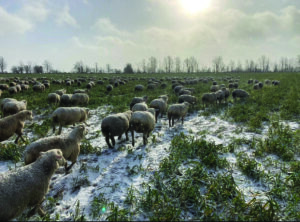
Also, at EOCC, a grower panel called ‘Successful Winter Cereals for Forage’ will be moderated by Christine O’Reilly. This discussion will explore why more livestock farmers are growing high-quality winter cereals for forage, how it works and tips for success. OMAFA Weed Specialist Mike Cowbrough will host another highlight session: ‘Fight Back: Proven Tactics to Control Persistent Weeds.’
MORE LEARNING OPPORTUNITIES
This season’s Farm Credit Canada ‘Young Farmer Summits’ will be held in person in Port Perry on November 29 and in Kitchener on December 3. On March 17 and 31, there will be two more Summits in virtual format. The summits are free, full-day events for farmers under 40 to have fun and explore the business side of farming. “Learn from industry experts, connect with peers and gain insights to take your operation to the next level,” states FCC. “Topics include transition planning, business management, mental health, and more.”
The Ecological Farmers Association of Ontario has a Small Grains Network for sharing resources, events and more, but will also hold its Annual Conference in London from December 2 to 4 this year. “We will have many sessions dedicated to topics like cover cropping, integrating grains and livestock on the farm,” says
Small Grains Program manager Jackie Clark. “A talented grain farmer from Manitoba will also be discussing her unique marketing model. After the conference, our Small Grains Program intake will open—you can read more on our website, but essentially, farmers can apply for funding for diversifying their crop rotations with small grains and a legume cover crop.”
THE THIRD ‘DEEP DIVE’
On February 3-4, 2026, the Ontario Soil and Crop Improvement Association (OSCIA) will hold its Annual Meeting and ‘Deep Dive’ at the GrandWay Events Centre in Elora. OSCIA events and communications coordinator Stacey McCarthy says the theme of the Deep Dive event is Residue Smart. The event will feature a dynamic line-up of expert speakers from both academia and the farm community. Registration opens in December, and in-person capacity will be limited.
This year marks the organization’s third Deep Dive event, with each year’s format evolving based on participant feedback to keep content timely and relevant, says Nicole Mackellar, director of member services and business development at OSCIA. Like other events offered throughout the province, it’s about bringing together the latest research and real-world experience to support sustainable, productive farming across Ontario.
“We consistently hear from members that OSCIA events like the AGM and Deep Dive are valuable opportunities,” says Mackellar. “They offer a chance to learn directly from peers and experts, explore practical solutions for on-farm challenges, and connect with others who share a commitment to continuous improvement.” •