
Dealing with corn’s most persistent pest
Keeping corn rootworm in check
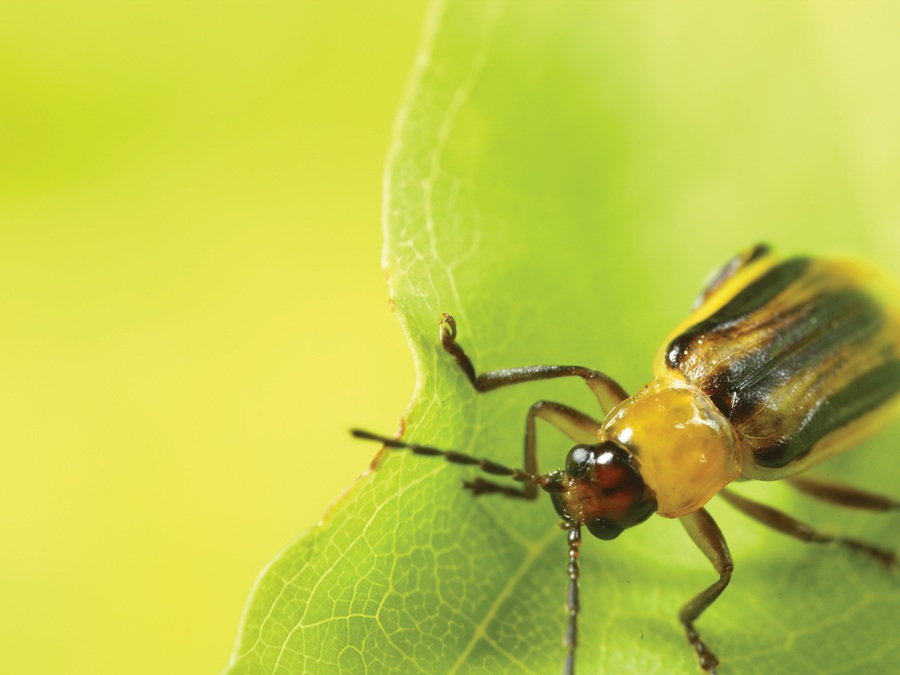
Livestock-dense counties, including Huron, Perth, Middlesex, and Oxford, are among those dealing with the heaviest corn rootworm infestation.

Dr. Jocelyn Smith has a favourite insect, and it’s one Ontario corn growers love to hate.
As a research entomologist, Smith is drawn to the resilience of the corn rootworm. And her work to better understand it is helping farmers manage one of their most problematic pests.
Last year’s growing season was an especially bad year for corn rootworm, for both the western and northern corn rootworm subspecies that are found in Ontario corn fields.
Smith says this pest pressure isn’t subsiding. Between the pest’s hardiness, the high numbers of mature corn rootworm beetles found later in the 2025 growing season, and growing Bt corn rootworm resistance, this pest is becoming an increasingly serious issue.
In a high-pressure year like last year, corn rootworm can result in up to a 50 per cent financial loss in fields with continuous corn.
And it’s not just the final yield loss that cuts into a grower’s bottom line. Corn rootworm can also create havoc at harvest, slowing down combines and adding extra labour hours if pest infestation is high enough to cause lodging.
“Growers need to take a long-term approach to corn rootworm management, not just one year at a time,” says Smith, associate professor of field crop entomology at the University of Guelph Ridgetown Campus. “Bt resistance is on the rise, making it more important than ever that everyone, including those who grow corn for livestock feed, understand their risk and incorporate management tools.”
ROTATE TO CONTROL
A relatively easy solution to manage corn rootworm is to stop growing continuous corn in the same field.
“I can’t stress enough that crop rotation and reducing continuous corn is the best management approach,” Smith says.
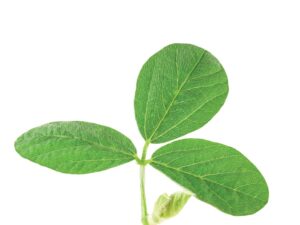
Here’s why. Corn rootworm mostly lay its eggs in corn fields and its larvae can only grow on corn. So, the most effective and cost-efficient way to control it is to rotate to a non-host crop like soybeans or alfalfa. Volunteer corn can also support corn rootworm populations.
Smith says the challenge is that some growers continue to grow corn-on-corn, especially in livestock-producing areas. And that leads to ongoing corn rootworm pressure.
“In years like 2025, when we had ideal weather conditions for heavy corn rootworm populations, the pest was spreading to surrounding fields, leading to new infections and potential problems for this year’s corn fields,” she says.
Unfortunately, Bt corn, the other common go-to tool for managing corn rootworm, is quickly losing efficacy, says Smith. She notes that 60 to 70 per cent of Ontario corn acres are planted with Bt hybrids to control rootworm. However, few of these fields actually require the trait to manage the pest because it’s either not present, or the pest pressure isn’t high enough.
“So, besides overusing corn rootworm traits and contributing to the rising rate of Bt resistance, growers are also paying for something they often don’t need,” Smith says.
Soil-applied insecticides, both liquid and granular, are also effective for controlling corn rootworm and can be used in rotation with Bt corn, or in situations where resistance is an issue.
STAY AHEAD OF CORN ROOTWORM
“Integrated Pest Management strategies can sometimes take a back seat to higher yielding practices and hybrid selection,” says Tracey Baute, entomologist, field crops, Ontario Ministry of Agriculture, Food and Agribusiness. “Corn rootworm management can start with seed selection, but it should be a long-term strategy that incorporates tools like crop rotation and soil insecticides when needed.”
Livestock-dense counties, including Huron, Perth, Middlesex and Oxford, are among those dealing with the heaviest corn rootworm pressure, but Bt resistance can be found throughout the province. Baute has been tracking the pest for five years, as part of a monitoring program with the Canadian Corn Pest Coalition and Corn Rootworm Trap Network. Using a network of sticky traps, she’s able to count and monitor the activity of adult corn rootworm beetles in fields in Ontario and compare it with populations across North America.
Through this network, she’s discovered that Ontario corn rootworm populations are now equivalent to those in Iowa, where the pest is a significant economic issue for growers. Baute notes that resistant corn rootworm has spread to Quebec and the Maritimes in recent years too. “Resistance doesn’t go away,” she says. Growers dealing with Bt resistant populations need to change their pest management strategy, Baute says.
Growers trying to understand the risk level for next year’s crop and determine if a control measure will be needed should consider scouting. Baute says fields should be scouted once a week in August to count the number of adults present in the ear zone (one leaf below and above the ear node).
If the total adult count is on average less than one western corn rootworm or two northern corn rootworm adults per plant, then the field will not need protection from rootworm the following spring.
Baute also recommends trapping, and using the sticky traps, to monitor adult activity in continuous corn fields to determine potential resistance development and to assess the effectiveness of a control measure. “Scouting can help inform crop management decisions, and check if they are actually working,” she says.
NEW TOOLS, SAME STRATEGY
And while no silver bullet exists to control corn rootworm, RNA interference (RNAi) technology released in Ontario in 2025 as a new mode of action for protection, offers some hope. Smith predicts this new tool will slowly disrupt pest pressure, but warns growers against overusing this new technology.
“RNAi is another tool that can be used in rotation with our other existing solutions, but corn rootworm could still develop resistance to this too, and we have to protect it,” she says.
The use of entomopathogenic nematodes (naturally occurring and beneficial nematodes) as biological controls are also being tested in Smith’s lab. These non-plant parasitic nematodes feed on the host pest and can be effective in controlling corn rootworm. Research into using these nematodes as a biological control is still underway, but Smith says results look promising.
“Corn rootworm is notorious for developing resistance to whatever we use against it,” Smith warns. “There are new tools available, but the most effective strategy will always be rotating control measures, planning ahead, and avoid relying on a single approach.” •