Europe adopting near-zero residue limit for agricultural imports
Europe adopting near-zero residue limit for agricultural imports Policy applies to pesticides and biotechnology used in Canada, but banned in Europe
Grain industry representatives say the European Union’s hazard-based approach to pesticides risks undermining science-based regulation, potentially creating new barriers for Canadian grain exports.

The European Union’s approach to pesticide and biotechnology regulation has long differed from Canada’s, resulting in various non-tariff trade barriers for Canadian farmers. Recent moves to reduce maximum residue limits of some pesticides already banned in the EU, but still available in Canada, could potentially result in Canadian farmers abandoning the use of such products altogether in an effort to maintain market access.
At a time when Canada is looking to significantly expand trade with partners outside the United States, Canadian grain sector representatives argue the imposition of Europe’s “reciprocity approach” for certain pesticides poses a significant threat for farmers and grain exporters.
HAZARD-FOCUSED REGULATION
Canada, the United States, Australia, and many other countries take a risk-based scientific approach in the regulation of pesticides and biotechnology – that is, where the risk of a product causing harm is used in determining whether something should be available for use, and if so, how it should be used. By contrast, the EU takes a precautionary hazard-based approach, where the potential for harm by a given technology, rather than the likelihood such harm will occur, is what determines its permissibility.
As detailed in a Canadian Grain Commission white paper released in January, this approach has resulted in a variety of non-tariff trade barriers limiting the export growth potential for many Canadian agricultural goods.
The Grain Commission paper reads as follows: “Over the past ten years, the EU has removed about half of the crop protection tools available to its own farmers, often for political rather than scientific reasons. As a result, the EU is now under pressure to block food imports produced using farming tools that are no longer allowed in Europe, even when those products are proven safe. This so-called reciprocity approach, or mirror clause, could have major negative impacts on Canadian agriculture trade to the EU.”
The EU is, at the time this article was written, proceeding with its reciprocity policy for imported agricultural goods, with policy implementation scheduled for spring 2026. Henceforth, the allowed maximum residue limits for specific banned chemicals allowed on imports – neonicotinoids in this initial case – will drop to 0.01 parts per million, or essentially zero. Shipments of agricultural products with any trace of these products could be deemed non-compliant, and face rejection.
The Grains Council white paper details how the policy is set to unfold: “Neonic insecticides are the first innovation targeted, but the EU has clearly articulated there will be others via statements to not allow pesticides banned in the EU back into the EU through imported food products.”
INTERNATIONALLY-ACCEPTED RESIDUE STANDARDS
The move to drop allowable residue levels to near zero runs counter to current international agreements on maximum residue limit standards under the United Nations Food and Agriculture Organization, says Mac Ross, vice-president of crop protection for the Canada Grains Council. While neonicotinoids are likely to be a greater issue for non-grain crops such as field vegetables, the precedent set by enacting such reciprocity policies could easily impact grain producers later.
“The prevailing thought for a long time was, ‘the EU is going to EU.’ We’ve had problems with regulatory differences for a long time. Something we’re trying to convey to industry and government is why now?” says Ross.
“Sure, there’s real opportunity in Europe, and Canada is strengthening ties with the EU…But when we talk about increasing trade with them, we need to realize there are some very real trade impediments around barriers to innovation.”
Ross says the EU started embarking on hazard-based approach in 2009. “And that has resulted in EU farmers having no innovation pipeline left. Companies just don’t want to bring them to market. Now the thinking in Europe seems to be, ‘if we can’t use it, we don’t want anyone else to use it’. We’re heading into a space where a foreign regulatory regime will dictate what Canadians can and cannot do.”
EUROPE: A CRITICAL MARKET
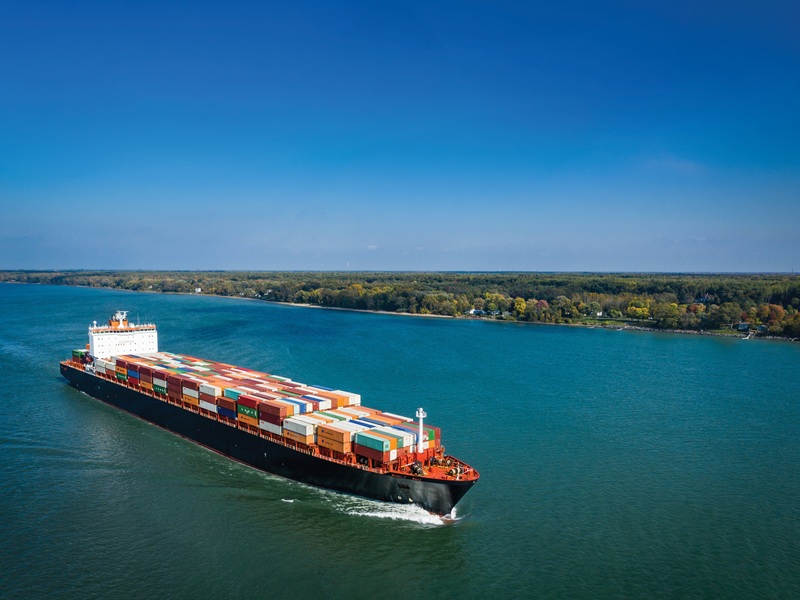
EU member states and the United Kingdom are already top-tier buyers of Ontario grain, thanks in no small part to the shipping advantage afforded by the St. Lawrence Seaway. In total, Ross says the EU represents a $3 billion market opportunity for grain.
According to Dana Dickerson, market development and sustainability director for Grain Farmers of Ontario, over a million tonnes of corn – fully 90 per cent of Ontario’s corn exports – make it to Europe each year. For soybeans, it’s 200,000 tonnes, although logistical complexities inherent in the inter-provincial movement of soybeans suggest the actual export tonnage is likely higher.
“Even with wheat, which traditionally we haven’t exported a lot into the EU or the UK, we’ve started sending more to Spain through the Canada-European Union Comprehensive Economic and Trade Agreement. Obviously, if there are measures placed on market access for using certain technologies, that could disrupt our trade,” Dickerson says.
Regardless of EU policy, EU farmers will still need to source grain from somewhere. Dickerson thinks finding product which meets all its regulatory restrictions might be a challenge. She also wonders whether the motivation for such restrictive maximum residue limits fits within a broader strategy, on the part of some groups, to fundamentally change European food systems.
“I think there are probably some people in the EU that perhaps believe if they put these constraints in place, they may reduce their animal agriculture production and push people into more plant-based diets,” says Dickerson. “I don’t think that’s realistic. They need corn and soybeans from us to maintain food security, and not rely on imports from other animal products. Ultimately the consumer is choosing to continue eating animal products.”
MAKING THE CASE TO EU PARTNERS
Like other elements of EU food policy, Dickerson says the reciprocity approach to residue limits on banned products has generated significant pushback from those concerned about food prices and security within Europe. It’s hoped that pushback can be leveraged by other global partners to encourage policy change.
“What we want to see in general is more harmonization and alignment in maximum residue limits and biotechnology, but we want it to be truly risk and science based. We feel in the EU, these decisions are more political,” she says. For Grain Farmers of Ontario’s part, the organization actively takes a leadership role in risk monitoring for products used, or soon to be used, in the production of Canadian grain.
“We have an initiative every year where we work with industry exporters, crop protection registrants, and other partners to review regulatory alignment and flag risks before those technologies reach farmers,” Dickerson says.
The Canada Grains Council recommends two actions for the Canadian government: maximize the use of existing bilateral mechanisms to oppose the EU’s pesticide reciprocity measures, and establish a coalition of like-minded countries to safeguard risk-based science regulation, while promoting trade-facilitative approaches for crop protection trade standards.
“For Canadian exporters, the EU’s approach creates a multitude of standards in the markets we have globally. We also have some open questions on how the EU can do that within its World Trade Organization obligations,” says Ross, adding there is a broader need for the EU to conduct an impact assessment on their approach. While this will happen, however, it will be after some of the stated regulatory positions have been finalized.
“Every country should have the sovereign right to determine what is safe for its citizens. But there’s a reason we’ve built international standards. It’s not like we’re saying ‘don’t put in place measures for your consumer base.’ It’s the opposite – we have those measures in place, but still support food security.” •