Canada can’t afford farmers who can’t afford to farm
Jeff Harrison, Chair, speaks to the House of Commons on Canada’s food security in the face of global instability
The following is the speech given by Grain Farmers of Ontario Chair Jeff Harrison to the House of Commons Standing Committee on Agriculture and Agri-Food ON June 16. The meeting focused on Canada’s food security in the face of global instability.

Today, I want to talk about a simple reality: Canada cannot have food security if farmers cannot afford to farm. Grain farmers are doing everything we can to keep producing crops for food, feed and other products, but many of the challenges we face today cannot be solved at the farm gate. They require government action.
Last year, much of Central Ontario experienced severe drought conditions. That came after several years of rising costs for equipment, fuel, fertilizer, and other farm inputs. Today, the Farm Input Price Index sits at record levels. Meanwhile, the prices farmers receive for their crops have not kept pace with the cost of producing them.
Fertilizer is a perfect example. Fertilizer is not optional. It is the food crops need to grow. Without it, there is no crop. Retail fertilizer prices remain high, and farmers remain deeply concerned about both affordability and reliable access to supply heading into 2027.
Farmers in Ontario, Quebec, and Atlantic Canada depend on fertilizer sourced from different regions around the world. When supply chains are disrupted, farmers feel the impact almost immediately.
Four years ago, Canada imposed tariffs and sanctions on fertilizer imports from Russia and Belarus—two countries that had historically supplied a significant portion of the fertilizer used by farmers in Eastern Canada. The cost of that decision was passed directly on to farmers. And we are still paying for it today.
The Canadian government has created exemptions for products such as cobalt and aircraft parts sourced from Russia and Belarus when it was deemed necessary to protect Canadian interests.
My question is simple: if exemptions can be made for those products, why not for fertilizer—the product that helps feed Canadians and supports our food system?
Removing tariffs on fertilizer imports from Russia and Belarus would be a practical, immediate step that could help reduce costs and improve supply security for Canadian farmers. But fertilizer is only one challenge.
Business risk management programs are supposed to protect farmers from the things we cannot control: droughts, floods, trade disruptions, geopolitical instability, and market shocks. That is exactly what they were designed to do. Canada has invested heavily in business risk management programs, but for grain farmers, AgriStability simply does not work well enough when we need it most. When crop prices fall below the cost of production, farmers need meaningful protection. Unfortunately, AgriStability fails to provide the support required to bridge that gap.
Grain farmers in eastern Canada have spent years telling governments this. We have participated in reviews, provided recommendations, built coalitions, and commissioned research because we knew there would eventually be a tipping point. That tipping point has arrived.
At the same time, our competitors in the United States benefit from responsive risk management programs and billions of dollars in supplemental support payments. They have also taken steps to secure fertilizer supplies and protect farm profitability during periods of market disruption.
As a result, American farmers are often better positioned to withstand the same challenges Canadian farmers face. For Ontario grain farmers, the most effective long-term solution is clear. The federal government should partner with Ontario in supporting the Ontario risk management program. The program is straightforward. It calculates the cost of producing a crop, compares that cost to market returns, and provides support when prices fall below the cost of production. The Ontario government has made a significant investment into this program.
It helps farmers manage risk when margins are squeezed by high input costs and low commodity prices. Most importantly, it gives farmers confidence that they can continue producing food during difficult times. If farmers cannot manage risk, they cannot continue farming.
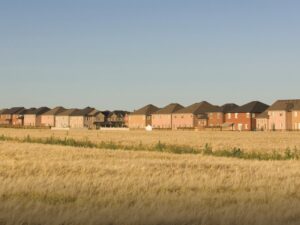
And when farms disappear, the consequences extend far beyond agriculture. Farmland does not sit idle. It gets sold. It gets converted to other uses. And once productive farmland is lost, it is almost impossible to replace. When that happens, Canada loses food-producing capacity.
Business risk management programs are not simply farm programs. They are food security programs. A country that cannot support its farmers cannot guarantee its food security.
We know what the solutions are. What we need now is the political will to act before more farmers are forced to make difficult decisions about their future. •