
Global lessons in herbicide resistance
Canadian farmers can learn from international successes and setbacks to protect the tools that still work
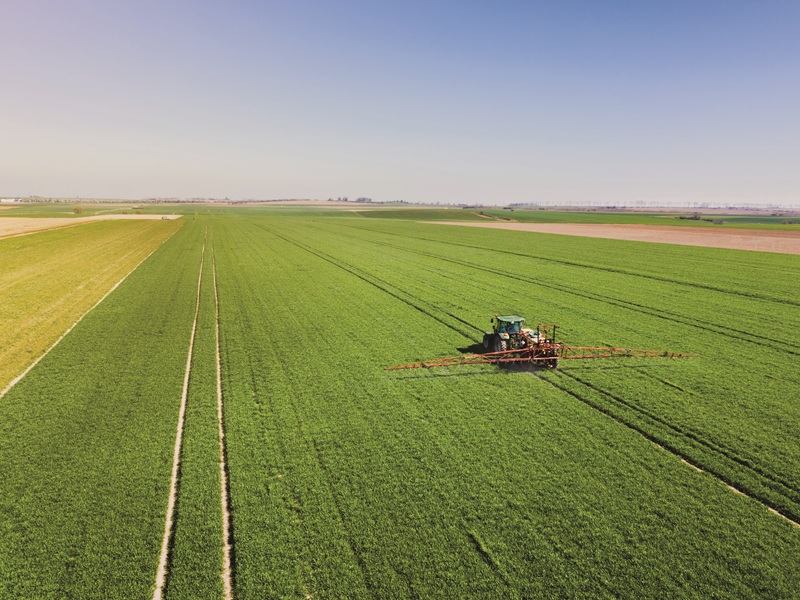
Experiences in Australia, the U.S., and South America show that growers need to act early by using integrated weed management strategies — including chemical, cultural, mechanical, and emerging technologies — to preserve effective tools and prevent resistance from becoming entrenched.

If herbicide resistance offers one clear lesson, it is that weeds do not respect borders. Around the world, growers are facing the same challenge: herbicides that once provided reliable control are losing their effectiveness as resistant weed populations spread.
For Canadian farmers looking ahead, Australia may offer the clearest glimpse of what is to come on the herbicide resistance front. After decades of battling herbicide-resistant annual ryegrass, Australian growers have been forced to adapt and develop new weed management strategies as herbicide tools have become less effective.
According to Michael Flessner, professor and weed science specialist at Virginia Tech, the rest of the world is paying close attention.
“Australia is being watched globally as other countries look to learn from its weed control strategies and solutions, and determine whether they can be adopted elsewhere to manage and mitigate herbicide resistance,” he says.
The experiences of growers around the globe offer both a warning and a roadmap. As herbicide resistance continues to evolve, Canadian farmers have an opportunity to learn from the successes, setbacks, and innovations emerging in other countries, and apply those lessons to their own fields.
WEED MANAGEMENT CHALLENGES
“Most farmers know herbicide resistance is a threat, but because it can be regional and even field-specific, it is easy to believe it is someone else’s problem,” says Flessner. “The challenge is that relying on herbicides alone often works — until it doesn’t. By the time resistance becomes obvious, the opportunity to prevent it has already passed.”
The top five herbicide-resistant weeds Flessner is watching in the U.S. are also familiar to Canadian growers: horseweed, Italian ryegrass, which is similar to the problematic annual ryegrass in Australia, kochia, Palmer amaranth, and waterhemp. While most growers recognize herbicide resistance as a growing concern, their responses vary widely. At Virginia Tech, Flessner and his team are focused on helping farmers tackle weed management challenges through integrated strategies that maximize herbicide performance today while preserving their effectiveness for the future.
Palmer amaranth offers a clear example of what is possible. Faced with a highly prolific weed that has evolved resistance to multiple herbicide groups, many growers are finding success by diversifying their approach — mixing and rotating chemical modes of action, combining them with crop rotations, and adding cultural and mechanical control measures. It is a strategy aimed not only at controlling existing weeds, but also at preserving herbicide effectiveness for the future.
“We’ve made significant progress in understanding resistant weeds over the past decade, but there’s still a perception among growers that we will always have herbicide options to solve the problem,” says Flessner. “Meanwhile, resistance continues to spread. More weed species are becoming resistant, and new cases are being identified every year. Resistance isn’t going away, so our focus has to shift from reacting to the problem to managing it for the long term.”
Flessner points to the increased use of pre-emergence herbicides as a positive example of how growers are adapting their weed management strategies. By controlling weeds before they emerge, growers can reduce early-season competition. He explains that reducing the number and size of weeds at the time of post-emergence herbicide application makes successful control more likely, while preventing herbicide-resistant weeds from surviving long enough to produce seed. That helps limit the number of resistant weed seeds entering the soil seed bank and reduces pressure for future growing seasons. As resistance concerns grow, more farmers in his area are incorporating pre-emergence applications into their weed control programs and seeing strong results.
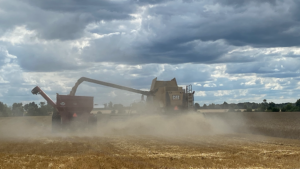
Mechanical approaches can also play an important role. Harvest weed seed control, or HWSC, which targets in-season weed seeds before they are returned to the field, has been widely adopted in Australia for more than a decade. The practice has helped reduce resistant weed populations and is often cited as one of the country’s most successful non-chemical resistance management tools.
“The challenge is that as soon as you find a strategy that works, you have to think about how to diversify it,” says Flessner. “If growers rely on the same solution year after year, weeds will eventually adapt. Staying ahead of resistance means continually changing the playbook before the weeds do.”
AUSTRALIA’S HWSC EXPERIENCE
Trevor Thiessen, president of Redekop, based in Saskatoon, works with growers around the world to integrate HWSC technology into their operations using the company’s Seed Control Unit. The system uses mechanical mills mounted on combines to destroy weed seeds at harvest, preventing them from being returned to the field and the soil seed bank.
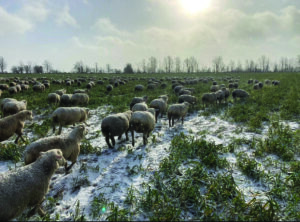
According to Thiessen, the roots of HWSC trace back to Australia’s battle with herbicide-resistant annual ryegrass. By the early 2000s, many growers had exhausted their herbicide options and were searching for alternative ways to manage the weed. Some fed the weeds to sheep, while others baled and removed weed-infested residue from their farms. Despite these efforts, ryegrass continued to spread.
A major breakthrough came with the introduction and commercialization of integrated mechanical seed destruction systems in the mid-2010s. Early adopters began seeing significant reductions in ryegrass populations, and the technology quickly gained traction. In regions hardest hit by herbicide-resistant ryegrass, Thiessen estimates mechanical mills were eventually installed on 50 to 80 per cent of combines.
“It’s not an immediate fix,” he says, noting that some weed seeds can remain viable in the soil for years. “But research has shown that after three to four years of using a mechanical mill, growers can achieve substantial reductions in weed populations.” While herbicide-resistant annual ryegrass remains a challenge in some parts of Australia, many growers have made significant progress by adopting a diversified approach to weed management. They learned they could not rely solely on herbicides, and have integrated multiple tactics, including HWSC, agronomic strategies, and chemical controls, to reduce weed pressure and slow the spread of resistance.
As a result, HWSC remains widely used across Australian crop production regions because growers have learned a hard lesson: once resistant weeds become established, the cost of regaining control can be substantial. “Growers understand that the added cost of running a mechanical mill on the combine is small compared with the cost of losing effective control of resistant weeds,” he says.
Thiessen is quick to emphasize that there is no single solution to preventing or managing herbicide resistance, only a combination of tools that can work together over time. Harvest weed seed control is one tool that targets weed seeds during harvest and destroys them before they become a future problem. By reducing the number of viable seeds available for the following season, it helps lower weed pressure in the next crop and can improve the effectiveness of herbicide applications by reducing overall reliance on chemical control.
“Harvest weed seed control allows farmers to gain a foothold in weed management, but it’s meant to work as part of a larger solution,” says Thiessen. “Every field needs to find what fits, and a mix of crop management approaches is the best way forward.” Global pressure
Herbicide resistance is not a regional problem — it is a global one, playing out in different ways depending on how long and how intensively growers have been dealing with it. While some countries and regions are still in the early stages of managing resistant weeds, others are further along the curve, where control has already become far more difficult.
According to Thiessen, the adoption of more integrated or innovative management practices is often driven by necessity rather than choice. Australia, he notes, is a clear example of how quickly practices can shift once resistance reaches a critical threshold.
There is a growing recognition across the global agricultural industry that lessons can be learned from the most severe resistance hotspots and used to inform more proactive management strategies. Thiessen points to South America as another region where resistance pressure is escalating. In countries such as Argentina, Brazil, and Chile, growers are increasingly facing limited chemical control options for several key weed species, including herbicide-resistant amaranth species.
This is one reason Redekop has partnered with Bayer Crop Science to introduce HWSC technology as part of a broader integrated prevention and management approach in Chile. “We’re focused on sustainable crop management solutions, and that includes helping farmers make their herbicide products more effective by reducing weed populations,” says Thiessen. He adds that while weed challenges vary by country, demand for HWSC technology is growing across South America as resistance pressures continue to intensify.
Looking ahead, both Thiessen and Flessner are keeping a close eye on the development of robotics, lasers, and precision spraying technologies.
“There’s some promising technology on the horizon that could help farmers manage herbicide resistance while also delivering environmental and economic benefits,” says Flessner. “But any new spraying technology is only as good as the chemical being applied — if we lose effective herbicides, we lose the foundation everything depends on.”
Thiessen agrees with Flessner and says that is why combining chemical and non-chemical tools to manage and slow the spread of resistance is more important than ever. He says Redekop is in the early stages of partnering with some technology providers to combine HWSC with field and weed mapping systems to maximize the effectiveness of targeted weed seed control.
PREVENTION OVER REACTION
“Canadian farmers understand the consequences of herbicide resistance, but the real opportunity is to learn from other countries before those problems escalate,” says Thiessen. “We need to shift our focus from reacting once resistance shows up to preventing it from becoming entrenched in the first place.” Flessner is quick to offer advice to Canadian growers, especially when it comes to preventing Palmer amaranth. “This is not a weed you want to mess with,” he warns. “Early detection and rapid response are key — if you find it, deal with it aggressively.”
A recent case of Palmer amaranth with confirmed resistance to six different herbicide groups underscores how far the problem has already progressed in some regions of the U.S. Flessner urges growers to stay alert for any pigweed plants that look out of place or unusual, and, when in doubt, remove them by hand before the weed has a chance to go to seed and spread. “If you see a funny-looking weed from the seat of the combine and don’t stop, you may regret that decision three or four years later if it was Palmer amaranth,” he says.
While herbicide resistance represents one of the most significant threats to growers from a production, management, and economic standpoint, not every weed control failure is caused by resistance. Flessner says farmers are often quick to assume resistance when a herbicide does not perform as expected, when, in reality, there can be several other explanations. Application issues, such as using the wrong surfactant, drought stress, weeds that are too large at the time of spraying, or rates that are too low, can all lead to poor results. “If there is a herbicide failure, it’s important to understand why and not jump to conclusions,” he says.
A COMPLEX GLOBAL PROBLEM
Herbicide resistance is widely recognized as one of the most significant threats to global crop production, but it is also one of the most complex. As Flessner puts it, “You can’t grow crops to feed the world if you can’t control the weeds.”
That complexity is pushing growers, researchers, and industry leaders to look beyond borders for solutions. From Australia’s long-running battle with annual ryegrass to emerging pressure points in South America and North America, the message is consistent: reliance on a single tool is no longer enough.
Instead, growers are seeing success in diversification — combining chemical, cultural, mechanical, and emerging technologies to manage resistance before it is too late. The strategies may differ by region, but the results are the same: prevention is becoming just as important as control.
For Canadian farmers, the opportunity lies in learning from those experiences early, rather than after resistance has already been confirmed. Both Flessner and Thiessen agree the future of weed management will depend not on finding the next silver bullet, but on preserving the effectiveness of the tools that still work, and using them in smarter, more integrated ways. •