From idea to opportunity
Two Ontario businesses advance new uses for locally grown grains
Two Ontario businesses are using Grain Farmers of Ontario support to create new opportunities for local wheat and soybeans through specialty flour development and value-added processing.

Business development is an arduous road, despite the stereotypical “overnight success” narrative. Developing a successful, sustainable idea can take years, even more than a decade, to bring to market.
This is why targeted support can help move promising ideas forward. The Grains Innovation Fund was created by Grain Farmers of Ontario to support visionaries and projects that create new and diverse market opportunities for Ontario grains and grain products.
Five projects were awarded funding through the 2026 Grains Innovation Fund. This article highlights two of those recipients: 1847 Stone Milling, based near Fergus, and New Protein International, which has a demonstration lab in Benmiller and a commercial facility planned for Sarnia.
1847 STONE MILLING
Founded in 2014, the company has grown into a consumer-driven retailer of quality flour. The 2026 Grains Innovation Fund has supported the development of Atta flour, made from Ontario organic hard red spring wheat, to be sold to local bakeries and restaurants, as well as outlets that market different flours directly to consumers.
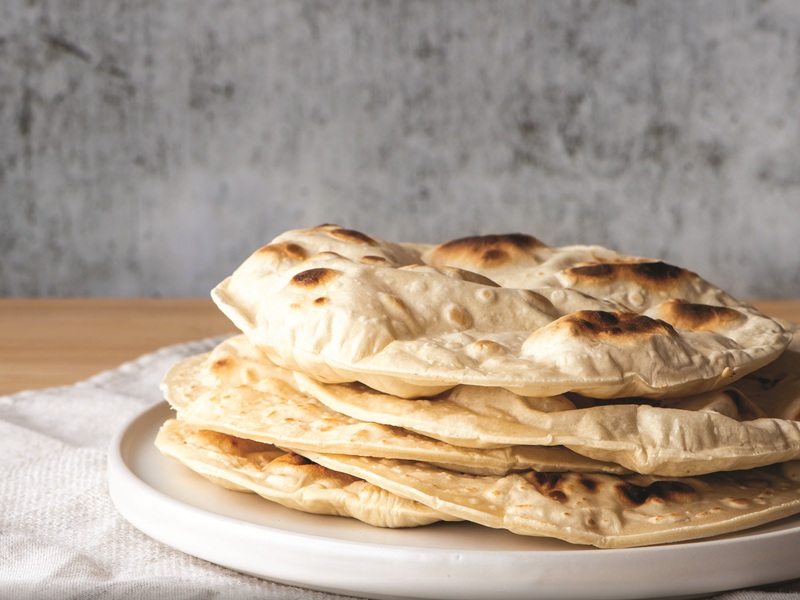
The idea to establish the Ontario-grown Atta market began after India banned exports of the product in 2023 in the wake of the ongoing Russian war on Ukraine. Atta flour is in high demand for making naan, chapati, and roti flatbreads. What sets 1847 Stone Milling’s flour apart is its milling process, as well as its organic production methods.
“Conventionally milled flour tends to go through a roller mill, where the grains are heated,” says Melissa McKeown, who started 1847 Stone Milling with her brother, Trevor.
“Because of the heating, they have to remove the germ to keep the flour shelf-stable. Since Atta flour is stone-milled, it’s kept cool, and the whole berry can remain intact within the flour.”
The result is a finely textured, smooth product, one that’s preferred by a growing segment of consumers. McKeown adds that she understands India’s rationale for the export ban, and it helped convince her and her brother that it was time to create their own market sourced from Ontario grain farmers.
“We contract with Ontario farmers to keep up with demand and to grow these special varieties that we’re looking for, which produce flour that is as comparable as possible to Indian flour,” she says. “We have growers who are growing these grains for us and next year, there’ll be more.”
As with most organic or contract crops, there is a premium paid for the effort. However, instead of a set incentive, the McKeowns work with each farmer to determine their specific needs to continue growing the organic wheat they need.
“We know every year is not going to be the same, and all of our farm producers have always been fair,” says McKeown.
“If some years they need a little more, that’s okay; we want to keep these connections and keep these farms going.”
She also praises Grain Farmers of Ontario for its support. Building this venture required investing in work with Dr. Saeed M. Ghazani at the University of Guelph’s food science lab to determine colour, particle size, protein, and blending types needed to meet the traits and specifications of Atta flour. They also had to purchase an additional large stone mill to ensure the quality standards and traceability consumers want, which requires investment.
“Being able to produce something like this is very important to us, and our farmers are very happy to be growing something they can see the outcome for,” says McKeown. “Our farmers take pride in knowing they can see where their grains are selling online and that they’re making a positive impact.”
NEW PROTEIN INTERNATIONAL
It’s a point of pride that Canadian farmers grow some of the highest-quality crops and ingredients in the world, and identity-preserved, non-GMO food-grade soybeans are one of those distinct hallmarks. It’s never been a question of “if” Canadian farmers are capable, but rather “how” they are processed here.
This is the issue surrounding soy protein isolate, an ingredient used in a wide range of food products, from beverages to baked goods, dairy alternatives, and protein bars. The issue that confounds its production involves exports and imports: growers in Ontario and other provinces produce the soybeans, but they are shipped abroad for processing in other countries, then purchased and imported by Canadian food manufacturers.
The loss of jobs, added value, and control of “homegrown” business was the incentive behind New Protein International’s (NPI) bid to build a fully scaled processing plant in Sarnia. The venture would eliminate exports of food-grade, non-GMO soybeans for processing, adding value and keeping jobs in Ontario and other parts of the country.
What also sets it apart is the use of carbon dioxide (CO2) extraction technology, replacing hexane, which is facing increased scrutiny from the European Union and other regulators around the world. Awards from the Grains Innovation Fund have helped with the installation of additional processing equipment, generation of proprietary data, feedback from end-users, and risk reduction.
It has been a lengthy process, starting with the demonstration plant in Benmiller and meetings with investors to push forward with a fully scaled facility. The latest news is that construction is expected to begin late in 2027, with commercial operations targeted for 2030.
Once in full operation, the plant will use 70,000 tonnes of Ontario soybeans annually, processing more than 17,000 tonnes of soy protein isolate.
“The Grains Innovation Fund project is extremely important because it helps bridge the gap between successful pilot-scale production and commercial-scale deployment,” says Graham Markham, NPI’s Chief Development Officer.
“Every successful production campaign at our demonstration facility increases confidence among customers, investors, lenders, governments, and industry partners.”
Although the immediate goal is to get the protein isolate plant up and running, longer term, it is expected to create demand for proteins, oils, fibres, and other components from several plant-based crops.
“One of the attractive aspects of building advanced ingredient-processing capacity is that it creates a foundation for future innovation and diversification,” says Markham. “We can produce products that the world wants and get feedback on the process and the product itself.”
And yet the funding aspect was both an opportunity to be explored and an impediment to moving forward. But Markham credits federal officials with realizing that Canadian businesses should not be importing food ingredients made from Canadian-grown crops. It is not a friend-or-foe issue, but a matter of common sense: if we can grow it here, why not process it and keep the jobs and the value, particularly by shipping the finished products abroad instead of buying them back from other countries?
“Our commercialization efforts have identified opportunities across domestic and international markets, including North America, Europe, and Asia,” adds Markham. “The key message is that Ontario farmers are producing some of the best food-grade soybeans in the world. And we have an opportunity to capture much more of the value associated with those crops, right here in Ontario.” •