From Ontario fieldsto markets around the world
Where do Ontario grains go?
From feed and food processing to export markets around the world, Ontario-grown corn, soybeans, wheat, barley, and oats support domestic industries and international demand.
Every year, Ontario farmers produce millions of tonnes of grain, but once it leaves the farm, where does it actually go? The answer could be just down the road, or halfway around the world.
Grain Farmers of Ontario recently took a closer look at that journey, which provides a clearer picture of the domestic and international markets that rely on Ontario grain.
Drawing on information and data from Statistics Canada and the Ontario Ministry of Agriculture, Food and Agribusiness, the report is also informed by data from, and interviews with, key stakeholders and industry experts. It follows Ontario-grown corn, soybeans, wheat, barley, and oats beyond the farm gate to better understand who is buying them, how they are being used, and where opportunities may be emerging.
Take a look at how Ontario grains are used:
CORN
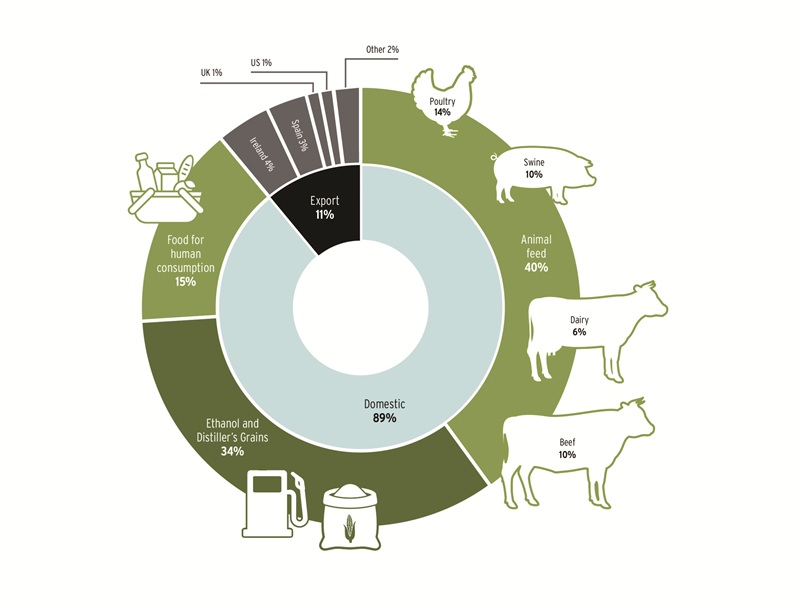
Corn, Ontario’s largest crop by volume, largely stays close to home. About 89 per cent of demand is within Ontario, where corn supports a range of industries. Animal feed is the largest user, accounting for approximately 40 per cent of demand, while ethanol and distillers’ grains represent another 34 per cent. Food processing also provides an important market. Ontario corn also heads across the border to the United States and across the Atlantic to markets such as Ireland, Spain, and the United Kingdom.
SOYBEANS
Soybeans tell a different story. More than half of Ontario soybean demand comes from export markets. Commodity soybeans move into markets such as Belgium and Italy, while Ontario’s food-grade soybean industry connects farmers with customers across Asia. Countries including Japan, China, Indonesia, and Vietnam purchase Ontario soybeans for products such as tofu, soy milk, miso, and natto.
WHEAT
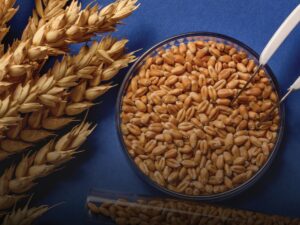
Ontario wheat also has a foot in both domestic and international markets. Approximately 54 per cent of demand is domestic, including milling and animal feed, while the remaining 46 per cent moves outside the province. The United States is the top destination, but Ontario wheat also finds a home in markets including Mexico, Nigeria, and Brazil.
BARLEY AND OATS
Ontario’s barley and oat crops fill important niches as well. Barley is predominantly used within the province, particularly for livestock feed, while oats serve both domestic customers and export markets, led by the United States.
Together, these markets demonstrate how connected Ontario farms are to the broader economy. Grain grown in the province may end up feeding livestock down the road, supplying an Ontario processing facility, or becoming an ingredient in a food product thousands of kilometres away.
Knowing where Ontario grain goes provides a better understanding of who is buying it, how they are using it, and where demand is headed. That insight helps identify new opportunities, strengthen existing markets, and keep Ontario grain moving, whether it is down the road or around the world.
Hayley Vinkovic is Grain Farmers of Ontario’s Market Analysis Specialist. Ontario’s Grain Markets report is available at gfo.ca/ontario-grain-production-and-utilization •