
Cover crops before corn
Studies recommend their use before corn…but select wisely
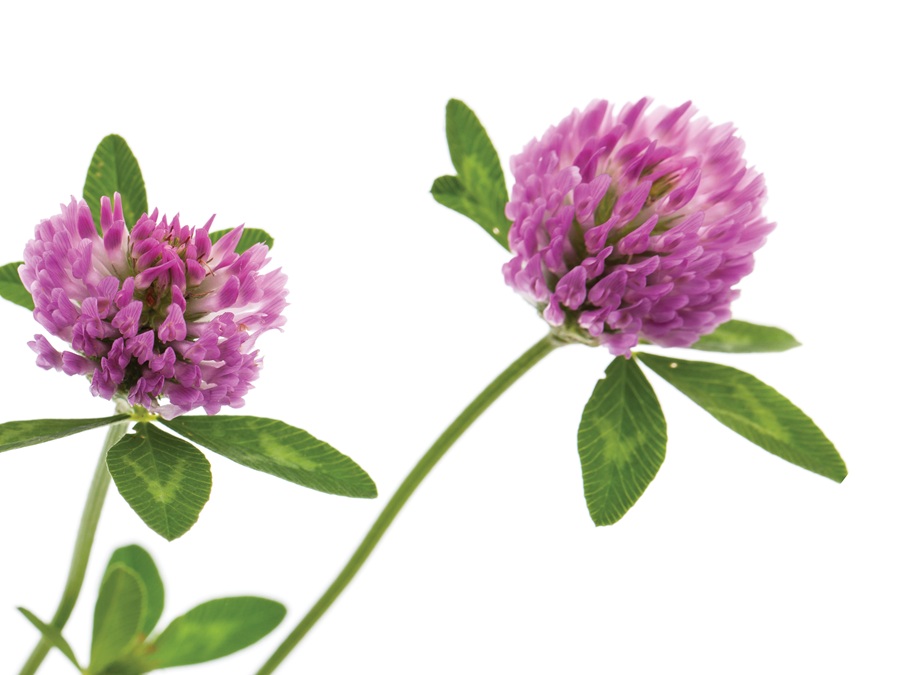
Besides providing N benefits, researchers also found that harvesting a cover crop for forage only slightly reduces corn yield the next year.

Ontario corn producers interested in cover crops’ nitrogen benefits can take heart: Research shows that under the right conditions, cover crops improve the bottom line.
Kim Schneider and her University of Guelph research team looked at nitrogen (N) benefits and forage feasibility when certain cover crops are planted before corn.
The researchers wanted to know if there is an immediate N benefit to this cropping practice and how it impacts the farmer’s bottom line.
“We also wanted to determine if this benefit is reduced or lost if the cover crop is harvested for fall forage, and if there is a reduction, how much is this offset by the value of the fall forage,” Schneider says. “Finally, we wanted to present to producers the specific crop options and agronomic management system that provide the most benefit.”
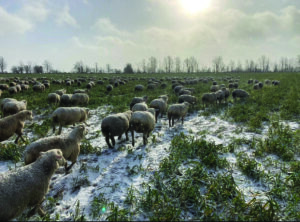
In trials over three years after winter wheat harvest, Schneider and her team planted annual legumes alone and in mixtures with oats, and radish. These plots were compared to a frost-seeded red clover cover crop and included Berseem clover, Balansa Clover and Austrian Winter Pea (peas).
The plots produced variable results each year. But in terms of forage and N benefits, solid recommendations have emerged.
RED CLOVER A WINNER
In 2022, researchers found that cover crop treatment had a significant effect on corn yield and provided strong fertilizer N credit.
Of all the cover crops in the trials, red clover yielded the highest corn yield (11.35 Mg/ha compared to no cover crop, at only 7.16 Mg/ha).
The good results in 2022 were due to good red clover establishment that year. The following two years, establishment was poor due to weather and weed pressure.
Schneider says when red clover establishes well and can produce substantial biomass, this research shows that its N credit beats any other legume cover crop tested.
She recommends that farmers consider frost-seeding red clover into winter wheat if possible.
“In a good year, we found red clover could produce about 80 kg N/ha for the following corn crop, with the range being 23 to 93 kg N/ha,” she says. “That’s greater than most of the other legume or non-legume cover crops that are available after winter wheat.”
Schneider and her team also found that both conventionally planted wheat and twin row-spaced wheat are good options for planting red clover. However, in a weedy field, twin row spacing may not be desirable.
“In 2023, the year we saw good red clover biomass, red clover planted into twin row wheat tended to provide more N in terms of an N credit, though not statistically more than red clover planted into conventional row spacing,” says Schneider. “However, wheat yield on average was reduced with twin row planting by 1.02 Mg/ha.”
CONSIDER THE FORAGE ANGLE
The team also found that harvesting a cover crop for forage only minimally reduced corn yield the next year (a mere 0.4 to 0.6 Mg/ ha). This tiny impact means that no changes are needed in crop management. Instead, she says, farmers can put their focus on finding the cover crop which maximizes yield with minimal year-to-year biomass variance.
Based on their results, she’s recommending monoculture oats, oat-pea, and oat-pea-radish.
But if you’re interested in a complete cover crop – one that yields high and provides high-quality forage as well – oat-pea-radish or oat-pea are better than oats alone. These mixtures will also minimize N immobilization, Schneider says. Of the annual legumes in this study, Balansa clover failed to establish well in all three years of the trial. Berseem clover produced a low-but-harvestable biomass in two of the three years. Berseem and Balansa clover may not establish well when planted after winter wheat harvest in August, especially if conditions are dry. Peas were more reliable but were still not a high biomass producer when planted by themselves.
“In the end, although each farm and field is different from the next and growing season conditions are also going to vary from year to year, harvesting one of these cover crop mixtures that displays greater yield stability for forage purposes appears to be a reliable option for helping cover the upfront cost of cover crops,” Schneider says.
But she adds a note of caution. Cutting the aboveground biomass of cover crops for forage may make cover cropping more profitable in the short term, it’s possible that this may reduce some of the benefits of cover crops in the long term. This needs further exploration in a longer-term study.”
SOIL HEALTH BENEFITS
More recommendations about the use of cover crops to improve corn performance come from a long-term study conducted by Laura Van Eerd and her colleagues in plots at the university’s Ridgetown Campus.
A few different annual cover crops were planted by the team from 2007 to 2020 (but only 10 of those 13 seasons because of the pandemic). In 2020, the team planted grain corn and again in 2021. In 2021, there was a 60 bushel per acre increase in dry grain corn yield with radish compared to the no cover crop control or oat cover crop.
“This was the first time that we saw a positive grain yield response to cover cropping,” Van Eerd says. In previous years, they saw no difference or slight but insignificant grain crop yield boosts with cover crops. In the 30 trials since 2007, they planted cover crops 169 times and found that 167 times (almost 99 per cent), the main crop yield was only as good as or a little better with a cover crop than without. However, 2021 was different, Van Eerd says, because conditions existed that may have boosted the yield benefits of cover crops.
“The season was dry early on, so in a year where rain is scarce for the first part of the growing season, it seems that the enhanced soil health with long-term cover cropping contributed to corn grain yield gains,” she says. “The mechanism appears to be related to improved N cycling with available water.”
In another part of the investigation, Van Eerd and her team looked at soil health in plots that were planted with annual cover crops six times over eight years. They found – as have many other researchers – that soil health was significantly better in plots with cover crops compared to no cover crops.
This research was funded in part by the Ontario Agri-Food Innovation Alliance, a collaboration between the Government of Ontario and the University of Guelph. •