
Pushing the intensity on wheat production
Planting dates, growth regulators, and desiccants are all part of the picture

Five years of Ontario field trials reveal how nitrogen, planting date, and plant growth regulators affect lodging, yield potential, and the economics of wheat production.
Measuring success in winter wheat production in Ontario has had plenty of support over the past three decades. Long-term studies in the province, combined with complementary research and intensive management practices from the U.K., have provided plenty of data and information to help assure growers of the benefits of including winter wheat in rotations.
To build on that detail, researchers with the University of Guelph’s Ridgetown Campus have completed a five-year study that includes planting dates, nitrogen applications, the use of plant growth regulators (PGRs), and desiccants on the previous soybean crop. The work was funded in part by Grain Farmers of Ontario, with support from Syngenta Canada and the Ontario Ministry of Agriculture, Food and Agribusiness.
Research on winter wheat, particularly its inclusion in rotations, is growing in importance. In addition to its effect on subsequent corn and soybean yields, more growers recognize its benefits, as indicated by the million-plus acres seeded in Ontario in six of the past seven years. With costs for seed, equipment, fuel, the carbon tax, and land all continuing to rise, farmers are encouraged to maximize revenues and profits.
PUSHING THE LIMITS
The five-year project to optimize winter wheat for increased cropping-system resilience was conducted by researchers Joshua Nasielski and David Hooker and began with the 2020 fall planting at Ridgetown, Arva, and Winchester. In some years, changes were made to the plot locations. In 2021, planting was carried out at Ridgetown, Arva, Exeter, and Winchester. In other years, one of the research sites was near Lucan. Two soft red varieties and two hard red varieties were planted early to increase lodging potential during June and July the following year. In the first year, the project had two primary objectives:
- Determine the impact of the newest plant growth regulators (PGRs) on performance and profitability, including lodging, yield, and quality. Nasielski and Hooker also examined the effect of PGRs with applied nitrogen (N) rates.
- Determine the effect of PGRs, using an integrated approach, to increase profitability, reduce lodging, increase grain yields, and maintain or increase quality.
- A third component, incorporating desiccants, was also part of the project.
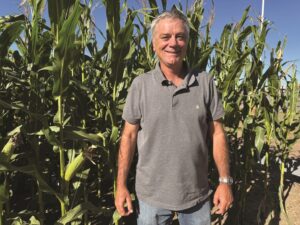
“The main goal was to improve the profitability of winter wheat in a rotation,” says Nasielski, an assistant professor at the University of Guelph. “With desiccants, the work aimed to support earlier planting dates (to increase yield and winter survival). With planting-date research, the work looked at interactions between planting date and intensive versus conventional management.”
By combining PGRs and N rates, researchers tried to determine whether growers could increase nitrogen application rates without increasing the risk of lodging. Higher N rates can raise lodging risk, and PGRs can help strengthen stems.
LODGING
They determined that lodging was moderate to high at Arva and Winchester in 2021, and low at Ridgetown the same year. It was near zero in all treatments at Arva and Ridgetown in 2022 and 2023, and at Winchester in 2022.
The study’s 2025 report summary says: “One of the biggest factors for determining lodging potential is the weather, which was a major contributor of variability across site-years.” Although all nine site-years were managed for high lodging potential through early planting and high seeding rates, significant lodging occurred at only four of the nine sites.
Where there was significant lodging potential, the use of a PGR (Moddus or Manipulator) increased yields compared to untreated controls due to less lodging. In susceptible varieties, PGR use reduced lodging by an average of 20 per cent while recording a three- to seven-bu/ac yield increase.
Where the potential for lodging was low or zero, the effect of PGRs on yield was negligible. The use of a PGR shortened stems and reduced lodging on average. But in one cultivar in particular, it shortened it considerably more than expected. Overall, the use of PGRs increased stem density by seven per cent, improving straw yield.
NITROGEN RATE
From 2021 to 2023, nitrogen was applied at rates of 0, 100, 150,
200, and 250 kilograms per hectare (0, 89, 139, 178, and 223 lb. of N per acre). The 2025 summary says: “There were only marginal increases in yield with a PGR where lodging was not an issue. In sites that did experience lodging, the wheat variety had the greatest impact on lodging, followed by N rate.”
The use of a PGR had the least effect of the three management factors. The conclusion with N rate was that an integrated approach is necessary to manage yield losses and declines in quality.
“For PGRs, we saw very big interactions with winter wheat,” notes Nasielski. “The results indicate farmers should check with the seed company or sales representatives about any potential adverse PGR interactions.”
PLANTING DATE
Early planting remains one of the most reliable ways to maximize wheat yield, much like in corn or soybeans. But according to Nasielski, management decisions such as higher N rates or the use of PGRs tended to have similar effects regardless of when the crop was planted.
While earlier planting dates generally produced higher yields than later ones, trials with multiple planting dates did not show that additional nitrogen or PGRs could make up for the yield lost from delayed planting.
“The early planting dates, compared to the late dates, increased yield, so lodging risk would increase a bit, but not much,” says Nasielski. “The research shows how important timely planting is for yield potential; you can’t manage your way out of the yield penalty.”
DESICCANT
In 2020, 2021, and 2022, Nasielski and Hooker ran desiccation trials at Ridgetown and Exeter to test the effects of planting date and whether a preceding soybean crop could be planted with full-season varieties. Using a desiccant, diquat, salflufenacil, and borax, could effectively shorten maturity and allow for timely early planting of winter wheat.
“On average, long-season maturity groups (MGs) reached maturity three to 15 days after adapted MG varieties, as we expected,” says Nasielski. “However, when diquat was applied at R6.5, long-season MGs were often able to reach harvest maturity earlier, or at the same time as, untreated adapted MG soybeans. In other words, a farmer could plant a long-season MG, apply diquat at R6.5, and harvest soybeans at the same time as, or earlier than, planting a full-season MG with no desiccant applied.”
Small reductions in yield are expected with an application of a desiccant at R6.5, although the reduction isn’t always statistically significant. The summary recommends that growers balance the cost of the product against any possible reduction in yield and the overall benefits of earlier wheat planting.
SOYBEAN MATURITY GROUP
Another key finding from the study is the potential to plant soybeans from an adapted maturity group ahead of winter wheat. With the use of diquat at R6.5, growers can plant an adapted maturity group variety instead of an untreated short-season maturity group variety and achieve higher yields with a similar, or earlier, harvest. •