Building heartier, healthier farm communities
Just in time: a new era of physical and mental farmer wellness arrives
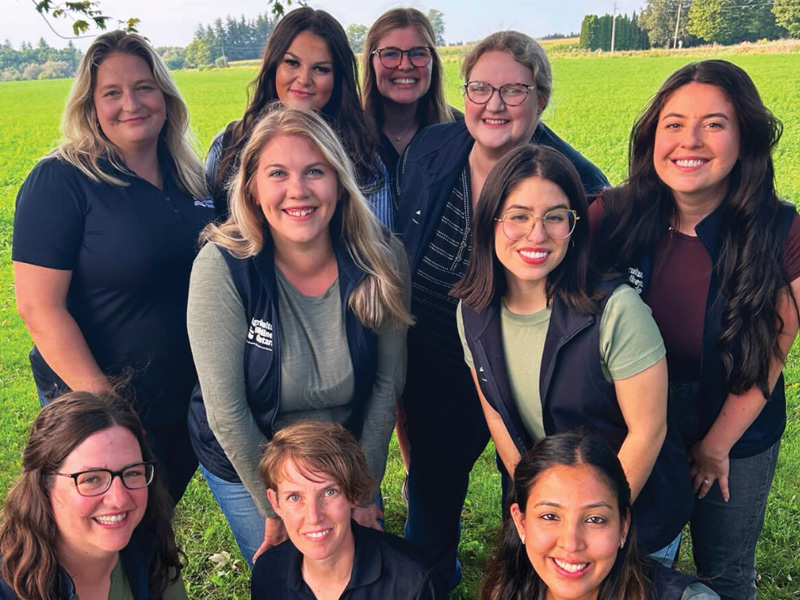
Across Canada, health-related initiatives have been launched that underscore how farming has complexities that have gone unknown or misunderstood for decades.

A new era of farmer wellness awareness – mental and physical – has arrived. Across Canada, health-related initiatives have been launched that underscore how farming has complexities that have gone unknown or misunderstood for decades. The new wave of emerging geopolitical and climate-related issues affecting food production and food security just makes farmers’ health even more of a challenge…and more of a priority.
Some of these wellness initiatives stem from research activity. One of the best -known studies resulted in the deeper understanding of farmers’ mental health challenges, which began percolating some 20 years ago by Prof. Andria Jones at the University of Guelph.
When studying the health of large animal veterinarians in Ontario, Jones came to realize producers too were dealing with significantly higher stress, depression and anxiety levels than the general public. However, no one was talking about them openly, let alone taking measures to address them: mental health was a hushed topic in agricultural circles. Jones and her team changed that by introducing their research findings to the farming community, opening doors for discussions and eventually for programs, initiatives and more research to address the problem.
Among the efforts that exist today are the Canadian Center for Agricultural Wellbeing, the Canadian Agricultural Literacy Program, the Do More Agriculture Foundation, The National Farmer Wellness Network, Farm Credit Canada’s Rooted in Resilience program, and most lately, Agriculture Wellness Ontario – all in a matter of a few years.
FREE CHILDCARE ISN’T KIDS’ STUFF
These sponsored programs open doors for more networking and less stress
Participants at the March Classic and Women’s Grain Symposium have been pleased to find free childcare available onsite at the events. The childcare program started as an experiment, but it’s now a solid part of these two Grain Farmers of Ontario major events.
Sponsored childcare arose from a casual conversation last fall with Agriculture Wellness Ontario about how free childcare could help reduce the stress that comes with organizing busy schedules and taking part in professional development events and active networking.
Agriculture Wellness Ontario went on to become the childcare program’s flagship sponsor.
Joanne Tichborne, Grain Farmers of Ontario’s Advertising Sales and Sponsorship Consultant, says childcare is an example of Grain Farmers of Ontario’s commitment to building a diverse community through innovative practices that remove barriers to entry.
“These members are the future of our organization,” she says. “They provide an important voice and new perspectives to the work we are doing now.”
Grain Farmers of Ontario plans to continue to offer childcare at this year’s Women’s Grain Symposium and at the 2027 March Classic if there is pre-registration demand.
Agriculture Wellness Ontario, supported by the governments of Canada and Ontario under the Sustainable Agriculture Partnership, offers several programs and services to the farm community. These include free, unlimited, around-the-clock mental health counselling to Ontario farmers, farm families and farm employees, including international workers. As well, this program has developed what it calls the Guardian Network, a volunteer, peer-driven community of mental health advocates that supports Ontario farming community, managed by Durham region farmer and registered psychotherapist Marnie Wood.
Grain Farmers of Ontario has also taken significant measures to support farm community wellness, including a farmer wellness page on its website and a Community Investment Program. “We understand the challenges farmers are facing and the stress that comes with farming,” it says. “Grain Farmers of Ontario is working to help you, our farmer-members, be successful in your business and we see a focus on mental health and well-being as part of that work.”
Other wellness efforts have stemmed from producers’ experiences and needs on and off the farm, and in some cases, led to support from Grain Farmers of Ontario. For example, when the organization was established in 2010, an initiative now called the Legacy Fund was created from accumulated assets of the three founding organizations (Ontario Wheat Producers’ Marketing Board, Ontario Corn Producers’ Association, and Ontario Soybean Growers). The fund was used to cash flow wheat trading activities from 2010-2021 and has a current value of approximately $14 million.
STRETCH, SIP, SNACK
When planting season arrives, it’s easy to get caught up in non-stop work. But peak performance depends on wellness. And that includes wellness breaks, when things get busy.
So this spring, Grain Farmers of Ontario’s Farmer Wellness Committee launched a wellness outreach project to focus on farmers’ physical and mental health. With support of other delegates from their district, committee members handed out snack bags to farmers they saw working in the fields.
Typically, the treats consisted of snack items produced in their district, fruit and granola bars.
The packages included messaging to stay hydrated, stretch and move, phone a friend, and have a snack break.
Rachel Telford, Grain Farmers of Ontario’s manager of member relations and staff lead for the Farmer Wellness Committee, says the committee felt strongly about acknowledging the need to focus on wellness at this time of year, given how much their stress increases when farmers are faced with a short window to get crops in the ground.
“Hunger, physical discomfort, building frustration with problems and delays can all take their toll,” she says. “These snacks, provided by Grain Farmers of Ontario along with mental health support resources, are friendly reminders that grain farmers are a community that looks out for one another.”
Through the Legacy Fund, an initiative called the Community Investment Program developed. Projects led by districts are matched 3:1 through this fund.
The program supports projects such as the London Children’s Museum (an initiative led by District 3, with participation from districts 1,4,5, and 9) and the DC Vollrath Memorial Park Rejuvenation in Finch, Ont., led by District 14. It also contributes significantly to health and wellness efforts.
For example, last year, District 13 took the lead in raising $20,000 for the University of Ottawa Heart Institute, to help purchase an additional MRI machine. With a second MRI, the Heart Institute can reduce wait time from three months to 30 days and increase the number of patients receiving an MRI annually from 3,000 to 4,500 (50 per cent more). With shorter wait times, clinicians will be able to diagnose faster and begin treatment plans for patients sooner, reducing the risk of complications from delays.
District 13 delegate Jenn Doelman says the district supported the project because of the potential for its long-term impact — improved community care, increased potential for local research initiatives and attracting highly skilled talent to its community. “It aligns so much with the values of Grain Farmers of Ontario,” says Doelman.
She also had a personal stake in the technology; her husband Mike Doelman had major heart problems that were treated at the institute. “Our farm and our family are thriving because Mike was able to be treated in a time of crisis and receive follow-up care to help him manage his heart disease,” she says. “When we speak of farmer wellness, all of the stress and strain of farming – even our lifestyle – eventually has an impact on our hearts.” And studies show that male farmers over the age of 45 years are at an increased risk of being diagnosed with heart disease compared to non-farmers in the same demographic.
Other districts are likewise leading important health and wellness projects, with support from the Community Investment Program. For example:
Palmerston and District Hospital received $20,000 from District 10 and the Community Investment Program to help purchase MRI technology and keep quality, advanced healthcare close to home and in rural communities. Currently, area residents must travel at least an hour for MRI services. A new MRI machine is the focus of the community’s largest ever fundraising campaign, the Palmerston and District Hospital Foundation MRI+ Campaign, driven by a committee of 20-plus local residents. The total estimated cost of the project, which is expected to be operational this year, is $8 million.
- Under District 10’s leadership, and with support from District 8 and the Community Investment Program, the Kincardine Hospital Redevelopment and Expansion project received $17,000 towards a massive undertaking that includes a CT scanner and MRI machine. An expanding population in the Kincardine area, doctor shortages and increasing emphasis on outpatient facilities services have put significant pressure on the hospital’s capacity. The expansion will ease overcrowding, address the anticipated increase in emergency unit visits and attract new medical personnel. Residents will be able to access MRI technology without having to wait for months or travel long distances in the winter.
- District 6 worked through the Community Investment Program to donate $20,000 to the Norfolk Haldimand Community Hospice, including the development of a Centre for Hospice Palliative Care. The centre will provide community residents with more equitable palliative and end-of-life care at home supported by a palliative care outreach team, and in a hospice residence if they are unable to stay at home. The new hospice, which opens in December 2027, will be located just outside of Jarvis. It addresses the need for hospice services in the region, which are currently unavailable.
- The Campbellford Memorial Hospital is a vital part of the community in District 12, serving patients from Peterborough, Northumberland and Hastings counties, along with seven municipalities. The hospital’s in-patients are on average 78 years old. Many have mobility issues and are bed-ridden, and will benefit significantly from a portable X-ray machine, a critical technology that allows for faster treatment decisions and helps speed up the examination workflow. District 12 worked through the Community Investment Program to donate $20,000 to help purchase this technology.
District 2 donated $7,000 through the Community Investment Program to the Chatham-Kent Health Alliance fluoroscopy campaign. Fluoroscopy is a diagnostic tool that provides real-time, moving X-ray images that are critical for detecting illnesses, guiding procedures and ensuring accurate treatment plans. From diagnosing disorders in stroke and cancer patients to guiding life-saving interventions, fluoroscopy can result in shorter wait times and improved accuracy. •