
Brazil’s biological advantage
It’s not just exceptional climate that’s made this country a production giant
Brazil’s rapid adoption of biological products has been driven by agronomic need, strong research partnerships, coordinated industry action, and supportive regulation.

Brazil, an expansive country that has gone from being a food importer to a food exporter in a generation, is widely regarded as a megafarm stronghold. However, while it continues to break production and export records, about 77 per cent of its operations are considered family farms. That’s about 20 per cent less than the percentage of family farms in Canada or the U.S., and a fraction of the production, but it still represents four million farms and about 80 million acres.
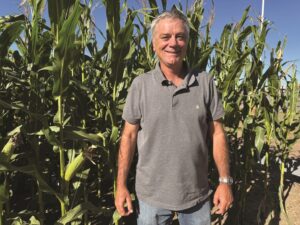
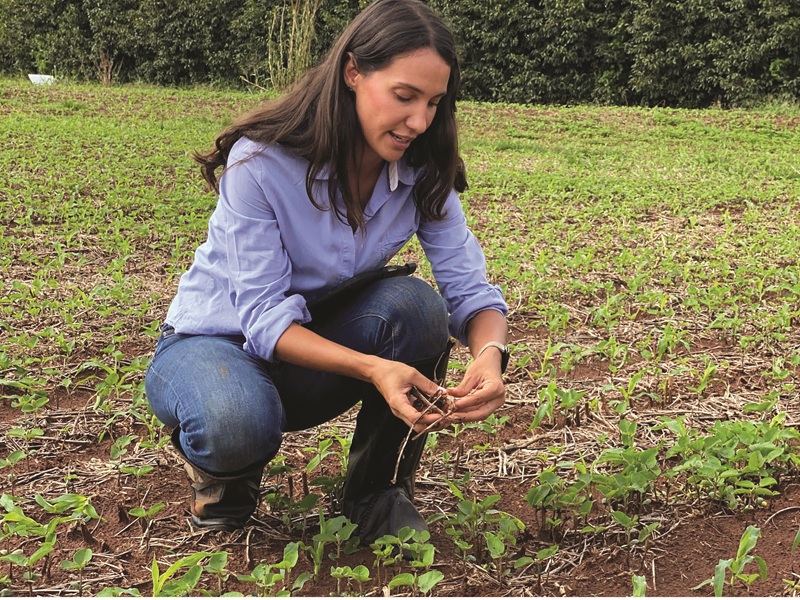
One such operation, Estancia Farm in São Paulo, looks much like a progressive Ontario grain farm — at least, in some ways. For example, it consists of 3,000 acres of corn and soybeans, and also operates a successful grain elevator. Its operators employ agronomists and other professionals to help institute research-based regenerative practices, such as no-till. And like Canadian farmers, they struggle with weather variability, including drought, and rising input costs.
A big difference, though, is that unlike many other Brazilian farmers who are eager to add value by adding land, Estancia’s operators don’t want to expand. The farm is run by two sisters in their 30s, Aline and Nathalia Vick, second-generation farmers who accepted their father’s offer to get involved. Aline says she and Nathalia would rather concentrate on maximizing yields on their current acreage through the kinds of plant and soil technology that have got them this far. In part, that means using biological products as part of an integrated management system.
Brazilian independent agronomist Ana Paula Silva says biological product use in grain production in Brazil, especially in soybeans, is well established, strong in some areas, and still expanding in others. She says Bradyrhizobium inoculation in soybeans, widely used to aid nitrogen fixation, is present in nearly 100 per cent of the crop and has been a foundation of the Brazilian production system for decades. Similarly, she says, the use of Azospirillum in co-inoculation, which stimulates root growth and improves nutrient use efficiency, has been growing consistently.
They’re part of a key group that includes phosphorus-solubilizing microorganisms, such as species of Pseudomonas and Bacillus, Trichoderma used for disease management and growth promotion, and bio-based products with biostimulant action, including amino acids, seaweed extracts, and organic compounds.
Silva says the growth of biologicals in Brazil has been driven by a combination of factors, led by high pest and disease pressure associated with tropical conditions. High temperatures and humidity for much of the year create an ideal environment for rapid insect multiplication and plant pathogen proliferation. Multiple cropping cycles and vast cultivated areas add to Brazil’s production complexity.
Other considerations are the search for greater input-use efficiency, the need for more resilient production systems, and the increasing cost of fertilizers and crop protection products — similarities that Brazilian and Ontario farmers share.
They also share the realization that research is the way forward.
In the early 1970s, a Brazilian agricultural science entity called Embrapa was launched and went on to become one of the world’s largest agricultural research organizations. Among its many activities, it works with private companies such as Koppert, a global leader in biological products, to meet Brazilian farmers’ needs.
There’s more. The São Paulo Advanced Research Center for Biological Control (SPARCBio) is one of the largest public-private innovation hubs focused on biological solutions for tropical agriculture. It’s designed to accelerate the translation of fundamental science into applied, field-ready technologies.
Finally, long-standing partnerships with renowned institutions, such as ESALQ/USP (Luiz de Queiroz College of Agriculture, University of São Paulo), ensure product development is grounded in scientific rigour, robust experimental design, and a clear understanding of pest, plant, and environmental interactions — again, a trait shared with Ontario growers and their strong support for research.
CANADA AND BRAZIL: THE DRIVERS FOR CHANGE ARE ALIKE
Can the success achieved in Brazil with biological products be replicated in Canadian agriculture?
Yes, says Thiago Castro, research and development manager at Koppert Brazil — provided this approach is adapted, not directly replicated, and supported by the right institutional framework.
Castro acknowledges that Canada operates under different climatic conditions and cropping systems. But, he says, the fundamental drivers are similar: the need to manage resistance, reduce environmental impact, improve sustainability, and protect farm profitability.
Canada also benefits from strong scientific institutions, advanced agronomy and a highly professional farming sector, he says.
However, Brazil’s experience clearly shows that technological readiness is not sufficient without a supportive regulatory environment and culture.
“A critical enabler of Brazil’s rapid advancement in biological crop protection has been the existence of a regulatory environment capable of operating with speed, predictability, and scientific alignment, combined with laws explicitly designed to support innovation,” he says. “Clear regulatory pathways, differentiated treatment of biological products, and legal frameworks dedicated to bio-inputs have significantly reduced uncertainty, accelerated product availability, and encouraged long-term investment in research and industrial capacity.”
Castro believes that for similar success to occur here, regulatory systems must be rigorous, efficient, and innovation-friendly, and must recognize the specific nature of biological solutions and their role within IPM systems. He says regulations and public policies that actively support biological innovation, rather than applying frameworks originally designed for chemical products, are key to enabling faster adoption and scaling.
“The Brazilian case demonstrates that when regulation, science, and industry evolve together, biologicals can move rapidly from niche solutions to mainstream agricultural technologies,” Castro says. “With appropriate regulatory agility, supportive legislation, and continued investment in science and extension, Canada is well positioned to follow a similar trajectory.”
Thiago Castro, research and development manager at Koppert Brazil, says the success of biological crop protection there stems from a unique convergence. It includes agronomic necessity, research, coordinated industry action, progressive regulation, and reliable biological technologies developed specifically for large-scale tropical agriculture.
“This reality has historically required solutions capable of delivering consistent, preventive, and long-term control, rather than short-term corrective responses,” he says. “Biological control evolved as a strategic answer to these challenges, particularly when embedded within well-structured integrated pest management (IPM) programs.”
Castro says a decisive element behind the rapid and sustained adoption of biologicals in Brazil has been the quality, robustness, and completeness of the technologies delivered to growers. Over the last two decades, biological products have transitioned from niche alternatives to scientifically engineered crop protection technologies.
At Koppert, this evolution is driven by a deliberate strategy of technology stacking, combined with a comprehensive biological control portfolio.
“This stacked technological approach has been fundamental in transforming biologicals into tools that deliver predictable, reproducible, and economically viable results under real farming conditions, even within the complexity of tropical agriculture,” he says.
At an industry level, Castro says CropLife Brasil has been fundamental to the fast and structured advancement of biological control in the country. CropLife has played a key co-ordinating role by fostering dialogue between industry, regulators, researchers, and growers, promoting science-based regulation, technical harmonization, and best practices for integrating biologicals into modern crop protection programs.
This coordinated approach significantly reduced adoption barriers and increased confidence throughout the agricultural value chain, he says.
According to Castro, regulatory evolution further reinforced this environment. Specific public policies and legal frameworks dedicated to biological inputs brought clarity, differentiated biological solutions from conventional chemical pesticides, and stimulated long-term investment in research, industrial capacity, and innovation.
“Brazilian growers are highly professional and strongly market-oriented,” he says. “As major global exporters, they face increasing pressure related to pesticide residues, resistance management, sustainability goals, and ESG commitments, while maintaining high productivity. Biological solutions that are scientifically validated, technologically robust, and operationally reliable directly meet these demands.” •