
The problem with GM wheat is not the science
The debate over HB4 wheat shows market acceptance can matter more than agronomic promise
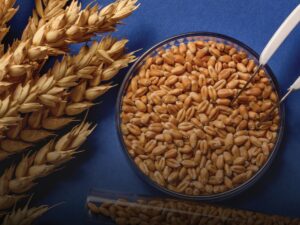
Argentina’s approval of HB4 wheat has reignited concerns about the market risks of genetically modified wheat, especially after the same trait was detected in soymeal shipments bound for the European Union, where it remains unapproved.

There is no genetically modified wheat grown in Canada, and for good reason. As one of the world’s largest wheat exporters, Canada has long prioritized export market demand over perceived agronomic benefits. Key destinations for both Canadian durum and non-durum wheat, such as the European Union, have zero tolerance for unapproved GM varieties. A detection would trigger serious consequences, regardless of volume or safety considerations. It’s a risk that has never been considered worth taking.
In October 2020, Argentina became the first country to grant commercial approval for GM wheat, giving the go-ahead to Bioceres Crop Solutions to cultivate varieties with the drought-tolerant HB4 trait. Its approval was met with resistance.
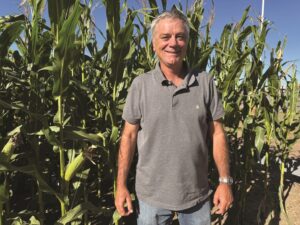
Santiago del Solar, a large-scale grain and cattle producer in Buenos Aires province, pushed to block commercialization while he was in office. From 2017 to 2019, he served under President Mauricio Macri as chief of staff to the agriculture minister. He said pressure to approve HB4 from the crushing industry and seed companies was significant, but he held firm.
In a conversation at Expoagro, Argentina’s largest outdoor agricultural show, del Solar expressed concern about HB4’s potential impact on trade. He also said he didn’t trust the claims about its effectiveness, calling it “snake oil.”
“My job in office was not to say if it worked or didn’t work,” he said. “That’s for the researchers. It is about the market.”
At the time of that conversation in early March 2026, no infractions had been reported. However, weeks later, del Solar’s concerns were validated when the EU’s rapid alert system for food and feed flagged multiple soymeal shipments from Argentina and Brazil for containing the same HB4 trait, which is still unapproved in the EU.
Argentine and Brazilian government authorities, who had been responsive to HB4-related press inquiries before the notifications, have since gone mostly silent.
Gustavo Idígoras, president of CIARA-CEC, Argentina’s chamber of grain crushers and exporters, contested the results, saying the method of detection was not valid because the labs did not have the specific gene needed to detect HB4.
“What they are running at the laboratory in the Netherlands is a genetic test that could detect a different trait,” he said.
Idígoras believes the labs tested for glufosinate resistance, a marker shared by several GM varieties already approved in the EU, including products from BASF and Bayer. However, the Netherlands Food and Consumer Product Safety Authority disputed that claim, saying its laboratory sequenced the genetic fingerprint of HB4 specifically. That methodology has been shared with Argentine authorities. The matter remains unresolved.
Since its commercial approval, HB4 wheat has been planted on approximately 50,000 hectares in Argentina. Soybean production is at just 2,500 hectares. How HB4 soy entered the supply chain is still unclear, and Cecilia Moral Muñoz, head of communications at Bioceres, could not account for its movement. The company, she said, does have a stewardship program.
She described it as an identity-preserved system implemented through contracted growers, controlled logistics, and designated commercialization channels. It is voluntary, she said, not a regulatory requirement.
HB4 soybean growers operate under a non-commercial scheme, contributing land and field operations as service providers under defined technical protocols. They do not acquire ownership of the seed.
The program functions differently for HB4 wheat. Growers are permitted to deliver only to authorized receiving points, mainly flour mills and animal feed manufacturers, so the grain does not enter the general commodity stream.
In both cases, the stewardship program ends at the first point of delivery.
What happens beyond that depends on third-party operators.
WHAT IS HB4 AND HOW DOES IT WORK?
HB4 is a genetically modified trait developed in Argentina from a gene found naturally in sunflowers. According to Martin Mariani, global seed and trade manager at Bioceres Crop Solutions, it works as a transcription factor, affecting more than 300 metabolic routes inside the plant. Under abiotic stress, he said, the trait delays ethylene production, the hormone linked to plant senescence.
Mariani described it as an airbag. During periods of minimal to no rainfall, the HB4 trait gives the plant better tools to withstand stress. If the rains don’t come, though, the plant will still die.
Independent research supports the technology’s value under specific conditions. Fernanda González, a wheat physiologist at INTA Pergamino and CONICET, evaluated HB4 wheat across 29 field environments in the Argentine Pampas and found an average yield advantage of eight per cent, rising to approximately 13 per cent in drought-prone environments.
The benefit was primarily associated with maintaining biomass and grain numbers under stress, rather than increasing grain size.
The trait also responded positively to moderate heat stress, likely because greater water uptake helped maintain a cooler canopy, she said. Under favourable conditions with little or no water limitation, the advantage largely disappeared. “The trait is most valuable in environments where crops experience combined drought and moderate heat stress,” she said.
Martín Díaz-Zorita, a crop scientist at the National University of La Pampa and CONICET who has conducted field trials under dryland conditions in the semi-arid Pampas since 2022, reached similar conclusions. He described HB4 as “a risk-management tool, not a guarantee of higher yield.”
Matías Kugler, a grain farmer and agronomist near Pergamino in northern Buenos Aires province, evaluated HB4 wheat varieties on his own farm. An early investor in Bioceres, he said yields were consistently higher under stress. The varieties carrying the trait were not competitive enough with top-performing commercial options, though, he said.
Bioceres has been working to address the germplasm gap through a collaboration with GDM Seeds, the dominant soybean germplasm provider in South America. GDM confirmed it is evaluating HB4 as part of its research and development efforts but said the technology has not yet been commercialized. The science, it seems, is not the real problem, and del Solar said as much long before commercial approval was granted.
While serving under President Macri, del Solar pointed to Canada as a cautionary tale. In 2009, trace amounts of CDC Triffid, an unauthorized GM flaxseed variety, were detected in a Europe-bound Canadian shipment. The EU market, which at the time accounted for 68 per cent of Canada’s flax exports, effectively closed. The estimated cost to the industry was $29.1 million.
Canada spent the next 17 years working to restore confidence, maintaining a rigorous testing protocol on every flaxseed shipment bound for Europe. That protocol was retired only in May, around the same time the Argentine and Brazilian soymeal alerts were making international headlines.
For del Solar, it was always about the market. When delivering wheat to Cargill, he said, buyers require a GMO-free guarantee. There is zero tolerance for the presence of HB4.
“No benefits, and all the problems,” Del Solar said.
It’s a tough lesson, and one Canada already learned the hard way through flax. Krista Zuzak, director of crop protection and production at Cereals Canada, said she supports the adoption of innovations that benefit farmers. But she was also clear about the conditions under which they would be considered.
“Before any new technology is adopted, we would work closely with international customers to ensure Canadian wheat would continue to be accepted in their markets,” she said. •