Getting more for less
Leveraging the interconnectivity of soil chemistry, biology, and structure for healthier soils and better crops
Soil scientist and farmer Jill Clapperton provides insights on practical soil management strategies tailored to individual farm conditions rather than one-size-fits-all prescriptions.

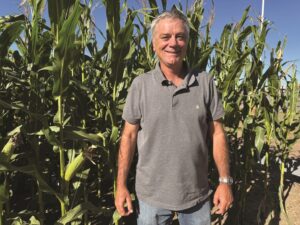
“Everything is connected. Everything we do starts with soil health.” Jill Clapperton, a veteran soil scientist and co-founder of soil health management company Rhizoterra Inc., shared that message with attendees at a soil and water health conference hosted by the St. Clair and Lower Thames conservation authorities earlier this year. She explained how farmers can tap the links between soil biology, chemistry and physical structure to improve crops and the environment.
Clapperton said no two farms — and no two operators — are exactly alike, from ecosystem conditions to business risk tolerance. For that reason, she doesn’t believe in “prescriptions” for improving soil health. Below are highlights from her presentation on the science of healthy soils and considerations for individual operators.
REDUCED TILLAGE
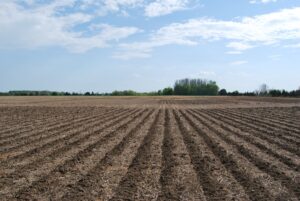
Soil is a habitat. Tillage disrupts that habitat and can harm the organisms that live there, including earthworms, which help move nutrients and create channels for water to infiltrate.
Tillage also weakens soil structure and increases the risk of erosion by wind and rain. Clapperton said the particles that leave the field include organic matter and the organisms that depend on it.
“What we’re talking about today is soil as habitat. If you build it, they will come … you can build it however you like,” Clapperton said. “But I’ll tell you right now: it’s all about reduced tillage.”
AGGREGATE STABILITY
Good aggregate stability and water-holding capacity help soil organisms move. Nematodes, for example, can’t burrow like earthworms and rely on water to reach the fungi and bacteria they prey on. That predation concentrates nutrients around plant roots, linking nutrient availability to water-holding capacity.
“I hope you’re all looking at roots. It’s easy to walk around and look at the tops of plants, but often the symptoms below ground are far worse than what you see above,” Clapperton said. She added plants should use energy to “explore the soil,” not to push through a hardpan.
“Good soil structure gives you more roots. In chemistry terms, it’s called metabiosis, when one positive change triggers another,” she said. “Then you recruit more organisms into the community, the whole system starts working together, and you get better soil structure.”
“Sometimes soil can look great, but still won’t infiltrate. That’s about roots — getting roots down,” Clapperton said. “Your most readily available source of organic matter isn’t above ground; it’s below ground: the roots. Roots are breaking down all the time. The residue on top takes longer to break down and oxidizes easily. Roots are a major source of organic matter, and they leak many carbon compounds.”
FEEDING FUNGI
Clapperton said most soil fungi — about 85 per cent — are beneficial in some way. Mycorrhizae, which attach to plant roots, are “the original carbon traders,” she said.
“Mycorrhizae colonize plants and increase photosynthesis … the green colour goes up. In fact, it shifts to a slight blue hue. If you’re wearing Polaroid glasses, you can see it,” Clapperton said. “It does that because it needs more energy. But it also changes the plant’s biochemistry, so the plant produces more amino acids and organic acids. These bacteria and fungi don’t just want sugar — they need nitrogen, sulfur, phosphorus and iron. They need manganese and trace elements, too.”
“Fungi also hold nutrients longer. That’s why soil mites and other decomposers like to eat fungi,” she said. “They mine nutrients out of organic matter, and then animals are eating concentrated nutrients.”
PROMOTING PREDATORS
Soil can have plenty of microbes and still be a tough environment for crops without healthy populations of mites and other predators, Clapperton said.
“We can get mineral immobilization when microbes get out of hand, and we don’t have enough predators to keep them in check,” Clapperton said. “That’s why soil structure is so important. Predators recycle bacteria, fungi and algae so plants can use those nutrients.”
“We can’t cycle nutrients in the soil until we have predators, and we can’t have predators until we have good soil structure,” she said. “You build up bacteria and fungi so predators will come — and you keep them by maintaining good structure. Those predators cycle a lot of nutrients.”
MEASURING NUTRIENT EFFICIENCY
“Your plant is your best bioindicator of what it’s actually taking up,” Clapperton said. Pairing soil fertility tests with in-season tissue tests can reveal gaps in nutrient uptake and signal changes in soil structure.
Micronutrients also matter — especially sulphur. Clapperton said acid rain once supplied sulphur to farm fields, but that source is no longer reliable.
“Use sulphur. You can’t build proteins without sulphur. I’m using 10 to 15 kilograms per hectare of elemental sulphur every time I plant, even with cover crops,” Clapperton said.
THE MAIN MESSAGE
Clapperton also touched on factors that affect crop transpiration, as well as buffer strips, companion cropping and even the science behind the smell of wet soil. Her core message: small management improvements can have an outsized impact on soil health — and on farm economics. She urged farmers to “plant with purpose.”
“We’re going to maintain water quality, feed our plants, be profitable and regenerate our communities,” she said. •