EU residue rules raise questions for Ontario grain exports
France’s import ban signals what could come next
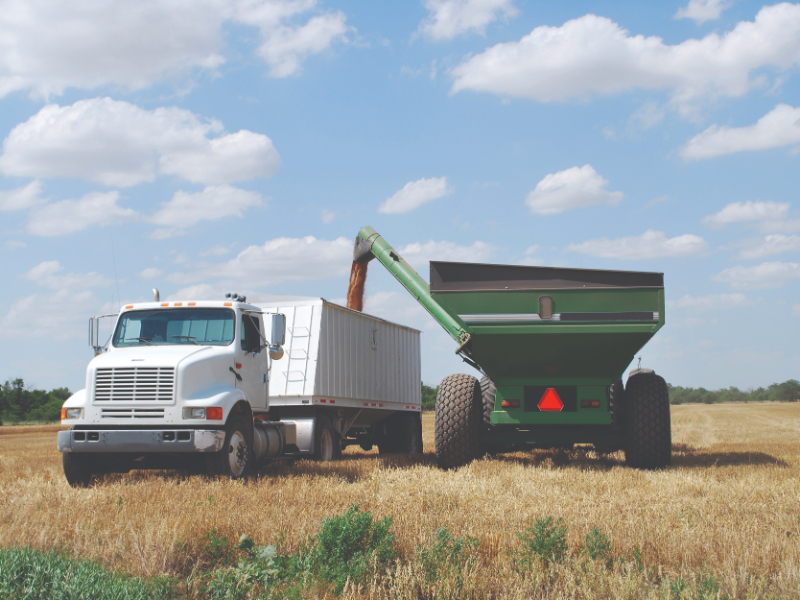
Proposed EU residue rules could put Ontario grain exports at risk by restricting imports of crops treated with products banned in Europe but still used in Canada, creating new market access uncertainty for growers.

The European Union represents a $3 billion market opportunity for Canadian grain, and one of the most complicated. EU member states and the United Kingdom are among Ontario’s top grain buyers, importing more than one million tonnes of corn and 200,000 tonnes of soybeans annually. But the EU regulates crop protection products differently than Canada does. Its Food and Feed Safety Simplification Omnibus, published Dec. 16, 2025, would set import residue limits at effectively zero for substances banned in the EU but still used here, threatening that market access. Neonicotinoids were the first substances targeted, with new limits taking effect in spring 2026. The EU has signalled others will follow. What that could mean in practice became clearer Jan. 7, 2026, when France moved ahead of the EU and acted on its own.
Using an emergency safeguard clause under European food law, the French government suspended imports of foodstuffs containing residues of five crop protection substances: glufosinate, mancozeb, thiophanate-methyl, carbendazim, and benomyl. All five are banned in the EU, but remain registered in Canada. The order covers wheat, barley, oats, and rye, as well as soybeans.
Officials framed the move as a matter of public health, but comments in a press release from France’s ministry of agriculture suggest trade competitiveness was also a factor. “The products we chase out the door, because of the substances with which they are treated, must not come back through the window,” said Annie Genevard, France’s minister of agriculture. Trade minister Serge Papin, who co-signed the order, called it an end to “a clear distortion of competition penalizing our farmers.”
France has used this mechanism before. A 2016 order on dimethoate became continent-wide policy in 2021. A 2024 order targeting thiacloprid was adopted EU-wide in 2025. According to Véronique Le Bail, secretary general of the French Chamber of Fruit and Vegetable Importers, the French government is now using the Council of State ruling to extend the same logic to all substances banned for agricultural use in France through legislation currently before parliament. Other member states are moving in the same direction, she said, and Poland has introduced a similar bill.
The country’s fruit and vegetable import sector challenged the decree at the Conseil d’État, France’s highest administrative court. Importers argued the measure contravened European rules on the free movement of goods and had been taken without consultation. The European Food Safety Authority had already established MRL standards for the substances in question and had identified no new consumer safety concern. The Commission, after examining the same data as French authorities, had not deemed emergency action necessary. The court upheld the decree regardless.
Despite high-profile inspections following the order, no seizures have occurred.
“We fear a tightening of protectionist rules at the borders of the European Union and France, under the guise of protecting consumer health,” said Le Bail.
WHICH PRODUCTS ARE AT RISK?
A cross-reference of EU hazard classifications against crop protection products registered in Canada for use on corn, soybeans, wheat, and barley flags five substances that could fall within the omnibus criteria. One product stands out: glufosinate-ammonium, sold commercially as Liberty. The EU withdrew approval for glufosinate in 2018, classifying it as a reproductive toxicant. It appears by name in the French decree, applied to soybeans. Under the omnibus criteria as currently drafted, it would meet the threshold for a zero MRL on imports. That does not mean the EU will act on it, but the mechanism is criteria-based, not substance-specific. It defines a ruleset, and any substance that meets the criteria falls within scope.
Glufosinate is the active ingredient in the LibertyLink herbicide tolerance system, used in corn and soybeans bred to tolerate over-the-top broadcast application. It is a Group 10 herbicide, a mode of action that has become increasingly important as glyphosate-resistant waterhemp spreads across southwestern Ontario.
“You just don’t want to lose tools,” said Mike Cowbrough, weed specialist with the Ontario Ministry of Agriculture, Food and Agribusiness. “Especially when the next active ingredient is probably another five or six years away.”
Cowbrough noted that alternatives, including 2,4-D and dicamba, remain available and effective against waterhemp, and that glufosinate’s current market penetration in Ontario has not yet reached critical mass.
But he was direct about the market access implications of a zero MRL.
“If it’s zero, you almost have to just ban the use outright if you want to have no risk of missing market access,” he said.
Health Canada’s Pesticides Regulatory Directorate (PRD) has an active special review underway on glufosinate, adding domestic uncertainty to the trade pressure already building from Europe.
At the EU level, the omnibus, as proposed, would embed the reciprocity approach in European law. A compromise text from the Council of the EU has already broadened the original proposal to include substances banned for groundwater risk or risk to pollinators. The European Parliament is expected to go further.
“What might be a more limited list of active ingredients today could expand dramatically depending on the final legislative process,” said Emilie Bergeron, vice-president of CropLife Canada, who was in Geneva and Brussels in mid-July to meet with third-country delegations and EU officials on the file.
CropLife Europe, which represents the crop protection industry before EU institutions, has raised concerns about the direction of the proposal.
“Where existing assessments have not identified a consumer safety concern, any additional import restrictions should be carefully justified, proportionate,and consistent with the EU’s international obligations under WTO/SPS rules,” said Anika Gatt Seretny, senior communications manager at CropLife Europe. “Our concern is that moving away from a predictable, risk-based system risks creating unnecessary uncertainty for operators, trading partners, and international supply chains.”
The EU’s own feed sector shares that concern. The European Feed Manufacturers’ Federation, FEFAC, whose members depend on imported grain and oilseeds to produce the compound feed that sustains European livestock, has been engaging directly with members of the European Parliament on the file.
“FEFAC is highly concerned about the potential impact on trade and on the EU food and feed security of the proposal allowing maximum residue limits of certain EU non-approved active substances to be set at the limit of quantification, merely based on their hazard profile,” said Alexander Döring, FEFAC’s secretary general. The federation is calling for a proportionate approach that considers the impact on trade in grains and oilseeds, and on food and feed supply chain resilience, given what Döring called the EU’s “acknowledged dependency on imported high-protein feed and cereals.”
BASF Canada Agricultural Solutions supports maintaining the current MRL framework until the Commission’s own impact assessment is complete. “Access to a broad range of crop protection tools is important for Canadian growers, as they allow farmers to effectively manage production challenges while supporting resistance management and sustainable crop production,” said Tabetha Boot, head of communications and industry relations.
That impact assessment is itself a concern. A study by the EU’s Joint Research Centre was promised before the summer break and has since slipped to September at the earliest. The omnibus is moving through the Council and Parliament regardless.
“It’s very likely that they will go ahead with the legislative change without having seen a final impact assessment,” Bergeron said. “Having one after you’ve made your decision makes less sense than having one before.”
WTO CHALLENGES GROW
Canada was the first country to file a specific trade concern at the World Trade Organization’s Sanitary and Phytosanitary Committee, targeting the omnibus MRL provisions in March 2026. Nineteen countries have since raised concerns, including Japan and several African nations. The Commission’s response has been that it sees no compliance issue.
The EU has lost WTO cases in agriculture before and declined to change course. Canadian beef producers have lived that reality for decades. Whether Canada would escalate to that level on pesticide MRLs remains an open question. What is not in question is that the criteria defining which substances fall within scope can expand, and that the legislative process is moving ahead of its own evidence base. The substances of concern today may not be the only ones that matter tomorrow.
“The active ingredients that might be affected today based on the Commission’s proposal might be very different in six months,” Bergeron said. “And we also have to think about the impact in other markets that are following the EU in terms of aligning MRLs.” •