
Raising the bar on oat yields
Agronomic information from Ontario's crop specialists

Oats provide an excellent opportunity to diversify crop rotations. When managed well, they can be both productive and profitable for Ontario growers. The success of an oat crop is a function of variety selection, management (particularly the amount of nitrogen applied), planting date, the suppression of crown rust, and seasonal growing conditions such as temperature and rainfall.
Variety selection
Growers should consider yield, test weight, crown rust resistance and lodging risk when selecting varieties. Ontario oat performance trials (www.GoCrops.ca) and trials by Dr. Josh Nasielski at New Liskeard Research Station demonstrate which varieties are more likely to lodge under heavy crown rust pressure.
Planting date
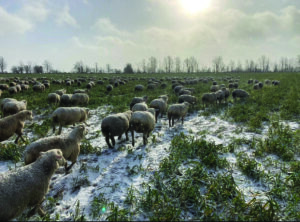
Oats, like other spring cereals, are hard to seed too early unless soil conditions are excessively wet. Frost seeding has proven successful for optimizing yield potential. Cool, moist spring conditions in early plantings promote tillering and help avoid hot, dry conditions during sensitive early growth stages. Early planting dates also advance flowering.
Target seeding dates for oats are:
- April 10 in southern Ontario
- April 15 in central and eastern Ontario
- May 10 in northern Ontario
Nitrogen rates
Using a starter fertilizer and fine-tuning nitrogen (N) rates has also been shown to increase yields. In trials at the Winchester and New Liskeard research stations led by Dr. Josh Nasielski, University of Guelph, the optimum N rate was 90 kg/ha applied pre-plant (Table 1).
Applying all N up front produced the highest yield potential, but split applications helped reduce lodging risk. Fungicides were also extremely effective at reducing lodging at high N rates compared with plant growth regulators.
In trials at Winchester and New Liskeard, the optimum nitrogen rate was 90 kg/ha applied pre-plant.
Crown rust
Crown rust is the most important disease of oats. Yield losses as high as 75 per cent and a 50 per cent reduction in test weight have been reported when a susceptible variety is grown and left untreated. Selecting varieties with good crown rust resistance, managing buckthorn (an alternate host for crown rust) and applying fungicide before head emergence are effective strategies. Crown rust also increases lodging risk, but fungicide applications, especially when disease is present, can help reduce lodging. •
Table 1: Comparing N rate and timing in oats
| N application timing and rate | 0 N control | 90 kg pre-plant | 90 kg at GS 60 | 60 kg N pre-plant and 30 kg at GS 60 | 30 kg N pre-plant and 60 kg at GS 60 |
| Yield (bu/ac) | 84 | 97 | 89 | 95 | 85 |