
Tools, tactics and trade-offs in resistance management
How growers across Canada are adapting to region-specific resistance risks
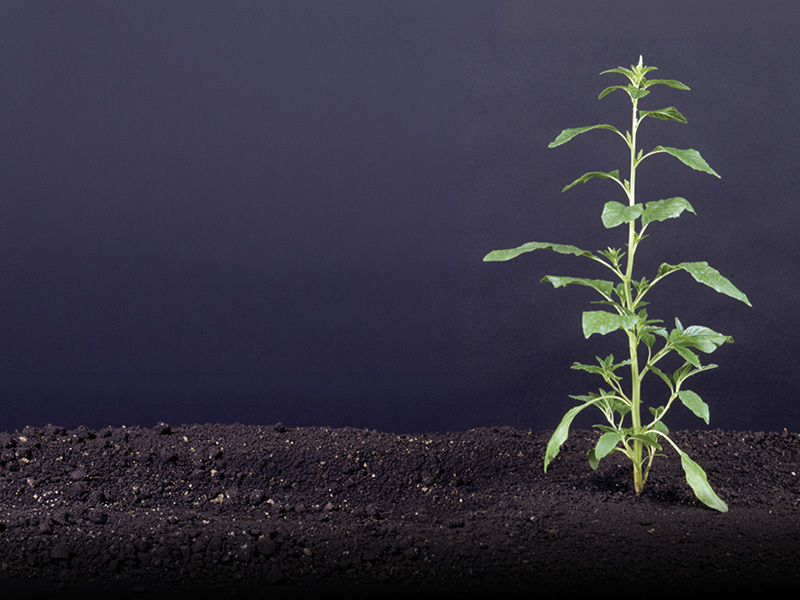
From waterhemp and ryegrass in the East to kochia and wild oats in the West, Canada’s weed challenges and resistance risks are shaped by local conditions, cropping systems, and evolving management strategies.

Herbicide resistance is inevitable. It’s only a matter of time before the genetic makeup of weeds adjusts to repeated chemical use and production practices.
“Some production systems are more at risk than others, like those that grow continuous soybeans and use the same mode of action each year,” says Mike Cowbrough, weed specialist for field crops with the Ontario Ministry of Agriculture, Food and Agribusiness (OMAFA).
“No matter what best management practice you choose, resistance will only be delayed. And you can do everything right to prevent resistance, but all it takes is resistant weed seeds moving in from equipment or wildlife to cause a management challenge.”
The reality is challenging, but Cowbrough says it’s not all doom and gloom. He points out the industry has better tools to identify weed species than it did 20 years ago, and more growers are adopting practices to manage and delay resistance.
There are also multiple benefits to managing resistance.
“The practices that make good sense for weed control also make good economic sense for the farm business,” he says, pointing to strategies like adequate soil fertility, which speeds crop canopy closure and helps restrict weed growth while contributing to yield. He cites residual weed control as another example, noting that while additional herbicides and applications can add costs, the reduction in weeds during the current and subsequent growing seasons generally results in good economic returns.
Cowbrough explains that the key to managing weeds, resistant or not, is to establish the most competitive crop possible and create conditions where weeds are less likely to germinate. He points to row spacing as another example where the right approach not only makes agronomic and financial sense for growers, but also contributes directly to weed management.
He references key management strategies for reducing waterhemp seed in the soil from research conducted at the University of Guelph Ridgetown Campus. The study examined integrated weed management strategies targeting herbicide-resistant waterhemp in the soil seedbank.
“Takeaways from the study show that row spacing, crop rotation, and effective residual herbicides are key management strategies for reducing waterhemp seeds in the soil seedbank, and that translates to more control in-season and for future crops,” Cowbrough says.
WESTERN PRESSURES BUILD
Widespread kochia infestations across the Prairies are also proving Cowbrough’s point. No matter what growers do to prevent this prolific weed, herbicide-resistant kochia is appearing in fields, ditches, and marginal growing areas everywhere.
“Kochia is quickly eclipsing wild oats as the number one problem weed in Western Canada,” says Shaun Sharpe, a research scientist with Agriculture and Agri-Food Canada in Saskatoon.
“It develops resistance quickly, spreads rapidly and in abundance, and seems to thrive in the dry, drought-like conditions we’ve had over the past few years.” Sharpe shares Cowbrough’s view on the inevitability of weed resistance. He’s especially concerned about the eventual arrival of Palmer amaranth, a member of the pigweed species that has shown resistance to multiple herbicide modes of action in the United States, including Groups 2, 3, 4, 5, 9, 10, 14, 15 and 27.
“Unfortunately, it’s just a matter of time before Palmer amaranth becomes a problem in Canada, after all, it moves effectively through wildlife, and it’s hard to control waterfowl who are known to spread the weed,” says Sharpe. While kochia tops the list of herbicide-resistant weeds in Western Canada, wild oats and cleavers aren’t far behind.
“Wild oats are actually the number one problem weed in all three Prairie provinces,” notes Sharpe, explaining that the weed seeds can last in the soil for up to 10 years and have shown resistance to Groups 1 and 2.
There is some good news for Prairie growers: kochia seeds only persist in the soil seedbank for two to three years, making intensive weed management in problem areas an effective option for longer-term control.
Similar to Cowbrough’s approach, Sharpe encourages growers to adopt a mix of weed control practices that make practical and economic sense.
“Chemicals are still the backbone of how we manage weeds in crop production systems,” notes Sharpe, reminding growers that every field requires its own unique strategy that includes cultural and chemical solutions. “What we need to do is preserve their effectiveness by introducing cultural practices and strategies that complement chemicals to ease the pressure and reliance.”
KNOW YOUR PROBLEM WEEDS
“The biggest weed problem is the species that’s in your field,” says Cowbrough, reminding growers that any weed can be a problem, even those that aren’t herbicide tolerant.
While pigweed species, including red, green, waterhemp, and Palmer amaranth, are among the most concerning herbicide-resistant weeds in Ontario, the most common problem weed is actually lamb’s-quarters because of its abundance.
Bluegrass and herbicide-resistant ryegrass are also on Cowbrough’s radar. Both are perennial species that can be difficult to control, particularly in soybeans and wheat, and have become more persistent over the past five years.
He believes bluegrass infestations may be spreading from established populations along roadsides into fields. One of the main weed control challenges is cost, as herbicides targeting these grassy weeds can be more expensive and must be used alongside broadleaf control products.
“Not a lot of growers are affected yet, but these grassy weeds are significant and can become a real problem once they are established in a field,” says Cowbrough.
According to Sharpe, kochia remains the dominant problem weed in Western Canada, especially as it continues to spread northward. Palmer amaranth is also on his radar, and he is watching closely as it advances through the U.S. and threatens both Eastern and Western Canada.
MANAGING WEEDS
Managing herbicide-resistant weeds requires practical strategies, along with a willingness to get creative when necessary.
Sharpe says diversification is essential to manage weeds, including herbicides, crop types and rotations, and, “approaches to just about every aspect of crop management.”
Cultural practices such as seeding timing, seedbed preparation, planting competitive crops, mowing weed patches, seeding cover crops, and interseeding should all be considered when preventing or dealing with herbicide-resistant weeds.
For growers dealing with herbicide-resistant waterhemp or other pigweed species, timing is also critical. These weeds can emerge throughout the growing season and even after harvest, allowing them to establish and gain a head start the following year.
“There’s no magical herbicide that gives residual control after harvest,” he points out, but strategic herbicide applications can help extend control. He recommends a two-pass weed control strategy to establish and extend residual activity for as long as possible, reducing the risk of late-season weed escapes.
One of the most important aspects of managing herbicide-resistant weeds is proper identification. Cowbrough explains that resistance can be confirmed through two methods: molecular testing and plant bioassay. Both are available to Ontario growers, with testing information and sample collection tips accessible through OMAFA resources.
“It’s important to know what species of weed resistance you have in your field in order to prevent it from spreading,” states Cowbrough.
“If you have herbicide failures, conduct a test. The sooner you know what you’re up against, the sooner you can develop a plan.”
STAY PROACTIVE
There are still plenty of questions, misconceptions, and assumptions about herbicide resistance, but both Cowbrough and Sharpe encourage growers to stay alert and be diligent when identifying suspicious weeds in their fields.
“It’s human nature — change won’t happen unless there’s a significant impact,” says Cowbrough.
But rather than waiting for that impact, he urges growers to be proactive.
He reminds growers that putting crops in the most competitive position possible is one of the most effective strategies that often pays for itself while also helping to manage weeds.
“We can’t spray our way out of an issue we’ve created with pesticides,” reminds Sharpe. “But we can introduce management strategies that reduce reliance.” •