Field Observations
SUMMER 2026
September 17, 2026
The grain corn crop is moving toward physiological maturity, also known as black layer, as the month progresses. Soybean harvest is just beginning on early-season varieties, with more acres expected to come off in the coming weeks. Spring cereal harvest is still underway, although it is nearing the end. And, let’s not forget about winter wheat planting — read up on seeding date and rate, weed management, and more.

Corn
Some short-season corn has reached black layer, or will reach it shortly, which marks physiological maturity. Black layer seals the kernel from further development or an increase in kernel weight. Kernel moisture content at black layer formation usually ranges from 30 to 35 per cent. May-planted corn is at about half to three-quarters milk line as it moves toward black layer. Continued warm weather will help the crop mature and dry down, and reduce drying fees.
If tar spot is found in fields at this stage, as plants are in dent to black layer, yield impacts should be low.
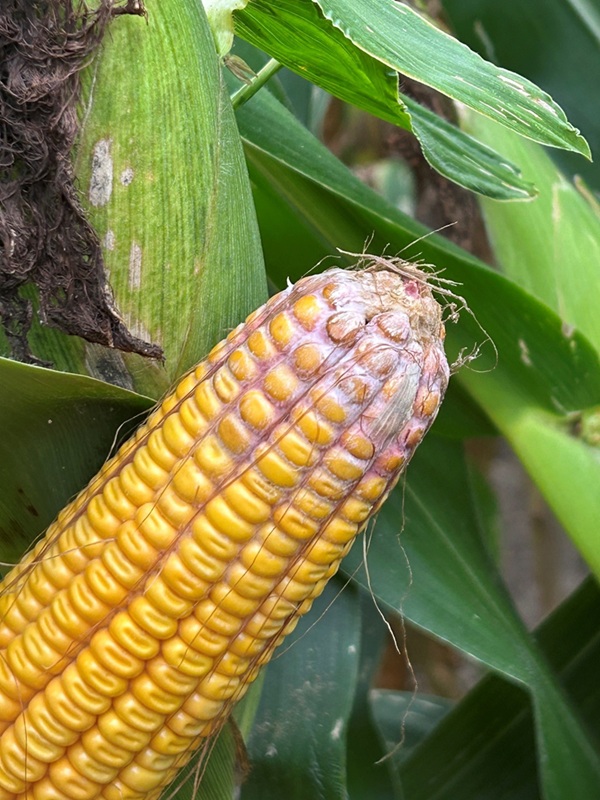
Earlier fungicide applications helped hold back the disease for the expected 14- to 21-day window, but some areas may have seen favourable conditions that allowed the disease to continue developing. If fields die down early, be sure to monitor stalk strength, as the plant may have cannibalized all remaining reserves to finish the grain. Fields with poor stalk integrity should be prioritized for early harvest to avoid lodged corn.
Northern corn leaf blight and some rust might also be identified in fields. Now is a great time of year to get into the field and spot differences in corn hybrids with respect to leaf disease and ear rots.
Overall, there have been very heavy dews, which can increase the chance of ear rots. Hybrids with tight ear husks may experience this more, as moisture is held close to the ear with less opportunity to dry out than with looser husks. The 2025 DON report, produced by the Ontario Corn Committee, is available. The trial evaluates how sensitive hybrids are to accumulating DON in grain under high disease pressure. The 2026 report will be published in the coming months, after corn harvest.
Corn silage harvest will be occurring shortly.
Soybeans
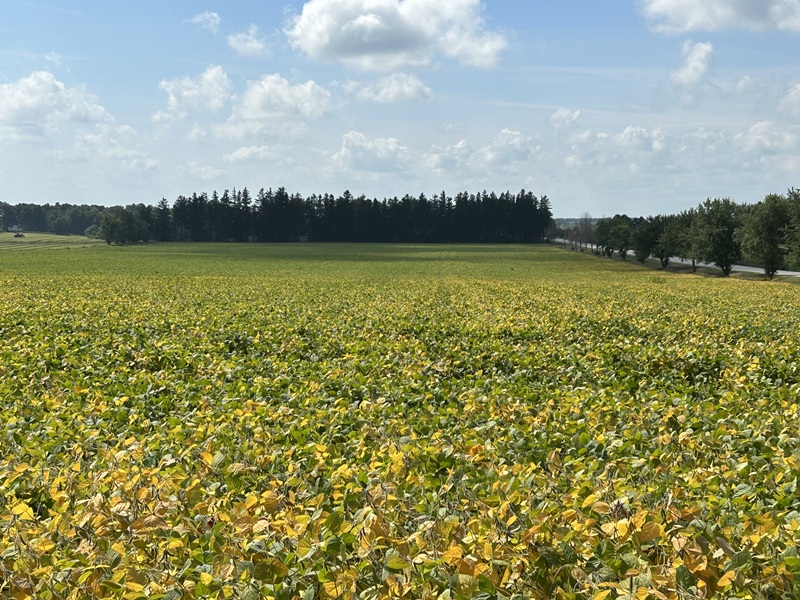
Soybean harvest has just begun and is still sporadic, but it will continue as weather and crop maturity allow over the next few weeks across the province. With a couple of weeks of moderate temperatures and little rain in the outlook, the key will be harvesting at optimum moisture and not below.
Around this time of year, patches within fields often become obvious and could be due to sudden death syndrome or soybean cyst nematode.
Residue management is crucial to creating a good seedbed for winter wheat planting. Make sure to check the spread pattern of the combine, pay attention to thicker areas of spread or uneven spread, and adjust the combine accordingly.
Using cover crops after corn and soybeans can offer a great opportunity to improve soils. More on why and how this can be done here.
Cereals
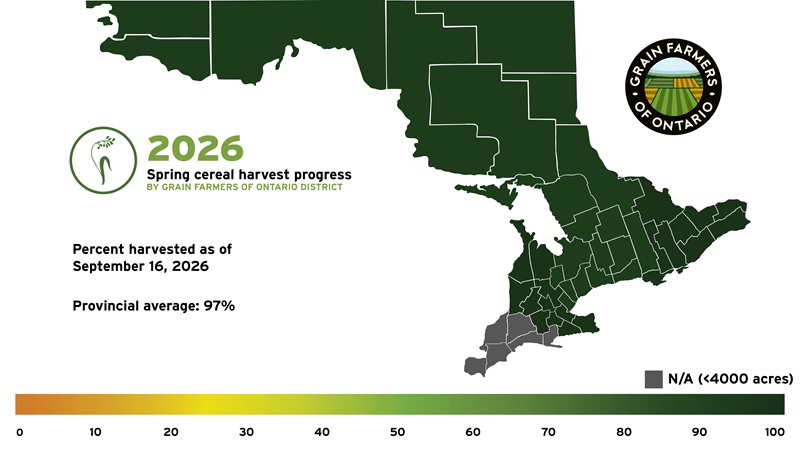
Field Progress, Grain Farmers of Ontario’s weekly estimate of planting and harvest across the province by district, reports that spring cereal harvest — barley, oats, and spring wheat combined — was at 97 per cent as of Wednesday, September 16, 2026.
With soybean harvest just getting started, winter wheat planting will follow close behind to support early establishment of the wheat crop, if ground conditions allow. Some fields are wet in areas that have received regular rains.
Watch this recently recorded GrainTALK webinar with Joanna Follings, OMAFA, which focused on how the 2026 season went and how to best prepare for planting winter wheat this fall, with a focus on mitigating and managing barley yellow dwarf virus, optimizing planting dates and seeding rates, and more. Watch the recording
Much of the crop’s yield is determined at planting. Planting in the optimum window, at the right population and planting depth, is the start of optimum yields. A consistent seed depth into moisture allows for even emergence. Planting depth is important to ensure root development for nutrient uptake and to help anchor the plant, preventing heaving during the spring thaw. Usually, a planting depth of one to 1.5 inches is ideal. Seed placement closer to 1.5 inches can help emergence if the soil is dry or fluffy, allowing the seed to be placed in moisture for rapid germination.
Winter wheat can be planted too early, increasing the risk of barley yellow dwarf virus vectored by aphids, which feed on wheat seedlings; Hessian fly; snow mould; and lodging if populations are not managed for earlier growth. That said, planting earlier than the optimum window in parts of the province can increase yield if managed properly.
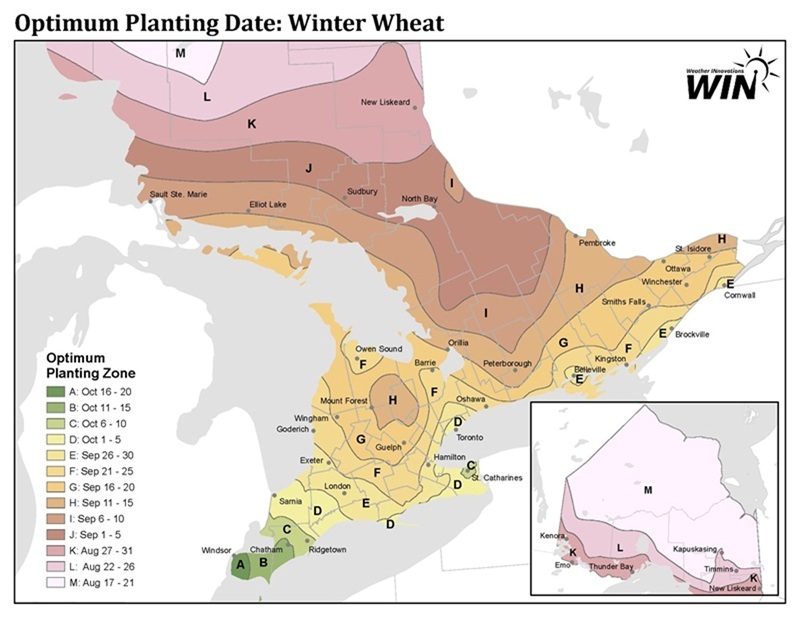
Seeding rates of 1.2 million to two million seeds per acre are the norm, based on planting date, soil type, and variety. Lower populations are used for earlier planting, loamy soils, and tall varieties. Later planting times for individual areas, heavy soil, and shorter varieties benefit from higher seeding rates to keep plant densities higher. As planting gets later, seeding rates should be increased to raise plant density and increase the potential number of heads next spring, as tillering may be reduced due to late planting. A general rule of thumb is to reduce rates by 100,000 seeds per acre per week if planting before the optimum date. If planting past the optimum planting date, increase rates by 100,000 seeds per acre per week.
Applying starter phosphorus fertilizer in-furrow with the winter wheat seed is beneficial to yields, as reported in this Field Crop News article.
Variety selections are crucial; more on this topic was covered in last week’s e-news.
Fall weed control is critical in winter cereals, especially for difficult-to-control weeds like bluegrass and Canada fleabane. Chickweed, dandelion, and shepherd’s purse are also among the key weeds that can be controlled this fall in wheat fields, when weeds are still small and timing is optimum. Applying fall weed control also opens the window in spring for ideal application timing for fungicide and/or PGR applications, while reducing the risk of injury from too many products in the tank or the wrong timing for key products.
As wheat is planted, reference A Visual Guide to Winter Wheat Staging for key development stages, wheat anatomy, and more.
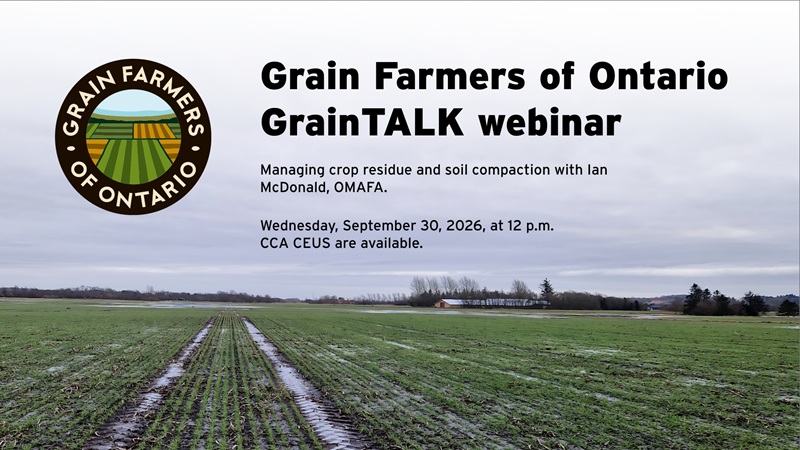
Upcoming GrainTALK webinar Join Ian McDonald, OMAFA, on Wednesday, September 30, at noon, as he shares insights on managing crop residue and soil compaction this fall. Register now.
September 10, 2026
While school buses are rolling across the province, corn and soybean crops continue to mature. Spring cereal harvest is ongoing, while soybean harvest and winter wheat planting are approaching.
Corn
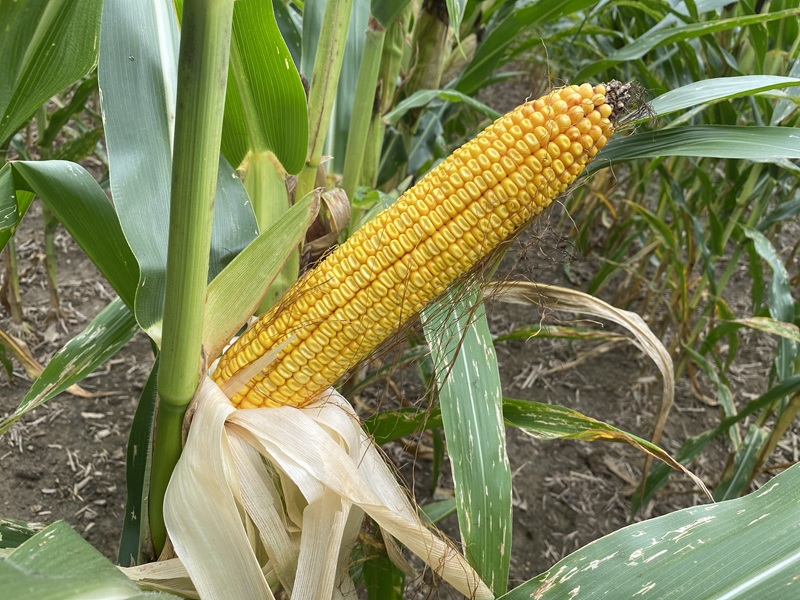
Corn across the province is moving toward maturity, or black layer, as the milk line moves toward the kernel tip. The crop’s maturity depends on its location within the province and planting date. Variation in maturity can be caused by several factors, including hybrid genetics, planting date, and disease pressure.
At this point, more warm weather is required for the crop to reach maturity and for grain to dry down as fall progresses. Good kernel depth and hard, dense starch packed into the kernel will add kernel weight and help maintain maximum yield potential.
If corn plants die prematurely because of frost, drought, or disease, yield loss is possible, and test weights may be affected. The impact will vary depending on the crop stage. Information on yield loss and the effect on test weight from dough stage, R4, when leaf damage can cause a 41 per cent grain yield loss, to maturity, R6, is available in this article. Corn plants that die prematurely before reaching true black layer, when the milk line is at 100 per cent, can also experience grain dry-down issues because the grain does not have an abscission layer to block moisture migration in the kernel. If the crop has not reached black layer, grain may rewet during wet weather, creating harvest challenges.
Severe storms brought damaging winds, hail, and heavy rain to regions of the province over the past week, causing some crop damage. More information on post-hail considerations can be found here. Fields that are lodged should be prioritized as harvest approaches.
Soybeans
In some years, harvest has begun in earnest by this week for early-season varieties. This year, harvest will start slightly later because of later planting and slightly lower heat unit accumulation, as discussed in previous e-news updates. However, the warm temperatures forecast this week will accelerate maturity and dry down. Yellowing and leaf drop are also occurring quickly. For crops that are physiologically mature, R7, it takes roughly eight to 10 days to reach full maturity, R8, when the crop is brown and 95 per cent of the pods are brown. At this stage, soybeans will rattle in the pods, and all leaves will have dropped. It typically takes another five to 10 days after full maturity before seed moisture reaches a harvestable level.
If aiming for a preharvest burndown, spray at the correct plant stage. Follow all preharvest intervals, use the appropriate desiccant, and maintain proper water volumes to support efficacy. Preharvest burndowns do not speed maturity or dry down. Instead, they can improve harvestability in fields with high weed densities or uneven maturity. Desiccation should occur when plants reach R7: pods have reached their mature colour, leaves are yellowing, seeds have turned from green to yellow, and seeds have separated from the pods because grain fill has stopped. At this point, desiccation can occur. If desiccation occurs before the crop reaches the correct stage, yield and quality can be affected. Speak with your local agronomist to confirm the correct stage before desiccation. You must always follow label restrictions for preharvest intervals and check with your grain merchandiser. More information can be found here.
As harvest begins, now is the time to establish a suitable seedbed for winter wheat planting. Spreading chaff evenly, avoiding ruts, and maintaining a weed-free field are key components of successful wheat production.
Cereals
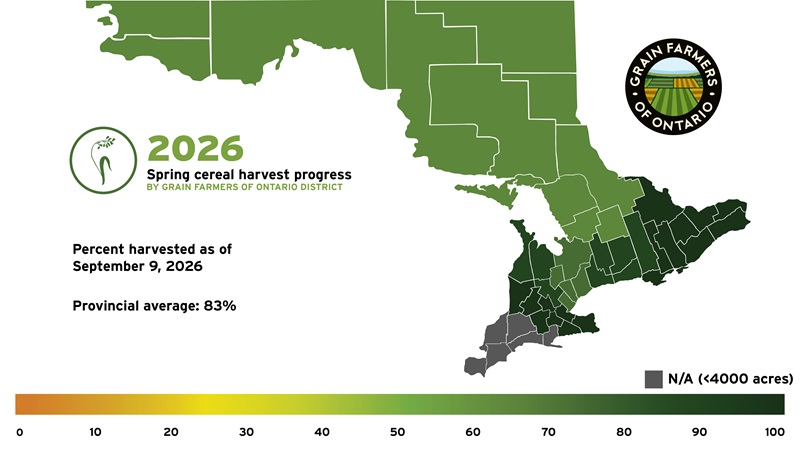
Spring cereal harvest is wrapping up as weather permits.
Field Progress, Grain Farmers of Ontario’s weekly estimate of planting and harvest progress across the province by district, reports that the combined spring cereal harvest, including barley, oats, and spring wheat, was 83 per cent complete as of Wednesday, Sept. 9, 2026.
Winter barley planting has begun.
As winter wheat planting approaches, review the 2026 Ontario Cereal Crops Committee trial data at GoCrops.ca.
When evaluating the data, focus on test plot locations near the area where planting will occur. The Ontario Cereal Crops Committee has several locations across the province to support regional comparisons. Ideally, plant more than one variety. Selecting early- and late-maturing varieties can spread the risk associated with weather and disease.
Consider the following when evaluating potential varieties:
- Yield: Yield may be the first trait considered when selecting varieties. Before choosing only the highest-yielding options, narrow the list by removing varieties that do not suit the intended marketing plan or cannot be produced under the upcoming season’s management plans.
- Fusarium head blight resistance: Fusarium head blight is a profit-robbing disease, and available varieties vary widely in susceptibility. If fungicides will not be used, select the most resistant varieties available. Comparing managed and unmanaged trials can offer valuable insight. Be sure you understand how to manage wheat for the best possible yields.
- Standability: As harvest nears, attention turns to standability. Lodging can reduce yield and quality and create harvest challenges when wheat must be picked up off the ground. If applying high nitrogen rates or manure, consider a shorter variety or the use of a plant growth regulator.
- Seed size: Know your seed size, and adjust the drill or planter to achieve the correct target population.
- Seed quality: Conduct a germination test to determine seed quality before planting. If the germination rate is low, adjust the seeding rate to achieve the target plant population.
- Disease resistance: Resistance to other diseases is also important because infections reduce yield potential. Although many diseases can be managed with seed treatments and fungicides, treatment and management costs may be higher.
- Early- and late-flowering varieties: Planting varieties with different flowering dates can reduce disease risk and spread harvest timing, improving harvest efficiency.
- Management: Ensure current crop management plans align with the varieties under consideration.
If using bin-run seed, cleaning and treating the seed before planting is highly recommended. Treating seed helps prevent dwarf bunt and other diseases. Planting certified seed for next year’s bin run is a good management strategy. Remember to clean any handling equipment that may handle treated seed.
Finally, timely planting gives winter wheat the best opportunity to achieve high yields. Get wheat in the ground as soon as possible.
GrainTALK webinar: Reflecting on 2026 and setting the stage for the 2027 winter wheat crop
Watch this recently recorded GrainTALK webinar featuring Joanna Follings of OMAFA, who discusses the 2026 season and how to prepare for winter wheat planting this fall. Topics include mitigating and managing barley yellow dwarf virus, optimizing planting dates and seeding rates, and more.
Upcoming GrainTALK webinar
Join Ian McDonald of OMAFA on Wednesday, Sept. 30, at noon as he shares insights on managing crop residue and soil compaction this fall. Register now.
September 3, 2026
As the calendar turns to another month, corn and soybean crops are also moving into another stage in their reproductive cycles, getting closer each day to maturity and harvest. Grain corn is staging up to R5, while some soybeans have reached R7. Spring cereal harvest is still ongoing in some areas of the province.
Field observations are now available in a new format — you can listen to the weekly reports.
Corn
The corn crop is filling grain this week as it reaches the dent (R5) stage, with a visible milk line starting to move across the face of the kernel. Some fields are starting to show brown husks, a sign that the milk line is approaching the halfway mark before reaching the black layer. Timely rains will help fill kernels over the next few weeks. If plants remain healthy, full kernels with good tip fill and strong test weight can be expected this fall.
Now is a great time to look for insects and their damage. Did certain treatments work better than others? Also, look at how hybrids are finishing the year. Are there some with less disease? Do some have better stalk strength? Did the timing of rainfall and pollination affect grain development?
Corn plants at this point in the year may show yellowing bottom leaves that look like they are drying up. Depending on conditions, this may indicate a potential nitrogen shortage. By R1, the plant has taken up about 65 per cent of its nitrogen requirement, with the rest taken up during the grain-fill period. Nitrogen is a mobile nutrient within the plant, and it will move from the bottom leaves to the cob for grain fill, cannibalizing the lower leaves as it moves to the area of higher demand. If there is a distinctive V pattern between the yellow and green tissue on the lower leaves, nitrogen is being mobilized.
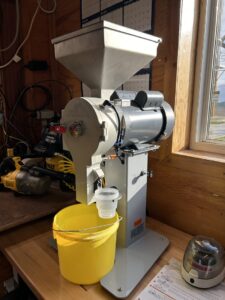
As harvest approaches, it is valuable to be aware of proper DON testing procedures and how to achieve consistent, accurate results. Deoxynivalenol (DON) is a mycotoxin naturally produced by the fungus that causes Gibberella ear rot in corn. Infection occurs through the corn silk channel when ideal temperatures — approximately 27 C — and higher humidity are present. Cool, wet conditions after pollination favour continual disease development and determine the level of infection. Effective sampling, detection, and quantification of DON are challenging due to its uneven distribution on the ear and across the field, resulting in infected and non-infected kernels in the same grain sample.
Accurate sampling is crucial to reduce false readings and improve grain management during delivery. University of Guelph research has highlighted essential improvements to the DON sampling protocol for better testing accuracy. More can be learned about proper sampling and testing techniques in this video.
Soybeans
Soybeans are starting to show yellow leaves or even drop leaves in some regions of the province. Earlier planting dates and earlier varieties are maturing and are very close to the physiological maturity (R7) stage, if not already there in some fields. Uneven field maturity indicates that not everything is uniform in the field. Fields that were replanted and patched this spring will show different maturity because of differences in planting dates. Fields that were planted during one planting period may have low spots that are greener because of less stress from more moisture, or delayed spring emergence due to waterlogged conditions. Areas of fields that are turning yellow more quickly than others need to be investigated, as this may indicate disease or insect pressure, such as spider mites. It may also be soybean cyst nematode (SCN) populations in the soil or late-season root rots. Sudden death syndrome (SDS) can appear at this time of year, as it has two phases: a root rot phase and a foliar symptoms phase, which usually shows symptoms after flowering. Charcoal rot is also being identified in soybeans. Yellowing could also be caused by moisture deficits, but it usually remains a mystery until scouting. Scouting the crop never stops, and finding the cause of the problem as soon as it is seen is important. Diagnosing leaf, stem, or root issues will be difficult at harvest, and proper identification of problems will lead to better management of the field in future years.
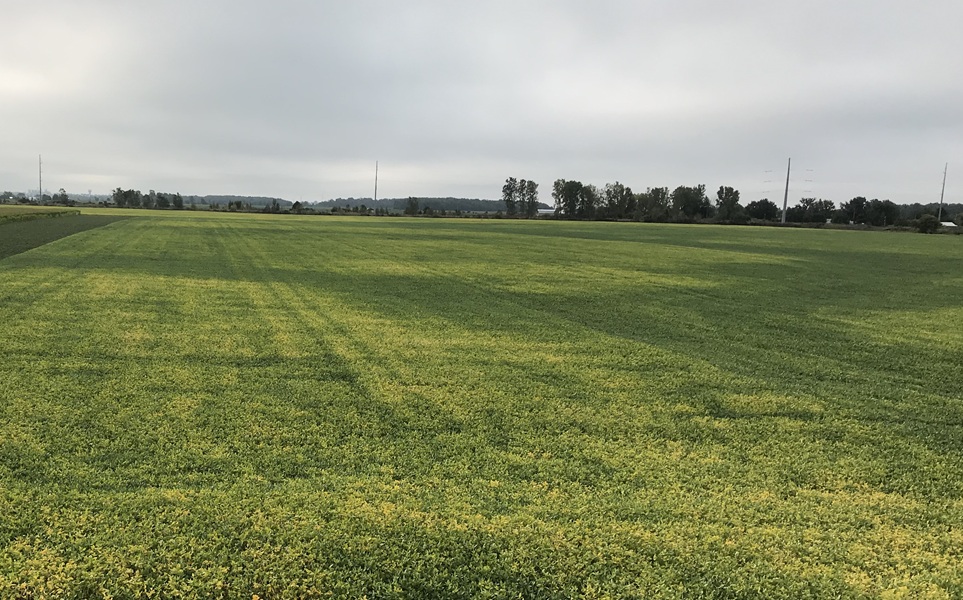
Soybeans in the fuller maturity areas of the province, mostly above 3,000 crop heat units (CHU), still have many green fields due to late planting. The soybeans are still at the full seed (R6) stage, but some early fields are starting to turn yellow. Rains last week helped finish the crop.
And with the maturation of soybeans comes a return to school. A friendly reminder that school buses will soon be back on the roads. Be on the lookout and stop for all buses. And just because school buses are running doesn’t mean all kids will be at school, due to sicknesses, etc. Be on the lookout for children when visiting farms and travelling around the countryside.
Cereals
Field Progress, Grain Farmers of Ontario’s weekly estimate of planting and harvest across the province by district, reports that spring cereal harvest — barley, oats, and spring wheat combined — was at 66 per cent as of Wednesday, September 2, 2026. Rain delays are keeping the remaining acres in fields.
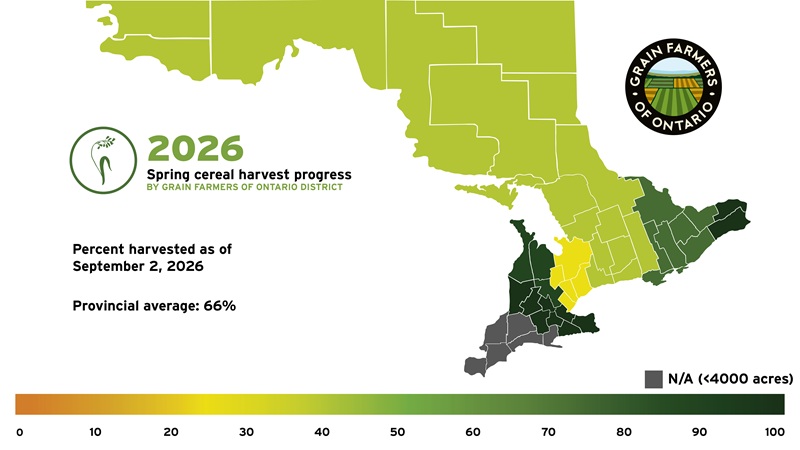
Winter wheat planting will begin in the coming weeks. If using equipment for harvest that also handles treated seed, ensure proper cleanout procedures are followed.
As winter wheat planting approaches, have a plan in place for fall weed control. Fall weed control — or, similarly, post-harvest weed control on harvested cereal fields — allows farmers to target weeds that emerge later in the growing season and helps set up a cleaner field for the next crop. More can be learned here.
Look ahead also to managing barley yellow dwarf virus this fall.
Also consider what BMPs you might incorporate on recently harvested cereal fields to prepare them for the next crop.
Upcoming GrainTALK Webinars
Join Joanna Follings, OMAFA as she shares how to best prepare for this fall when planting winter wheat while focusing on mitigating and managing Barley Yellow Dwarf Virus, optimizing planting dates, seeding rates, and more.
Join Ian McDonald, OMAFA as he shares insights on managing crop residue and soil compaction this fall.
August 27, 2026
Timely rains were received across much of the province this past weekend, helping crops continue to pack energy into the grain. Corn is at stages up to R5, soybeans are at stages up to R6, winter wheat harvest has mostly wrapped up, and spring cereal harvest continues.
Corn
The earliest-planted corn is starting to form a visible milk line as it reaches the dent stage (R5), while most of the crop is in the dough to early dent stage this week. Once kernels dent, average grain moisture is 55 per cent. June-planted corn is at the milk stage (R3). It is important to know the crop’s growth stage and whether grain will mature before a killing frost. In some cases, alternative uses other than harvesting for grain may be advisable for late-planted fields.
Through September (if warm weather continues), corn will see rapid movement of the milk line as the plant closes in on physiological maturity (black layer). The next few weeks are the critical grain fill period for the corn crop when the plant focuses all its energy on filling the kernel. The depth and weight of the kernel will be determined over the next three weeks. Maximum sunlight (solar radiation) and adequate rainfall (moisture) will provide the crop with the best opportunity to fill the kernels with starch.
The milk line of the corn kernel is the line on the kernel where the hard starch meets the milky wet part of the immature kernel. This milk line will continue to progress to the tip of the kernel as the corn produces more starch and packs it into the kernel. Once the milk line has reached the tip (sugars converted to starch), the kernel is full, and the black layer (abscission layer) is formed, which restricts the transfer of sugars in or out of the kernel.
From May 1 to August 24, Elora accumulated 2,221 crop heat units (CHUs), compared with the five-year average of 2,290. For the same period, Ridgetown accumulated 2,917 CHUs, compared with the five-year average of 2,809; Kemptville accumulated 2,443 CHUs, compared with the five-year average of 2,449; and Earlton accumulated 2,093 CHUs, compared with the five-year average of 2,112. Overall, Ontario has experienced cooler nighttime temperatures over the past month than are typical for this time of year, resulting in slightly lower CHU accumulations in some areas.
Be on the lookout for tar spot. Humid, foggy conditions can allow for extended leaf wetness over multiple hours — ideally seven to eight hours — and warm weather between 15 C and 21 C. Ideal conditions for tar spot development have occurred in some areas, though the disease has not been as widespread as in some past years. The impact on yield depends on when the disease arrives on the plant compared with the plant’s growth stage; more mature crops will see less impact.
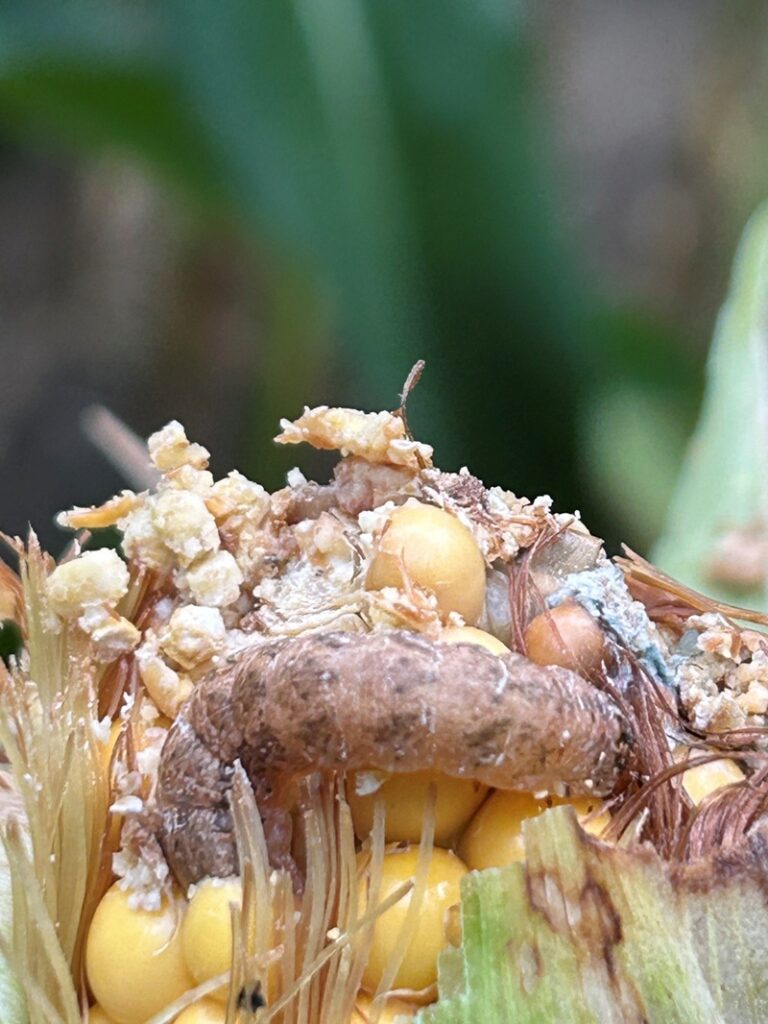
Western bean cutworm larvae feeding is being observed. Keep records of fields that saw increased pressure. In fields where this pest is present, watch for mould development as harvest gets closer. For a full list of corn hybrids that have Bt insecticidal proteins that provide protection against western bean cutworm, view the Canadian Corn Pest Coalition list, as some hybrids have traits for this pest and others do not.
Corn rootworm and European corn borer need to be scouted for. Report any signs of unexpected injury on Bt hybrids. More on these pests and what to look for here.
Soybeans
Soybean pods continue to fill this week, with many fields reaching the R6, or full seed, stage of development. Any stress at this point in the season will prompt the plant to drop smaller pods, as its main goal is to fill the current pods. Looking at the seven-day forecast, warm weather and some rain on the weekend should allow good seed formation to continue.
Soon, especially in shorter-season soybeans, crops will reach R7, or beginning maturity, when one pod on the stem has reached mature pod colour. The change from R6 to R7 can span roughly nine to 30 days, depending on weather and other factors affecting the plant.
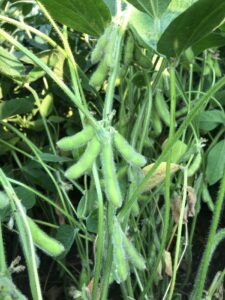
A full moon is due August 28. If higher-elevation and more northern areas get past that point without a frost, they may breathe a small sigh of relief, as heavy frosts should still be a few weeks away. The next full moon is September 26.
As harvest approaches, be sure that grain handling equipment is clean and ready to handle harvested grain, especially if it has handled treated seed or fertilizer. More info on handling treated seed and clean out can be found here.
Yield estimates are being done at this time of year. A simple method to estimate soybean yield is: (plants/acre x pods/plant x seeds/pod) ÷ seeds/lb ÷ lb/bu = average bu/acre.
An example of this could be: (134,000 plants/acre x 24 pods/plant x 2.8 seeds/pod) ÷ 2,500 seeds/lb) ÷ 60 lb/bu = 60 bu/acre average.
Using 2500 seeds/lb is assuming the plants are healthy. Stressed plants could be assumed to have smaller seeds and more seeds per pound, so the number should be increased.
Yield estimates should be taken throughout the field and then averaged to be more accurate.
White mould, phytophthora, and septoria are being identified in fields that have received ample moisture. Some areas received more than seven inches of rain this past weekend.
Spider mites and aphids are also still being identified in fields, with some at threshold.
Cereals
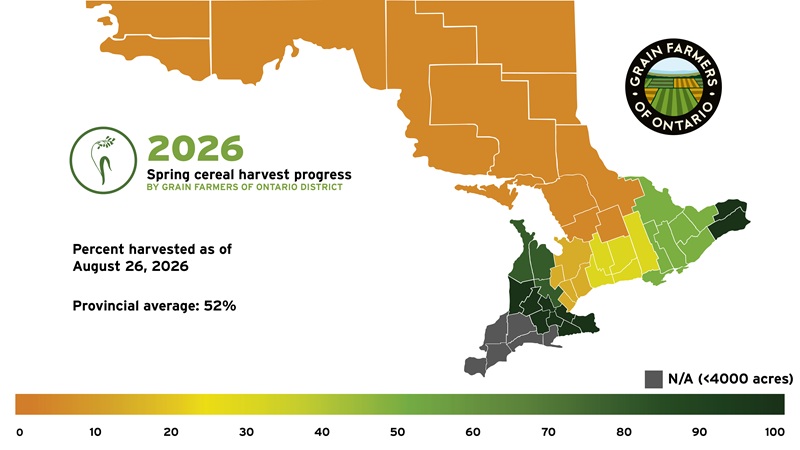
Field Progress, Grain Farmers of Ontario’s weekly estimation of planting and harvest across the province, by district, reports that spring cereal harvest (barley, oats, and spring wheat combined) is at 52 per cent as of Wednesday August 26, 2026.
Winter wheat trials are posted and available at GoCrops.ca. Grain Farmers of Ontario is a voting member on the Ontario Cereal Crop Committee (OCCC). The OCCC publishes yearly trial data.
Foxtail and other weed species are showing up after winter wheat harvest, don’t let them go to seed!
New pest – Orange Wheat Blossom Midge
If it is suspected that Orange wheat blossom midge may have impacted your 2026 winter wheat or spring wheat crops, please complete this survey. Information gathered will help researchers and extension specialists assess the extent of wheat midge damage, identify risks and support the development of management recommendations for future growing seasons.
Upcoming GrainTALK Webinars
Join Joanna Follings, OMAFA as she shares how to best prepare for this fall when planting winter wheat while focusing on mitigating and managing Barley Yellow Dwarf Virus, optimizing planting dates, seeding rates, and more.
Join Ian McDonald, OMAFA as he shares insights on managing crop residue and soil compaction this fall.
Drones in Agriculture
The Canadian Government has recently shared this document on what you need to know when using Remotely Piloted Aircraft Systems (RPAS) for pesticide application in Canada.
August 20, 2026
Crops continue to progress through the reproductive stages (corn R3 to R4, soybeans R5). Although many may be hoping to take a last-minute summer vacation as winter wheat harvest is close to finishing, insect issues continue to be found in fields, along with diseases. Continue to scout.
Corn
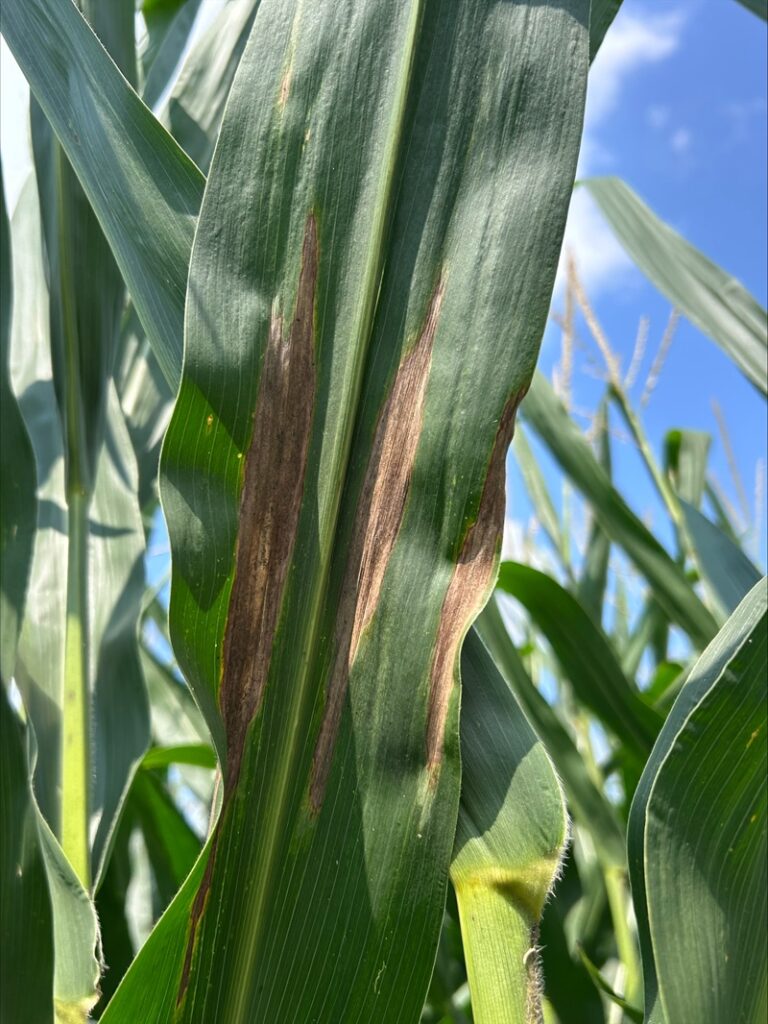
Much of the corn is at the R3 (milk) stage, with earlier planted or earlier maturing fields at R4 (dough) stage. Dough stage occurs about 24 to 26 days after silking, as the kernels’ milky fluid turns to more of a dough-like consistency.
Lots of moisture and humidity at this time of year with moderate temperatures are ideal for leaf diseases, which are beginning to show up in fields. Northern corn leaf blight, Eye spot and others are beginning to be identified. More on these diseases and others can be found on the past Grain Farmers of Ontario GrainTALK webinar.
For corn growers growing corn-on-corn, it is necessary to scout fields, especially for corn rootworm beetle populations and rootworm damage. Ideal weather has increased rootworm populations over the past few years, and damage to corn roots has been showing up. It is imperative to manage this pest, as yield and plant standability can be drastically reduced. If rotated corn fields are beside corn-on-corn fields, the rotated fields can still be at risk for damage. More details on scouting and how to manage this pest can be found in our Grain Farmers of Ontario Agronomy Alert and the GrainTALK Farmer Forum: Corn Rootworm Resistance.
It is that time of year again when yield estimates are being taken, on fields that are developed enough. A quick method for determining potential yield is kernels per cob multiplied by cobs per acre and dividing the kernels by bushel.
Detailed Yield Calculation
Step 1. Ears per Acre – At each sample site, measure 1/1000th of an acre along the row (30″ row = 17.4 feet in row length). Count the harvestable ears in the 1/1000th of an acre. Select random cobs and count kernels where there are complete rings of kernels around the cob and avoid counting kernels on the extreme ends of the ear (butt and tip).
Step 2. Kernel rows per ear – Count the number of kernel rows per ear on every fifth ear and determine the average.
Step 3. Kernels per row – On the same fifth ear, count the number of kernels per row and determine the average.
Step 4. Calculate – Kernels per ear by multiplying row number (step 2) by kernel length (step 3). Take the average number of kernels per ear and calculate by the average number of average cobs per 1/1000th acre, then divide by the factor representing the number of kernels per bushel, usually 90.
Yield (bu/acre) = (average # kernels per cob) x (# cobs per 1/1000 acre) / factor
14-row cob with 30 kernels in a row = 420 kernels per cob
(420 kernel cob) x (32 cobs in 1/1000 an acre) / (90 factor) = 149.3 bushels/acre estimate
Step 5. Repeat this procedure at a representative number of sample sites in the field. Calculate the average yield potential of all the sites to get an estimate of the yield potential of the entire field.
*It is important to use the right factor when estimating yield to get a realistic estimate. Kernel weight and kernel size will have a large impact on the calculation.
| Growing conditions | Factor | Range in kernel number/bushel |
| Excellent – large and heavier kernel | 75-80 | 75,000-80,000 |
| Average – average kernel size and weight | 85-90 | 85,000-90,000 |
| Poor – smaller kernel, lighter kernels | 95-105 | 95,000-105,000 |
Soybeans
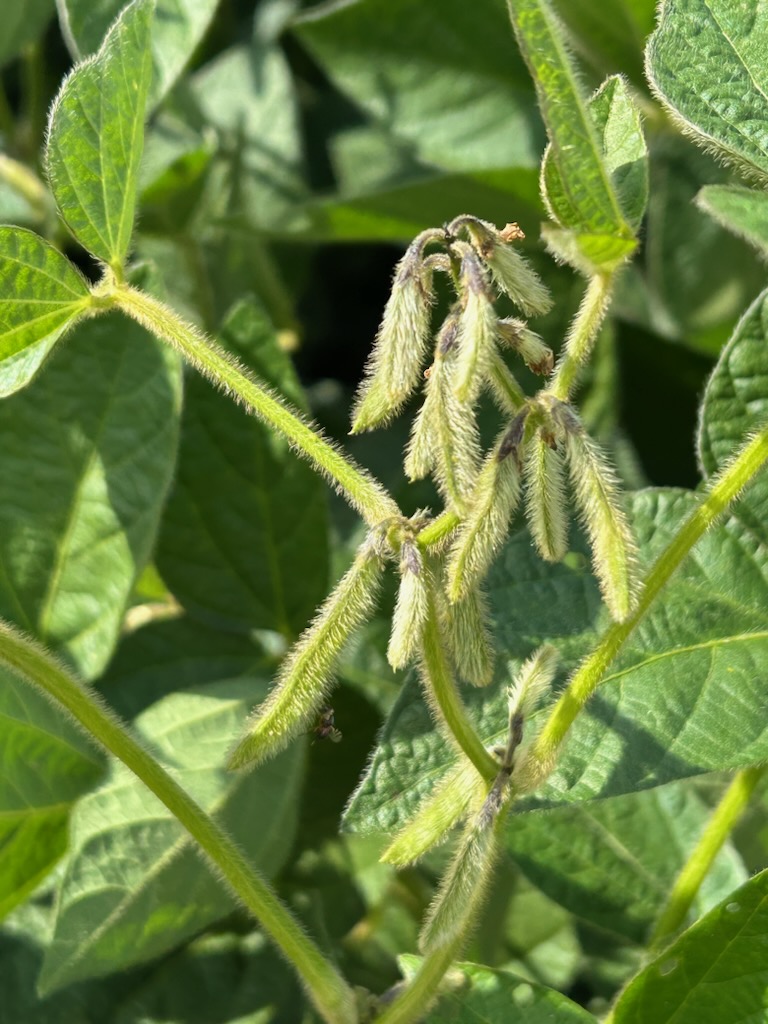
Soybeans are in the R5 to early R6 stage, as the pods near the top of the plant are green and filling the pod. Soybeans stay in the R5 stage for roughly 11 to 20 days. As bean sizes increase on the top pods, the growth stage progresses towards R6. During R5, plant nitrogen fixation peaks, while plants also attain maximum height, node number and leaf area at this stage. Flowers are hard to find as the plant reaches this maturity point and is focused on filling the pods. Sunlight and good moisture conditions over the next few weeks will help size up the soybeans.
When travelling the province there are some weedy fields, harvest may be a bit of a challenge with the weed growth. Desiccation closer to soybean maturity at 80 per cent leaf drop may be a choice in some of the troubled fields. If growing IP beans, volunteer corn in the sample is a big NO along with staining from nightshade. Be sure to plan for corrective actions or plan for loss in premiums. If there are resistant weeds, take note, and make plans to control resistant weeds in next year’s crop as it will become a bigger problem.
Spider mites and aphids are certainly making their presence known in the province. Keep scouting for both pests, be aware of preharvest intervals as the days progress. Grain Farmers of Ontario invests 1.85 million into field crop research across the province each year, some of that research recently has been on spider mites and new species of mites being found in Ontario, some populations of mites are also showing resistance. More information can be found in this recent Field Crop News article.
Be on the watch for White Mould, some helpful identification tips can be found in the link. At this point, many field may be past ideal timing for any action if warranted, but it is always good to scout and know what is in fields and take notes in order to prepare for next year.
Red crown rot (RCR) is a soil borne fungal disease that has not been confirmed in Ontario but has been identified in several nearby states: Kentucky, Illinois, Indiana and Ohio. Due to the fungus persisting in the soil, the disease affects the stem, root and leaves causing premature senescence, with up to 70-80 per cent yield loss in severe situations. More on this disease in the Grain Farmers of Ontario factsheet. See where RCR has been identified so far this season in the US here.
Cereals
Field Progress, Grain Farmers of Ontario’s weekly estimation of planting and harvest across the province, by district, reports that winter wheat harvest is at 99 per cent, and spring cereal harvest (barley, oats and spring wheat combined) is at 38 per cent as of Wednesday August 19, 2026.
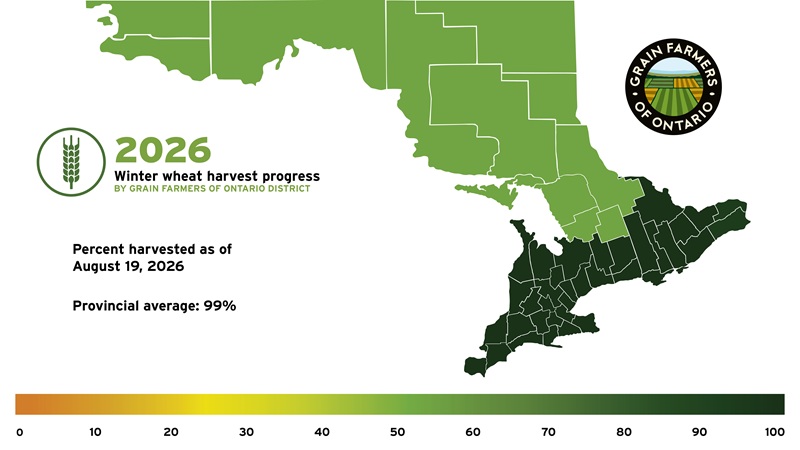
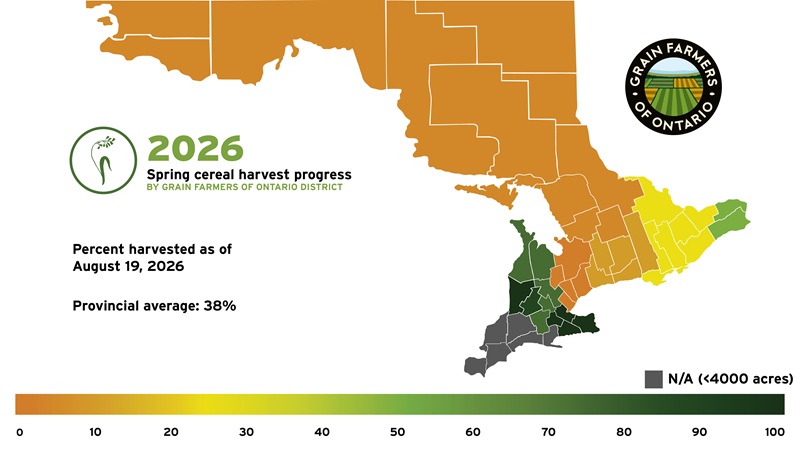
A reminder that winter wheat trial data is being posted online from the Ontario Cereal Crop Committee (OCCC) as it becomes available at GoCrops.ca. Grain Farmers of Ontario is a voting member on the OCCC.
The Agricorp deadline to report winter wheat yields for Production Insurance is September 1.
As winter wheat planting creeps closer, keep in mind that seed treatment is incredibly important. When seed is planted without being treated, the seed is vulnerable to seed and/or soil borne diseases and pathogens such as rhizoctonia, pythium, fusarium species and more. Dwarf bunt can sometimes also be an issue in winter wheat, that has not been treated. A common indication of the disease being a fishy odour given off from the grain, along with masses of black spores. The infection can be initiated when infected seed is planted into cool, moist soil. Fungicide seed treatments can effectively help manage dwarf bunt, as it is a soil borne disease. Setting the combine properly, as well as aeration of harvested grain and time can help reduce odours. Speak with your local agronomist about the best seed treatments to protect seed, to ensure a healthy, productive crop.
Did you notice empty spikelets, shriveled or lightweight kernels, poor grain fill, missing kernels, along with potential lower grain grade and quality in the winter wheat harvest? Damage from Orange wheat blossom midge (OWBM) was identified in wheat fields. This pest causes the most damage in its larvae form as it feeds on wheat heads. Damage from this pest is often hard to identify before maturity, due to heads looking relatively normal while feeding from the larvae is occurring. The environmental conditions in 2026 allowed this wheat midge to flourish, compared to prior years.
Keep records of the affected fields and varieties to better assess damage across the province. This also helps to plan and prepare for future years, through identifying risks and supporting further management recommendations. More on this pest can be found on Field Crop News.
If it is suspected that Orange wheat blossom midge may have impacted your 2026 winter wheat or spring wheat crops, please complete this survey. Information gathered will help researchers and extension specialists assess the extent of wheat midge damage, identify risks and support the development of management recommendations for future growing seasons.
GrainTALK webinar on cover crops
Watch this past GrainTALK Webinar: Farmer Panel – Cover Crops: The How, the Why, and Their Benefits and Challenges
Three experienced farmers- Larry Dyck, Adam Ireland and Andy Van Niekerk share their insights regarding cover crop adoption and implementation. Additionally, discover more about the Ontario Soil Network, a farmer-led network where farmers work together to adopt and promote practical, proven approaches to improving soil health.
August 13, 2026
By the middle of August, it often starts to feel like fall. However, the corn and soybean crops are still putting plenty of energy into grain fill, with corn ranging from late R1 to R4 and soybeans from R4 to R5. The winter wheat harvest is close to wrapping up, and the spring cereal harvest is just beginning.
Corn
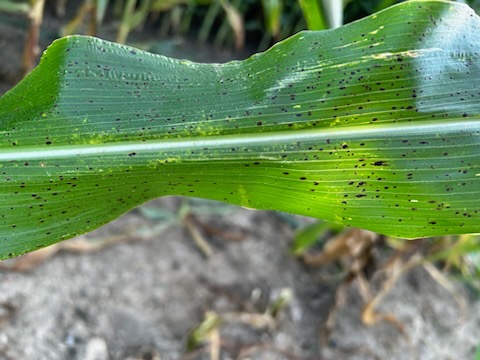
Corn development across the province varies widely because this year’s planting window spanned several weeks. For the most part, the June-planted crop is in the R1 to R2 stage, from pollination to blister. Early-planted corn is in the early dough, or R4, stage, and much of the provincial crop is in the R2 to R3, or milk, stage. The R4 stage occurs roughly 24 to 26 days after silking, when the kernel turns from a milky to doughy consistency.
On average, soil moisture across the province has been exceptional to excessive in some areas, and crops have continued to develop under ideal conditions with little to no drought stress over the past couple of weeks. That said, small, localized pockets have missed the rains and have drought-stressed crops, but they are limited to a small geography.
Tar spot is still a disease to keep scouting for; more information is available in previous weeks’ Field Observations. If the disease is just being found, consider the corn growth stage and the number of days to harvest before applying a fungicide. Be mindful of the pre-harvest interval required for the product being applied to control the target disease. As shown in the photo below, tar spot lesions can aggressively affect green tissue and the plant’s ability to photosynthesize, reducing crop yield through premature death.
Soybeans
Soybeans are in the R4, or full pod, to R5, or beginning seed, stages. As shared in past posts, some later-planted fields are delayed in maturity.
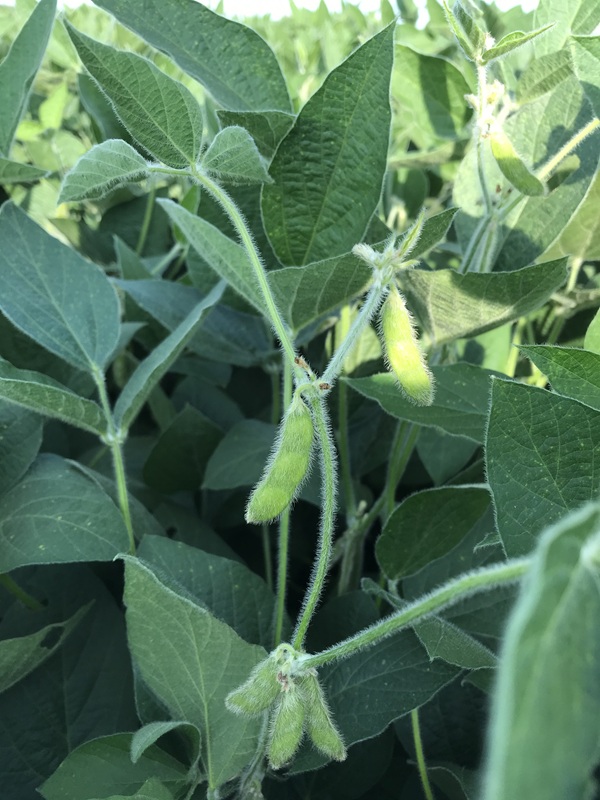
Excellent canopy growth continues, and more pods have formed on the upper part of the canopy. Flowers are tapering off as the remaining pods continue to set seed over the next few weeks. It is hard to estimate yield yet because pods are still forming, and any stress in the next couple of weeks could abort seed or reduce seed size.
Fields are starting to lodge because earlier plant development benefited from ideal growing conditions, timely rains, and adequate heat, creating longer internodes and lanky plants. Higher plant populations, heavy rain, and wind have also contributed to lodging.
Some dead plants are showing up in fields. Make sure to look closely and identify the cause. In some cases, wet roots throughout part of the growing season may have caused root rots in numerous fields.
Every year has the potential for white mould due to the disease triangle: a susceptible crop, favourable environmental conditions, and a pathogen. Conditions are an important driver of this disease.
Red crown rot is a soil-borne fungal disease that has not been confirmed in Ontario but has been identified in several nearby states, including Kentucky, Illinois, Indiana, and Ohio. Because the fungus persists in the soil, the disease affects stems, roots, and leaves, causing premature senescence and yield losses of up to 70 to 80 per cent in severe situations. More information is available in the Grain Farmers of Ontario factsheet.
Overall, look for insights across fields to help identify the cause of any symptoms that may be showing. Knowing the correct cause of a problem will lead to better decisions in the future, including rotation, population, and variety selection.
Cooler nights are signalling that we are in the second half of summer as day length shortens. Even though it is still August, soybean harvest will be here before we know it. Now is a good time to ensure grain handling equipment is free from any treated seed or foreign material. Helpful tips to reduce the chance of contamination are available in the Grain Farmers of Ontario Handling Treated Seed Factsheet.
Cereals
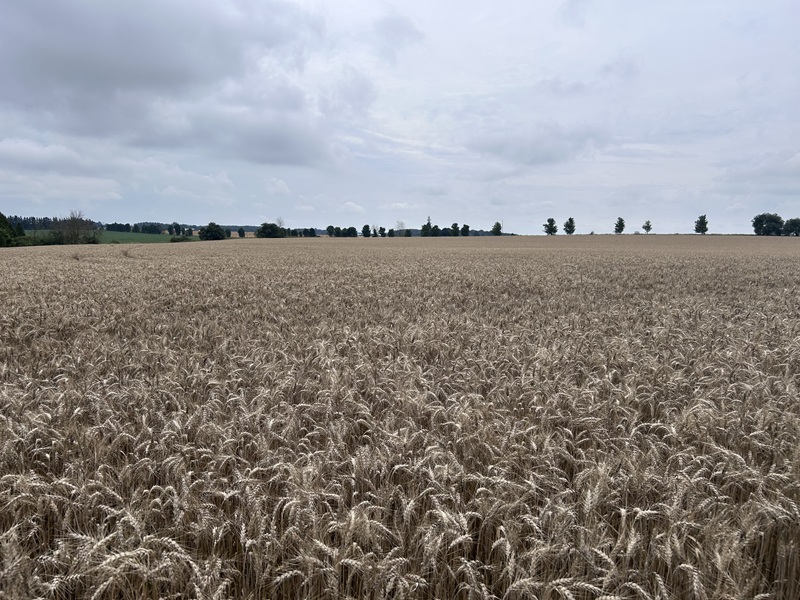
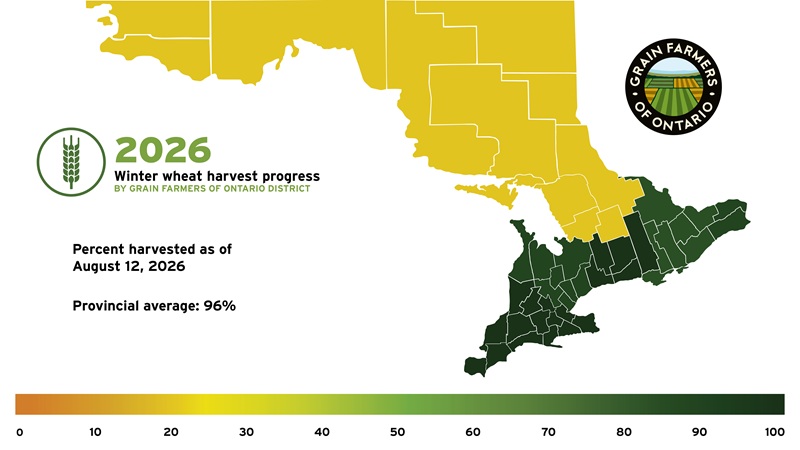
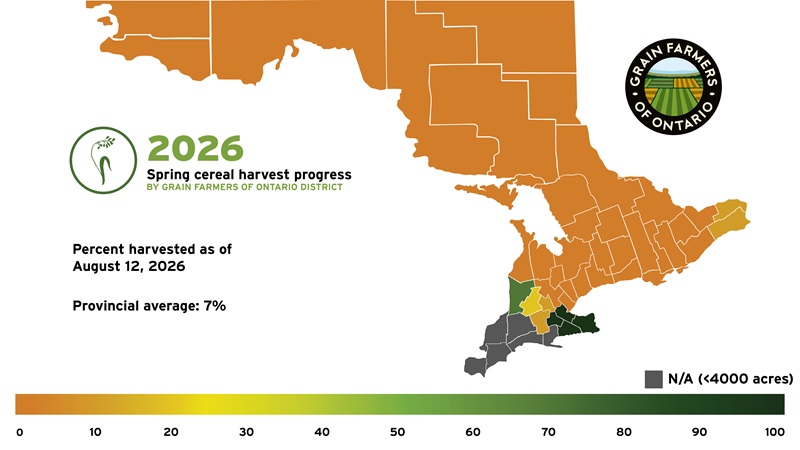
Field Progress, Grain Farmers of Ontario’s weekly estimate of planting and harvest progress across the province by district, reports that winter wheat harvest is 96 per cent complete, and spring cereal harvest, including barley, oats, and spring wheat, is seven per cent complete as of Wednesday, Aug. 12, 2026.
New pest for winter wheat
Damage from orange wheat blossom midge has been identified in wheat fields. This pest causes the most damage in its larval form, as it feeds on wheat heads, leaving completely empty spikelets, shrivelled or lightweight kernels, poor grain fill, and missing kernels, along with lower grain grade and quality that are often identified at harvest. Damage from this pest is often difficult to identify before maturity because heads look relatively normal while larvae are feeding. Environmental conditions in 2026 allowed this wheat midge to flourish compared with previous years.
Keep records of affected fields and varieties to better assess damage across the province. This also helps with planning and preparing for future years by identifying risks and supporting further management recommendations. More information about this pest is available on Field Crop News.
Webinars to watch
Watch Grain Farmers of Ontario’s three-part GrainTALK webinar series on soil fertility. While each webinar stands on its own, the series is designed to tell a complete story, from soil sampling to building a fertilization plan.
August 6, 2026
Much of the province received rain over the long weekend, with some areas receiving upwards of 4”. A million-dollar rain as some would say for the corn and soybean crops, as they are firmly in the reproductive stages. Scouting continues for several diseases and pests. Winter wheat harvest is continuing.
Corn
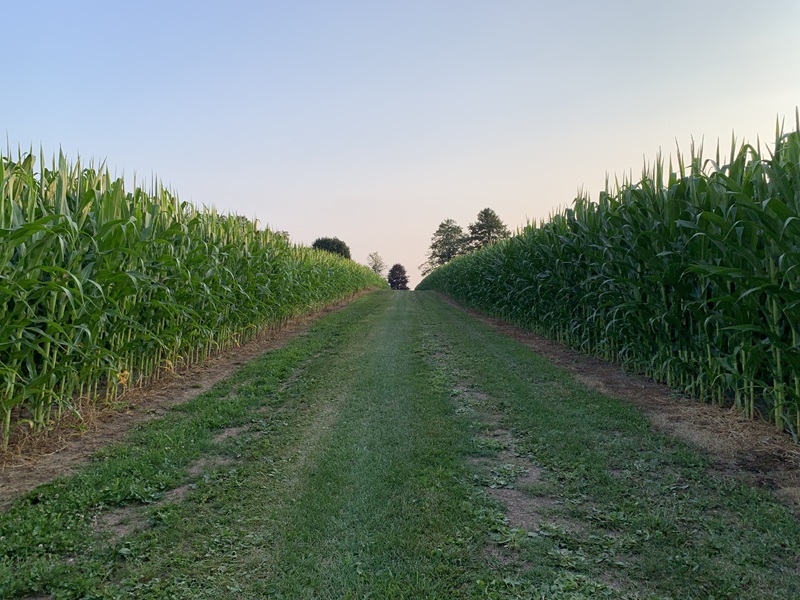
Corn is staging from VT to early R3 (milk stage, kernels turning from white blister to yellow), which occurs roughly 18 to 20 days after silking.
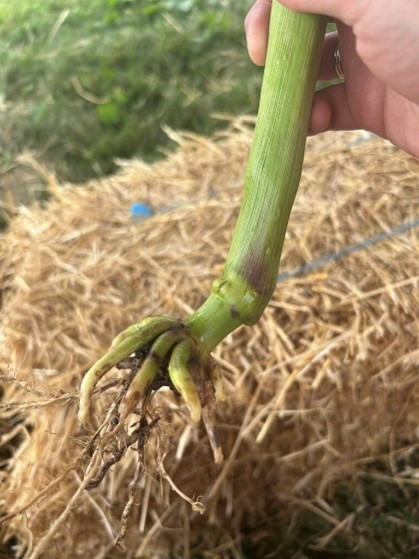
Tar spot should still be scouted for, as it has been identified and confirmed in Essex, Chatham-Kent, and Haldimand-Norfolk counties so far this season. Depending on when the disease appears within the canopy can determine how much of a yield impact it will have. Note that Tar spot has an incubation period of 2 to 3 weeks before the infection is visible on the crop’s leaves. Spraying needs to take place in most cases between tassel emergence and milk stage at the first sighting of the disease for a one-pass approach. Fungicides do not cure the disease that is established but give protection from the infection for several weeks (which fungicide used determines the length of protection). There are some who aim for a 2-pass approach, on fields that have a previous history of disease as it can be infected earlier if a dense crop canopy and ideal weather conditions prevail. The main purpose of a 2-spray approach is to maintain green plant tissue during grain fill to maintain maximum yield potential. The one pass targeted at fresh silk timing (V1) seems to be the key economical timing for average conditions when also considering using a spray to control Gibberella ear rot infection during fresh silk timing. Use the right product for the disease and timing that are being targeted.
Over the past few years, western bean cutworm (WBC) has shown peak flight in the last week of July and the first week of August, be vigilant with monitoring for the pest. For scouting and threshold criteria read more here.
Corn Rootworm (CRW) is a concern with corn-on-corn rotations. Roots damaged by CRW can be weakened enough that plants lodge or that the stalks have a gooseneck shape, making harvest challenging. Aside from standability concerns, with damaged roots the plant overall can be under stress, creating yield impacts. Pollination can also be impacted due to the adult pests clipping the silk impacting pollination. To learn more about this pest and CRW resistance, watch this GrainTalk webinar featuring Tracey Baute, OMAFA entomologist and Erin Hodgson, extension entomologist specialist with Iowa State University.
Soybeans
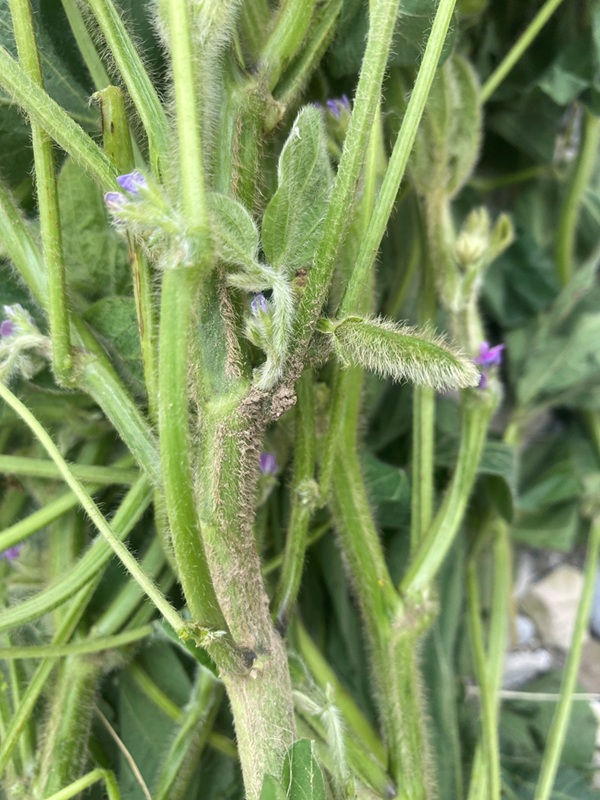
Soybeans are staging from vegetative stages (late planted) to R5 (beginning seed-seeds are 1/8” long in the pod on the 4 uppermost nodes on the main stem).
With recent heavy rains in areas of the province over the past week or 2, white mould may be a concern in some regions and may remain a concern for the duration of the flowering stage of the plant.
Sudden death syndrome can often be observed in soybean fields around this time of the year. Foliar symptoms often appear after flowering. There have been several wet-dry-wet cycles which allows SDS to thrive.
Still be on the lookout for insects; bean leaf beetles, aphids, and spider mites can still be creating challenges in fields.
Cereals
Field Progress, Grain Farmers of Ontario’s weekly estimation of planting and harvest across the province, by district, reports that winter wheat harvest is at 88 percent, as of Wednesday August 5, 2026.
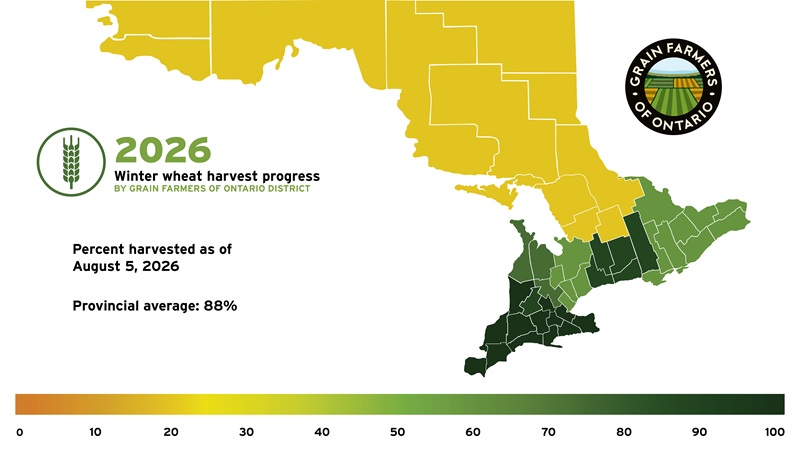
Yields across the province are variable.
With recent rains that might have rewet the wheat kernel, be aware of the potential for pre-harvest sprouting – harvest those fields first and dry the grain.
Damage from Orange wheat blossom midge has been identified in wheat fields. This pest causes the most damage in its larvae form as it feeds on wheat heads leaving completely empty spikelets, shrivelled or lightweight kernels, poor grain fill, missing kernels, along with lower grain grade and quality that are often identified at harvest time. Damage from this pest is often hard to identify before maturity, due to heads looking relatively normal while feeding from the larvae is occurring. More on this pest can be found here.
The Cover Crop Decision Tool is a great resource for finding out what cover crops will work best on each farm. This valuable tool is supported by Grain Farmers of Ontario – much of the research that the organization funds is included in the tool.
For information on winter wheat quality across the province view the Ontario Wheat Quality page on the Grain Farmers of Ontario website.
Spring cereal harvest should be beginning in the next couple of weeks.
The Ontario Cereal Crop Committee (OCCC) has released the preliminary trial data for winter barley on GoCrops.ca. Find the trials for 2026 in the performance trial results for winter barley. Grain Farmers of Ontario is a voting member for the OCCC.
With recent rains some acres across the province might be quite waterlogged. Harvesting in less-than-ideal soil conditions can cause compaction. Read the Grain Farmers of Ontario Factsheet on Soil Compaction for short term and long-term considerations to help mitigate compaction.
Crop Chats
Crop Chats, produced by OMAFA, virtually visits several Ontario farms and hears from farmers on topics such as winning with no-till, winning with tillage, along with seeding equipment decisions. It’s never too early to begin thinking about next season.
Interim Update: Drone Application of Pesticides
Health Canada has issued an interim Letter of No Objection allowing Remotely Piloted Aircraft Systems (RPAS; which include drones) for the application of pesticides that already have an aerial application label.
This means that, in certain situations, products labeled for aerial use can now be applied by drone provided all existing label directions for aerial application are followed exactly—including application rate, spray volume, droplet size, buffer zones, or any other conditions of use.
Additional requirements include:
- Two separate individuals, one for mixing/loading and the other for drone operation
- Full compliance with required PPE for mixers/loaders and drone operators
- Adherence to all applicable federal and provincial regulations (including pilot certification)
A final policy on drone application of pesticides from Health Canada will be published in the near future.
As an additional recommendation farmers should reach out to the chemical manufacturer for technical guidance to ensure proper application with drones as this is an emerging new application technology as to ensure proper product efficacy and crop safety.
Croplife Canada has provided these 2 resources on drone usage:
July 30, 2026
Winter wheat harvest continues across the province between rains. The corn crop is pollinating and in early reproductive stages, while the soybean crop is in the mid-reproductive stages across much of the province.
Corn
Corn is currently staging from the late vegetative stage (V12) to the kernel blister stage (R2), with the majority of the crop at VT to R1. The R2 growth stage is reached 10 to 12 days after silking, as kernels develop white “blisters” that contain clear fluid. Pollination is one of the most critical times in the lifecycle of a corn plant for yield.
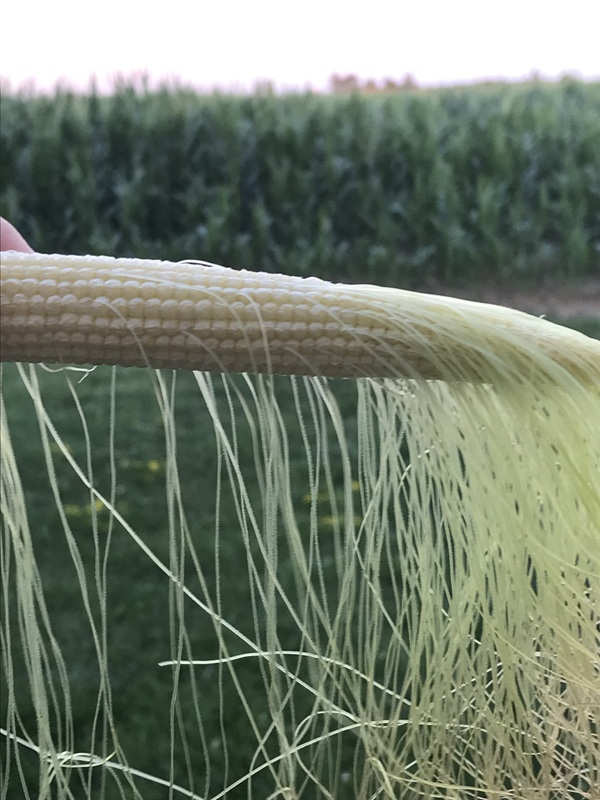
During pollination, the silk emerges from the corn husk, while the tassel emerges at the top of the plant. The first silks to emerge from the ear are from the lower end of the cob. Once silks have emerged from the corn husk, they may elongate by one to two inches a day, slowing over time and stopping growth once a pollen grain encounters the silk. Some fields may have silks emerging before tassel emergence and may see very long silks. When silks emerge before the tassel, they may not be as receptive to pollen by the time pollen is shed and present. This can result in fewer kernels and/or missing kernels, especially at the base of the ear. Corn hybrids have often been designed to help combat drought stress by promoting active silk emergence and reducing the chances of delayed silk emergence. However, when growing conditions are ideal, silk emergence can sometimes occur before tassel emergence.
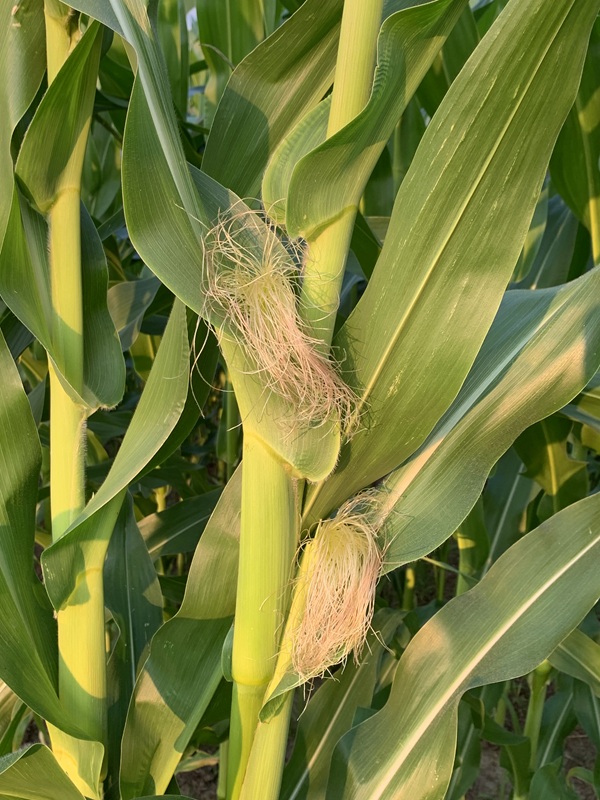
A common issue that can also be seen in fields experiencing drought conditions is delayed silking, which can cause missing tip kernels. Corn silks are made up of a lot of water, and drought can reduce silk growth and emergence. The two weeks before pollination and the two weeks after can often be the most sensitive period for moisture stress in the corn crop.
Heat stress can also affect corn pollination. Excessive heat can cause silks to die sporadically, creating poor pollination and erratic kernel set on the ear, especially in more severely stressed areas of the field.
After pollination, it is a good time to do a pollination check by performing a shake test. To do a shake test, husk back the ear after pollination and shake it with the tip of the cob toward the ground, allowing silks to fall off the cob. Silks remaining attached will be fresh, green, live silks that have not been pollinated. Kernels will not form if there is no more pollen or if live silks are not outside the husk.
Keep an eye out for tar spot in fields. Look in the upper canopy for infection that has been blown in on storm systems. Look in the lower canopy to find infection that has self-infected from previous crop residue. Look for black, slightly raised spots on the leaves that do not wipe off. Learn more about tar spot.
With later-planted corn pollinating later in the season, there may be a higher risk of Gibberella ear rot infection and potential DON accumulation due to the environment during pollination. Speak with your agronomist and create a plan for fungicide applications if warranted. More on this topic was included in last week’s e-news article.
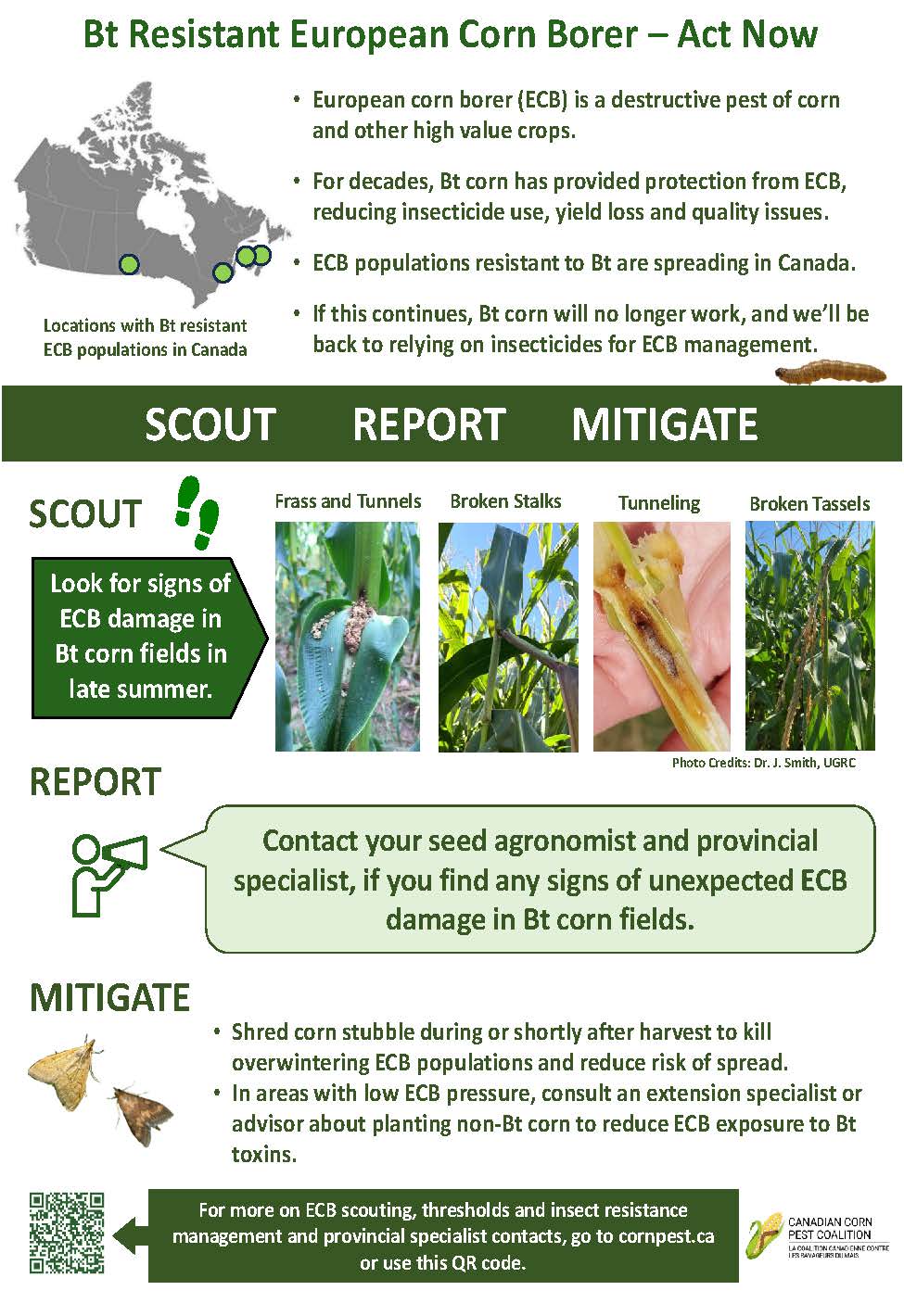
For the past several years, Bt corn has provided protection against European corn borer. However, that protection is being threatened as populations resistant to Bt genes spread in Canada. Learn more about this pest and the threat in the infographic below.
Soybeans
Soybeans are currently in the vegetative stage in late-planted fields and staging up to R3, or beginning pod, in others. Many soybeans are close to a critical stage and need moisture to help determine productive yield. During the R2 to R4 period, there are large demands for moisture. For much of the province this year, moisture has not been too much of a concern. However, some areas have seen a lack of moisture over the past three weeks or so, and soil-available moisture can change in other areas if drought periods arise over the next few weeks. The R4 to R6 growth stages are when the plant starts to accumulate dry matter in the pods and seeds. Stress during this time can cause major yield reductions, more than any other period of soybean growth.
It is a tale of two conditions when it comes to moisture. Some areas have had ample moisture over the past week, while others have had limited moisture. In areas with ponding water, symptoms of root rots (Rhizoctonia, Fusarium, and Phytophthora) may be observed due to wet, saturated ground.
A disease to keep an eye out for is red crown rot. This soil-borne fungal disease has not yet been confirmed in the province but has been identified in several nearby states. It can affect yield quite drastically. Learn more about this disease in the Grain Farmers of Ontario Agronomy Factsheet.
Cereals
Field Progress, Grain Farmers of Ontario’s weekly estimate of planting and harvest progress across the province by district, reports that winter wheat harvest was at 63 per cent as of Wednesday, July 29, 2026. Many are reporting average to above-average yields, with good quality. Good yields have also resulted in good straw yields.
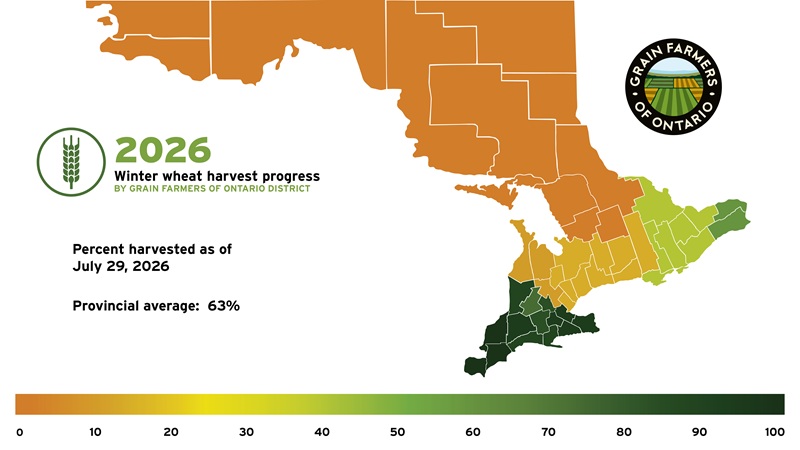
Many remove straw from the field to use for animal bedding. However, straw has significant benefits when left on the field, including increasing organic matter, increasing residue to reduce soil erosion, and providing a valuable source of nutrients that can be broken down and remain in the field.
The table below provides an overview of phosphorus and potassium levels removed from one ton of straw and the corresponding estimated fertilizer costs to replace those nutrients.
| Nutrient | Avg. to Max. Removal (lbs actual/ton) | Fertilizer | Fertilizer Replacement (lb/ac) | Fertilizer Cost ($/lb) | Value ($/ac) |
| Phosphorus | 3.2 – 6.0 | MAP (11-52-0) | 6.5 – 11.5 | 0.60 | $3.90 – 6.90 |
| Potassium | 16.8 – 42.5 | Potash (0-0-60) | 28 – 70.8 | 0.50 | $14.00 – 35.40 |
| Total value ($/acre): | $17.90 – 42.30 | ||||
| Total value (¢/lb of straw): | ¢ 0.8 – 1.92 |
*A MAP value of $1,320/metric tonne and a potash value of $1,080/metric tonne were used in these calculations.
Source: https://fieldcropnews.com/2022/07/ontario-field-crop-report-july-27-2022/
Spring cereals are in the final stages of grain fill and the beginning stages of ripening and will be harvested in the next several weeks.
Soil sampling and cover crops
After winter wheat harvest is an ideal time to complete soil sampling to get a better understanding of soil nutrient levels for upcoming nutrient applications. According to the 4Rs — right rate, in the right place, at the right time, and from the right source — soil sampling should occur every four years. Making fertilizer recommendations without a soil sample or using a sample that is older than four years does not meet 4R requirements.
Cover crops after winter wheat are a great choice to increase soil health, keep nutrients from leaching, and increase soil organic matter. The Cover Crop Tool uses Ontario-based research, much of it funded by Grain Farmers of Ontario, to help find the best cover crop to meet each operation’s goals.
Weeds
Curious about what resistant weeds are being found across the province this year? View the 2026 mid-season weed survey results for a summary of weed species that have been sent in for identification and herbicide resistance testing. Grain Farmers of Ontario helps fund this weed resistance testing.
If there are suspicious weeds in fields, learn more about weed resistance testing and view a database of resistant weeds here.
July 23, 2026
Winter wheat harvest continues across much of the province. As corn and soybeans move into the reproductive stages, diseases such as tar spot are being scouted for, while insects such as western bean cutworm and corn rootworm are also on the radar in corn. In soybeans, white mould, aphids, and more are being scouted for.
Corn
Corn development is still variable across the province, with fields ranging from vegetative stages to R1 (silk — one or more silks extend outside the husk leaves) in the earliest-planted crop.
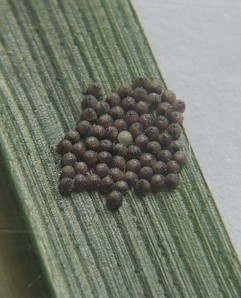
Around this time of the season, western bean cutworm (WBC) eggs are often observed in corn fields, with some WBC larvae hatching and on the move. Tracey Baute, OMAFA, shared the following with Grain Farmers of Ontario:
Western bean cutworm activity has increased over the last week. Moth counts are increasing, and egg masses and larvae are likely present in early-planted fields that are already in tassel or early silk stages. Earliest-planted fields should be scouted first, followed by later-planted fields that will just be entering the early tasselling to green silk stages when peak flight occurs. More information on western bean cutworm scouting and thresholds can be found on CropIPM.
Corn rootworm (CRW) monitoring is occurring in fields. Watch this past GrainTALK webinar on Management strategies and innovative research on corn rootworm to learn more about the lifecycle of the pest, best management practices, and more. The Canadian Corn Pest Coalition provides a chart of the Bt corn products available, and what each trade name and insecticidal protein provides protection for. However, it is important to note that CRW resistance can occur, with resistance potential especially high in continuous corn production. Rotation is key. More on this pest can be found here.
Corn fungicide timing is at hand, depending on the protection goal and product used. Many different ear disease infections can occur at silking, as the silks are a key entry point into the ear for pathogens such as Gibberella (Fusarium graminearum). Depending on weather conditions and the spores in each field, ear disease development begins at pollination. Infections can also occur due to ear damage from insects, animals, or hail. Which ear disease takes hold will depend on what spores are in the field, and what weather conditions are ideal for those spores during and after infection. It is all about timing.
Gibberella ear rot is always a topic as the corn crop is pollinating. Infection occurs with warm temperatures (27 C) and humid conditions, combined with rainfall that splashes fungal spores onto the silks two to six days after emergence. Cooler, wet weather after silking also favours disease development. Extended periods of rain in the fall promote fungal growth and increase disease severity. More on this infection can be found here. Check the susceptibility of each hybrid and manage accordingly for Gibberella ear rot and DON. GoCrops.ca shares the 2025 Ontario Corn Hybrid Screening Trials Report; this report gives an indication of corn hybrids’ susceptibility to DON infection. The Ontario Crop Protection Hub is a great reference for herbicides, fungicides, and insecticides registered in Ontario. Always wear PPE and follow the label. Spraying at silking, when silks have fully emerged, are green, and are not dried up, is recommended to best manage Gibberella, as silk channel infection can occur two to six days after silking, with symptoms appearing two to three weeks after infection. Be sure to scout fields, as this year, some tassel emergence is delayed while silk is present. Don’t just rely on the drive-by scouting method, which might not show the true staging story.
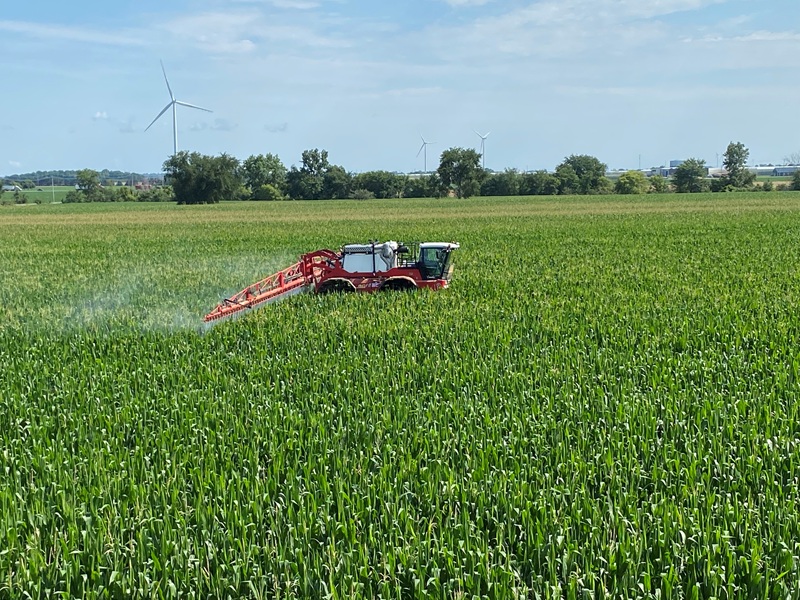
Be sure to scout for tar spot. It was found and confirmed in Michigan earlier this month. Tar spot was discovered in Ontario in 2020, and moved as far east as the Peterborough and Northumberland regions in 2024. Ideal conditions for development are when plants have more than seven hours of leaf wetness. With recent weather patterns, fields that had the disease last year are at higher risk. Scouting fields is the only sure way to confirm disease infection, and the Crop Risk Tool can aid in identifying risk levels based on weather forecasts. Read the Grain Farmers of Ontario fact sheet to learn more about this disease. The Ontario Crop Protection Hub indicates fungicides that have activity to help control tar spot. Timing of application is important if spraying when the silks are still green. Also, consider the risk of Gibberella ear rot, as it will produce the DON mycotoxin. If spray timing is at the green silk stage, a tank mix with a product that also controls Gibberella ear rot should be considered (R1). For more information on tar spot, view the past GrainTALK webinar with Albert Tenuta and this Crop Protection Network webinar.
Keep an eye out for northern corn leaf blight. The incidence of this disease has increased in past years due to several factors, including:
- more corn-on-corn production;
- more corn residue, due to an increase in no-till or reduced tillage;
- intensive corn management strategies;
- favourable environmental conditions; and
- the development of new northern corn leaf blight races that resistance genes are not controlling.
This past Field Crop News article has more information on northern corn leaf blight.
Common rust can also begin showing up in corn fields around this time of year. Ideal conditions for its arrival are high humidity, nighttime temperatures of 18 C to 21 C, and moderate daytime temperatures. It is rarely a major concern, but it is good to be aware of what might be showing up in fields.
Soybeans
Soybeans are anywhere from V4 in late-planted fields to R4, or full pod, when pods are three-quarters of an inch long at one of the four uppermost nodes on the main stem. Overall, fields are looking variable.
Fungicide timing is occurring or approaching for white mould control, especially in high-risk areas. The key to getting the most benefit from fungicide applications is timing. Risks for white mould include field history. If there is a known history of white mould, the chance of it recurring is higher. Variety, row spacing, plant density, and how quickly the field will canopy all factor into the likelihood of infection. Weather patterns will also help determine risk. When it is foggy or humid, and moisture is on the plant most of the day, there will be a higher risk of white mould. The Crop Risk Tool can help determine a field’s risk level. Fungicides can lower the severity of infection; however, timing is critical. Application timing ranges from R1 (single flower on the main stem) to R3 (pod on the main stem). Be sure to speak with your agronomist for optimum timing and product selection, and always follow label recommendations. Learn more about this disease in the Grain Farmers of Ontario white mould fact sheet.
With recent conditions, keep an eye out for aphids. Pockets of this pest often show up in regions of the province each year. When scouting for aphids, a threshold that should be reached before spraying is 80 per cent of the plants in the field having at least 250 aphids per plant, with an increasing population. Scouting should occur multiple times over a period before an insecticide application is warranted to ensure the population is increasing. The Aphid Advisor app is a great resource to help make decisions.
Tracey Baute, OMAFA, also shares that “two-spotted spider mite (TSSM) infestations are showing up in a few soybean fields. More sightings are expected in the next week or two, given that wheat harvest is underway and hot temperatures continue. Over the last three years, more than half of the soybean fields tested have had dimethoate-resistant TSSM populations. Sampling has also determined new species of spider mites not previously known to be in soybeans or beans. This year, we are looking for more samples to document the mite species and test for resistance at Western University as part of a Grain Farmers of Ontario-funded project. Anyone finding populations before or after a dimethoate application in soybeans or dry beans should contact Tracey Baute to collect samples for testing.”
Cereals
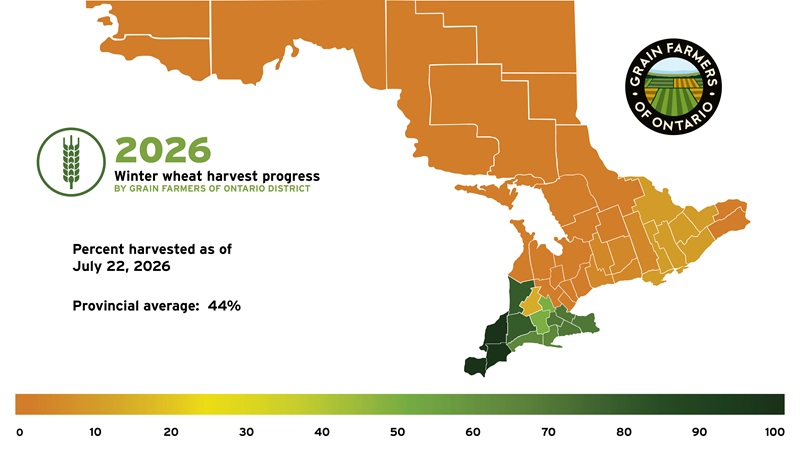
As some areas are winding down from winter wheat harvest, others are just getting started, with most of the province working on the 2026 winter wheat harvest. So far, yields have been average to variable, depending on rainfall amounts in the field and temperatures through the grain-fill period. Field Progress, Grain Farmers of Ontario’s weekly estimation of planting and harvest across the province by district, reports that winter wheat harvest is at 44 per cent as of Wednesday, July 22, 2026.
Glume blotch on wheat has been identified in fields. It is a fungal disease that causes brown or purple blotches on the glumes, which bracket the wheat grain, or small yellow flecks or spots on the leaves that become yellow halos and turn brown to greyish brown. It can impact the plant from seeding to maturity, reducing test weight when the seed is affected. Glume blotch often occurs when wet, humid conditions persist.
Spring grains are in the grain fill stages.
Weeds
Have there been some tough-to-control weeds this year? Tough-to-control weeds might be partly due to weed size when the sprayer finally got into the field because of wet conditions, or poor crop stands allowing late-season weed emergence. However, some might be due to resistance.
Be sure to scout for waterhemp, which is resistant to multiple herbicide groups in various regions of the province. Also watch for Palmer amaranth, a new weed identified last year that is highly competitive, can spread easily, and has known resistance to nine different herbicide groups. If you think there might be a Palmer amaranth plant in a field, contact Mike Cowbrough, OMAFA.
Soil Fertility Webinar Series
Watch Grain Farmers of Ontario’s three-part GrainTALK webinar series focusing on soil fertility. While each webinar stands on its own, the series is designed to tell a complete story — from soil sampling to building a fertilization plan.
Cover Crops
Cover crops can be an important tool in any farming operation to help increase organic matter, reduce soil erosion, suppress weeds, and more. Learn more about the current, innovative Living Lab – Ontario drone-seeding cover crop project in this past Ontario Grain Farmer article. Grain Farmers of Ontario is a core partner of Living Lab – Ontario.
For more insights on cover crops, along with the how, the why, their benefits, and their challenges, as told by farmers, watch this past Grain Farmers of Ontario GrainTALK webinar.
July 16, 2026
Wheat harvest is off to a strong start this week, with farmers from Windsor to London beginning harvest, and some areas already finished. The rest of the province will begin harvesting soon as wheat matures. Corn and soybeans are developing quickly in the summer heat, and stress areas in fields — including water damage and compaction — are becoming more visible as plant water demand peaks and root damage limits uptake. Smoky skies have kept temperatures down a few degrees, but they have also made outdoor work harmful to human health.
Corn
Corn across the province is ranging from V10 in late-planted fields to early VT, as tassels begin to emerge in early-planted corn. As corn nears the end of the vegetative stage, it is finalizing the number of potential kernels. Under severe stress, kernel numbers will be reduced. Lack of moisture at pollination can reduce silk development and shorten the pollination period, resulting in fewer kernels being pollinated and fewer kernels per cob. So far this year, there have been few moisture-limiting concerns; if anything, there has been excessive moisture. However, this can change quickly. Saturated soils have kept roots shallow. Shallow roots caused by wet or compacted soil will show drought stress quickly when conditions turn hot and dry, as roots cannot grow fast enough to reach water as they might have after a drier spring.
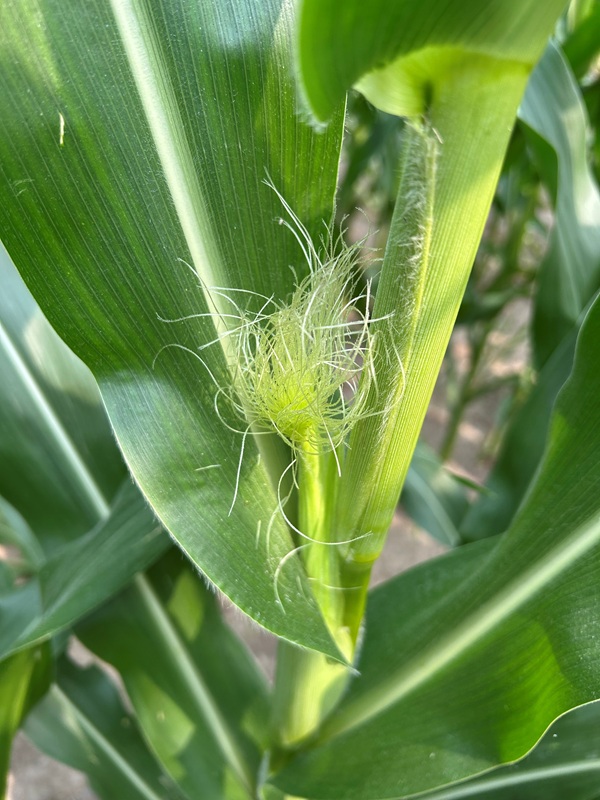
Gibberella ear rot infections occur with warm (27 C), humid temperatures and rainfall that splashes fungal spores onto corn silks two to six days after silk emergence. With recent conditions, Gibberella ear rot could be a concern. Check the susceptibility of each hybrid and manage accordingly for Gibberella ear rot and DON in corn. GoCrops.ca shares the 2025 Ontario Corn Hybrid Screening Trials Report; this report gives an indication of the susceptibility of corn hybrids to DON infection. The Ontario Crop Protection Hub is a useful reference for herbicides, fungicides, and insecticides registered in Ontario. Always wear personal protective equipment and follow the label. Spraying at silking, when silks have fully emerged and are not dried up, is recommended to best manage Gibberella, as silk channel infection can occur two to six days after silking, with symptoms appearing two to three weeks after infection.
Be sure to scout for tar spot. Tar spot was discovered in the province in 2020 and had moved as far east as Peterborough and Northumberland counties by 2024. Ideal conditions for development occur when plants have more than seven hours of leaf wetness. Much of the province has not yet experienced these conditions, as it has been quite warm and dry overall; however, this can change. At this point, earlier-planted fields are at higher risk due to the larger canopy, along with fields that had the disease last year. Scouting fields is the only sure way to confirm disease infection, but the Crop Risk Tool can help identify risk levels based on weather forecasts. The Ontario Crop Protection Hub indicates fungicides that have activity to help control tar spot. Timing of application is important. If spraying when the silks are still green, also consider the risk of Gibberella ear rot, as it can produce the DON mycotoxin. If spray timing is at the green silk stage, a tank mix with a product that also controls Gibberella ear rot should be considered (R1). For more information on tar spot, view the past GrainTalk Webinar with Albert Tenuta and this Crop Protection Network Webinar.
With a wide range of maturities and planting dates, it will be important to know the stage of each field to apply fungicides at the right time for the best control.
Soybeans
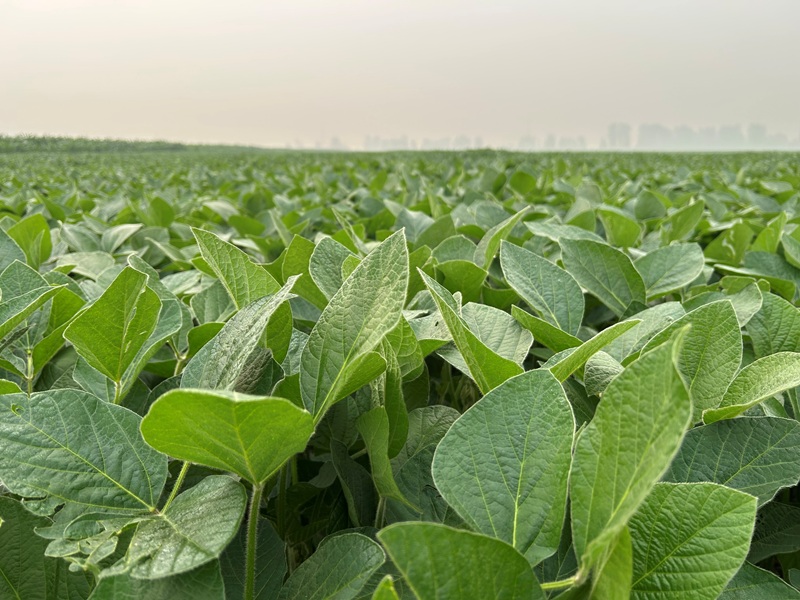
Soybean stages range from vegetative growth to R3, or early pod development, when there is a pod at least 3/16 inch long, but less than 3/4 inch long, at one of the four uppermost nodes on the main stem with a fully developed leaf. Soybean plants usually flower over 25 to 35 days, with flowering still occurring as pods develop.
Pay attention to the amount of moisture soybeans are receiving while they are flowering. In some parts of the province, farmers should be on defence against white mould. The ideal timing for fungicide applications is between the R1 and R3 stages, when infection is occurring. Some may choose one pass of fungicide, approximately 15 days after flowering begins, while others may choose two passes: the first when most plants have a single flower, followed by a second eight to 10 days later, so both passes are applied during the peak flowering period. More information on white mould can be found in the Grain Farmers of Ontario factsheet.
For more information on white mould and other diseases to watch for in soybeans, view the past GrainTalk Webinar with Albert Tenuta.
Cereals
Winter wheat harvest was stop-and-go last week in southwestern Ontario. Wheat was mature, but fields needed dry weather. This week’s dry weather has seen harvest in some areas go from zero to 75 per cent within the week. Field Progress, Grain Farmers of Ontario’s weekly estimate of planting and harvest across the province by district, estimated winter wheat harvest at 16 per cent as of Wednesday, July 15, 2026.
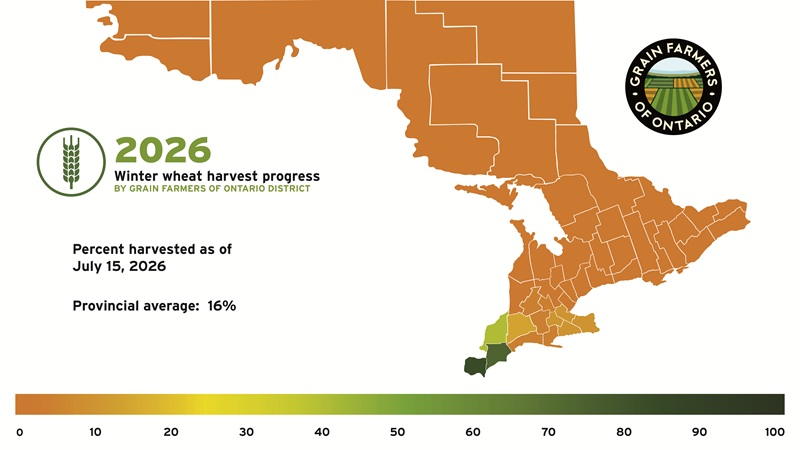
Harvest can be limited by overcast skies, heavy dews, and rain showers that prevent plants from drying. When combines are rolling, moisture levels range from 16 to 10 per cent, with reports of decent test weight. Fields lodged during grain fill will show lower test weights; harvest delays and wet conditions can also affect test weight and sprouting.
Heavy rains and strong winds have moved through the province over the past couple of weeks, and some fields have lodged. Lodging certainly makes harvesting more difficult, but it can also lead to disease development. When a plant is lying on the ground, it remains wet longer than if it were standing, increasing disease risk. If a field is mature, aim to harvest lodged fields first to limit disease incidence and poor grading at the elevator.
Black point, which appears as black smudging or discolouration on kernels or as a black cloud of spores around the combine at harvest, could be a slight concern. The disease develops when conditions are wet and warm during the grain fill and ripening period. More can be learned at the 23:24 mark of this Grain Farmers of Ontario GrainTalk Webinar.
Spring cereals are in the midst of grain fill.
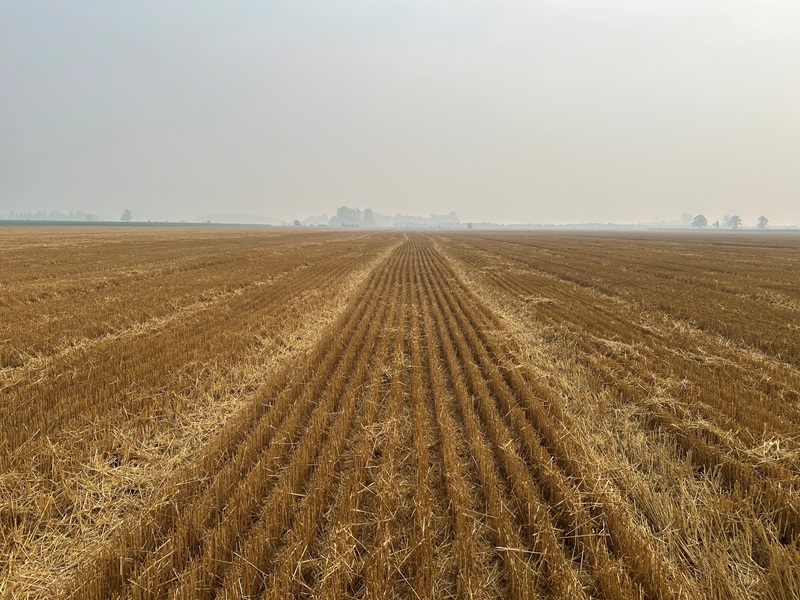
Smoke rolled into southern Ontario on Wednesday, darkening the skies and reducing some of the solar radiation that had been driving temperatures of 34 C to 36 C. While considering the pros and cons for grain crops, wheat did not dry as quickly on Wednesday to the 10 per cent moisture seen on Tuesday. For some, this will help keep harvest moisture in the 12 per cent range, while it may delay harvest in areas waiting for drydown. Smoke particulate matter can be harmful to human health. Protect yourself when working outside, and prevent long-term lung damage by wearing personal protective equipment. Take breaks and stay hydrated. Be safe out there.
July 9, 2026
Winter wheat harvest has just begun in the deep southwest. Corn and soybeans continue to grow, and timely rains and moderate warmth will help these crops succeed.
Corn
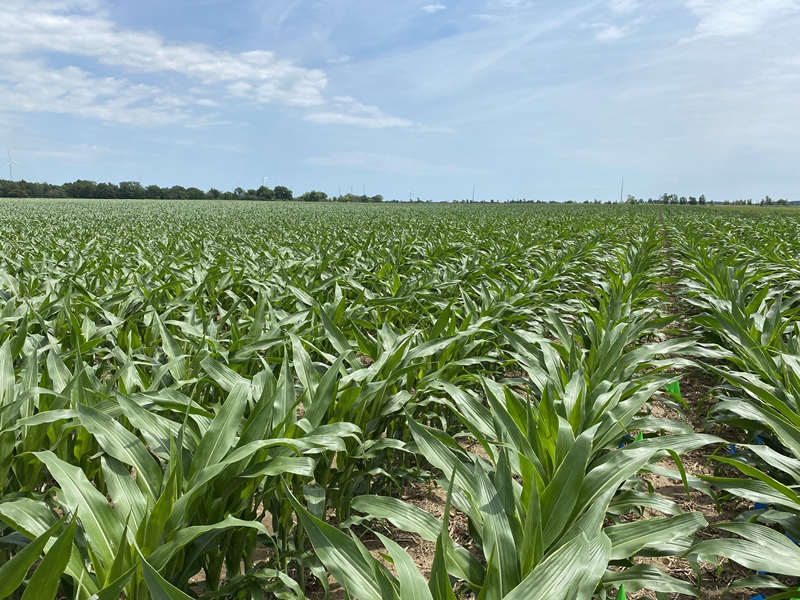
Early-planted corn is nearing the end of the vegetative stage, and the number of potential kernels is being finalized. Under severe stress, kernel numbers will be reduced. Tassel emergence in earlier-planted fields will begin within the next couple of weeks. When the last branch of the tassel emerges from the whorl, the VT stage has been reached (VT stands for vegetative tassel stage). To get a rough idea of the anticipated time frame for tassel emergence, pull the whorl out of the plant and unfurl the leaves. The number of leaves wrapped around the tassel, multiplied by a factor of two, three, or four (two to four days per leaf emergence, depending on growing conditions), will give a rough estimate of the number of days until tassel.
Heavy rains and wind moved through Ontario again over the past week. Unfortunately, in some cases, the combination of very strong wind and torrential rain lodged corn. Some corn has rebounded with help from its brace roots, while other corn may have a goosenecked appearance as it continues to grow.
Field Crop News shares that rain makes grain. Learn more about how rainfall from mid-June to mid-July influences corn yields, with research financially supported by Grain Farmers of Ontario.
Tar spot has yet to be confirmed in the province this year; however, that can change quickly and should be monitored, as conditions have been optimal for infection in some areas. Areas with a history of high infection, such as along the shores of Lake Erie, will most likely see some incidence of the disease identified within a few days. Anticipated tar spot infections will occur in fields with a history of tar spot and in those with a larger canopy, such as earlier-planted corn, because larger canopies create ideal conditions for disease development. Late-planted corn that has not canopied yet, or corn planted in wide rows, would not be a concern until the crop reaches the V8 to VT stages and the canopy is large enough to be conducive to infection. These late fields may miss the early calendar date but may still be affected as the disease develops this summer. Scouting fields is the only sure way to confirm infection, but apps such as Crop Risk Tool can help identify risk levels based on weather forecasts. Tar spot is now endemic in western Ontario, where there have been several years of infection and the disease overwinters in soils. Infection will start lower in the canopy if it is caused by spores within the field.
Indiana is so far reporting tar spot infections. This can lead to future infections in Ontario fields as spores are released and wind patterns move them into unaffected areas. Airborne spores will infect the top of the canopy.
Scouting and identifying the location of the disease in the canopy helps indicate whether the field was self-infected or the infection was airborne. Either way, the disease is present, and the earlier the crop can be treated, the more leaf tissue and plant health can be preserved to maintain yield potential. Timing is important, as most fungicides are effective for only about 14 days. The sooner the crop is sprayed, and the earlier the growth stage, the more likely a second spray will be needed if conditions are favourable for disease development. Select fungicides that control tar spot, as not all fungicide products do. If spraying when silks are still green, consider the risk of gibberella ear rot, as it produces DON mycotoxin. A tank mix with a product that also controls gibberella ear rot should be considered if spray timing is at the green silk stage (R1).
Soybeans
Soybean stages range from vegetative growth to R2 (full bloom). At R2, plants have an open flower at one of the two uppermost nodes on the main stem. From R2 to R4, soybeans rapidly take up water and nutrients, with uptake peaking at R4. It is important to keep soybeans healthy for optimum yield.
Watch for diseases such as white mould and insects such as aphids. See last week’s field observations for more information.
The Ontario Crop Protection Hub is a helpful reference for herbicides, fungicides, and insecticides registered in Ontario. Always wear personal protective equipment and follow the label.
Double-crop soybeans may be planted after winter wheat when possible. More information on double-cropping soybeans, and factors to consider when double-cropping, can be found in last week’s field observations.
Cereals
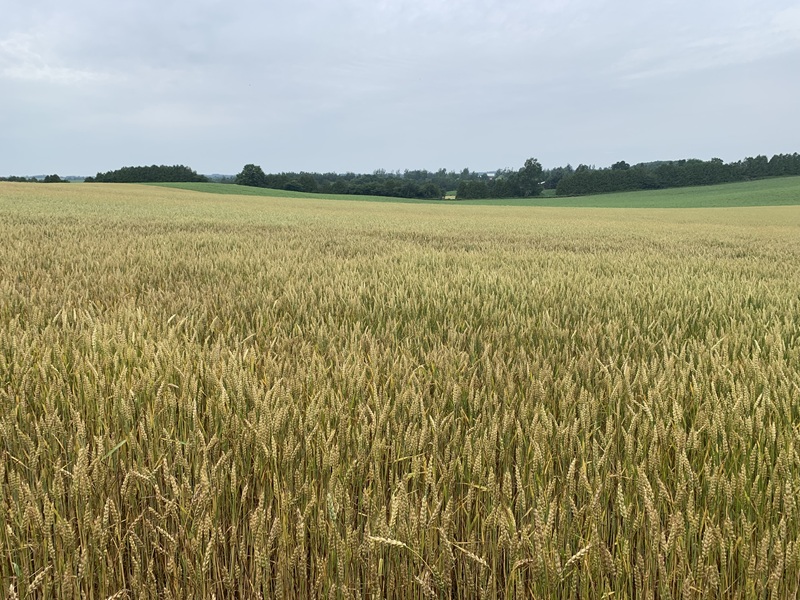
Winter wheat harvest has begun at a low rate in the deep southwest, as weather and crop drydown allow. Rainstorms that moved through the area have caused some delays in getting into fields.
As harvest progresses and moves across the province, keeping an eye out for Fusarium is imperative. Using a visual scale to estimate Fusarium severity across fields can help target which fields to harvest first. The aim is to harvest the fields with the highest severity first, as DON levels can almost double each time a storm rolls through. When harvesting, aim to set the combine to blow out Fusarium-damaged kernels. If moisture is higher, this may be more challenging. Some key tips are included in the link above. Note that lodged wheat has an increased potential for Fusarium infection and DON production. More can be found here.
Another concern on farmers’ minds is the chance of sprouting as scattered rain showers continue.
The winter barley harvest is wrapping up.
Spring cereals are approaching the boot-to-head stages.
Cover Crops
Cover crops can be an important tool in any farming operation to help increase organic matter, reduce soil erosion, suppress weeds, and more. Learn more about a current, innovative Living Lab – Ontario drone seeding cover crop project in this past Ontario Grain Farmer article. Grain Farmers of Ontario is a core partner of Living Lab – Ontario.
For more insights on cover crops, along with the how, the why and their benefits and challenges, as told by farmers, watch this past Grain Farmers of Ontario GrainTALK webinar.
July 2, 2026
Wild weather, including hail, a tornado, and flooding, was seen over the past week. Winter wheat harvest is creeping closer, and corn and soybeans are being scouted for insects and disease.
Corn
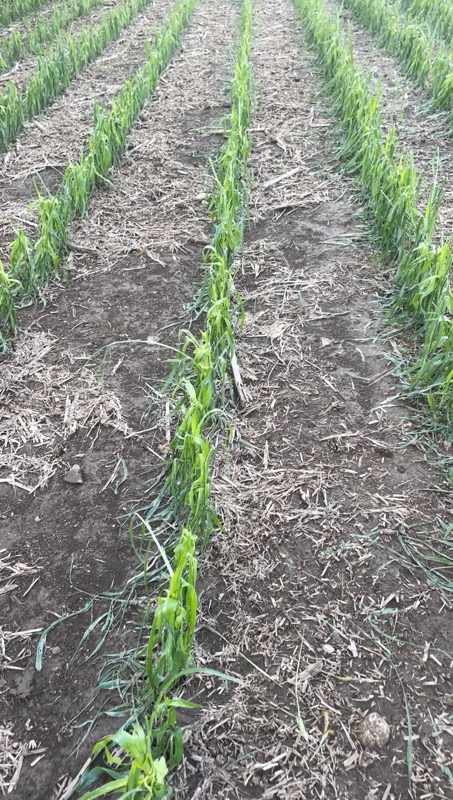
The corn crop is developing nicely as we move into the summer months. Corn is staging between V5 and V11. Around V5, the growing point is above the soil surface. At V9, the tassel is rapidly developing but is not yet visible at the top of the plant. New leaves appear every two to three days, and ear shoots are also developing.
Significant storms rolled across the province late last week, bringing heavy rain, a tornado, and up to golf ball-sized hail. For more information on how to manage a crop that has been impacted by hail, read this past Field Crop News article.
Nitrogen is still being side-dressed and top-dressed across some areas of the province.
Tar spot has been identified this summer in Indiana. If conditions warrant, be prepared to apply a fungicide that controls tar spot when the forecasted risk level is high, favourable weather is present, and the disease has been identified in the local area in previous years.
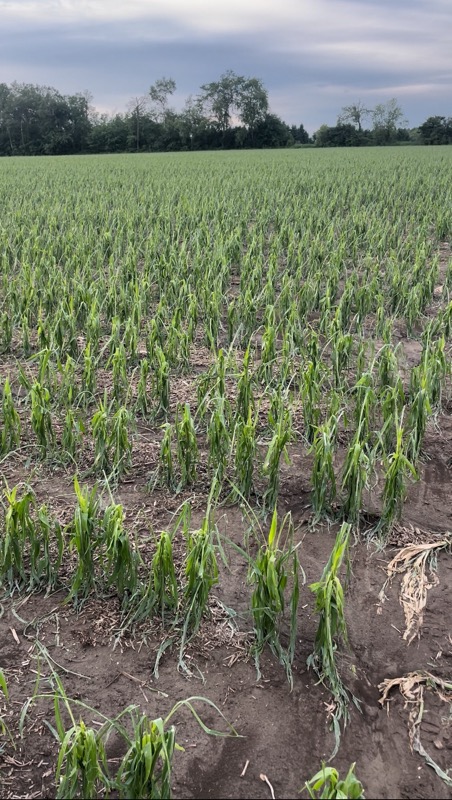
The Crop Risk Tool provides weather-based forecasting and risk assessments for various crop diseases, including tar spot, northern corn leaf blight, and Gibberella ear rot, helping farmers make data-driven decisions. The tool allows users to select the crop, location, planting date, and more to create a risk assessment. The optimum time to run the risk assessment is approaching and is between V10 and R3.
It is best to manage tar spot during corn growth stages V8 to R4. Always read and follow labels, and speak to a local agronomist before making a spray decision.
Soybeans
Soybeans are staging anywhere between V1, the first trifoliate, and R1, beginning bloom, when at least one flower appears on the plant on any node on the main stem. Staging is important as the season progresses so herbicides, fungicides, and insecticides can be applied safely and effectively, as required.
Fields are looking a bit stressed in some areas because of saturated soils. In some fields, nodulation is not occurring yet, and soils are denitrified from prolonged ponding. Symptoms of yellow and stunted plants can be seen between tile runs or in lower areas with heavier soils. As the plant reaches the V2 to V3 stage, nitrogen fixation begins; however, saturated soils affect nitrogen fixation because the processes, and the associated bacteria, need gas exchange for activity.
Root and stem rots can also be common in soils that have excess moisture.
Keep an eye out for soybean cyst nematode (SCN) damage as the season progresses. At high populations, nematodes can cause yellowing leaves, stunting, and early maturity, often in circular patterns. SCN can be tested for and should be monitored every three to six years; more information can be found here.
Fungicide timing is occurring or approaching for white mould control. Timing is the key to getting the most benefit from fungicide applications. Risks for white mould include field history. If there is a known history of white mould, the chance of it recurring is high. Variety, row spacing, plant density, and how quickly the field will canopy all factor into the likelihood of infection. Weather patterns will also help determine the risk. When it is foggy or humid, and moisture is on the plant most of the day, there is a higher risk of white mould.
The Crop Risk Tool provides weather-based forecasting and risk assessments for various crop diseases, including white mould and frogeye leaf spot, helping farmers make data-driven decisions. The tool allows users to select the crop, location, planting date, and more to create a risk assessment.
Fungicides can lower the severity of white mould infection; however, timing is critical. The application timing ranges from R1, a single flower on the main stem, to R3, a pod on the main stem. Be sure to speak with your agronomist for optimum timing and product selection, and always follow label recommendations.
Keep an eye out for aphids. When scouting for aphids, the threshold before spraying is that 80 per cent of the plants in the field have at least 250 aphids per plant, with an increasing population. Scouting should occur multiple times over a period before an insecticide application is warranted to ensure the population is increasing. The Aphid Advisor app is a great resource to help make decisions.
A reminder as the season progresses: Grain Farmers of Ontario, through research funding, has supported the development, with OMAFA, of the Pest Manager app, which allows you to identify, map, and find integrated management options for common weeds, insects, and diseases in corn, soybeans, and cereal crops. The pesticide use information in the app is specific to Ontario, and users should always read the product label before use.
Cereals
Spring cereals are in the heading stages. It takes roughly 660 growing degree days to fill a wheat head. This period spans approximately 25 to 30 days for grain fill, or less if it is extremely warm, which is not a long time.Winter wheat is staging from soft dough, GS85, to ripening, GS87. During the dough stage, the green colour of the kernel, glume, and peduncle begins to fade. With the hot weather experienced this week, wheat plants will mature quickly.
The maturity of wheat can be determined by the peduncle changing from green to yellow. At this point, the crop is fully mature; grain fill and the translocation of plant sugars have been completed. This stage can be compared to the black layer on corn.
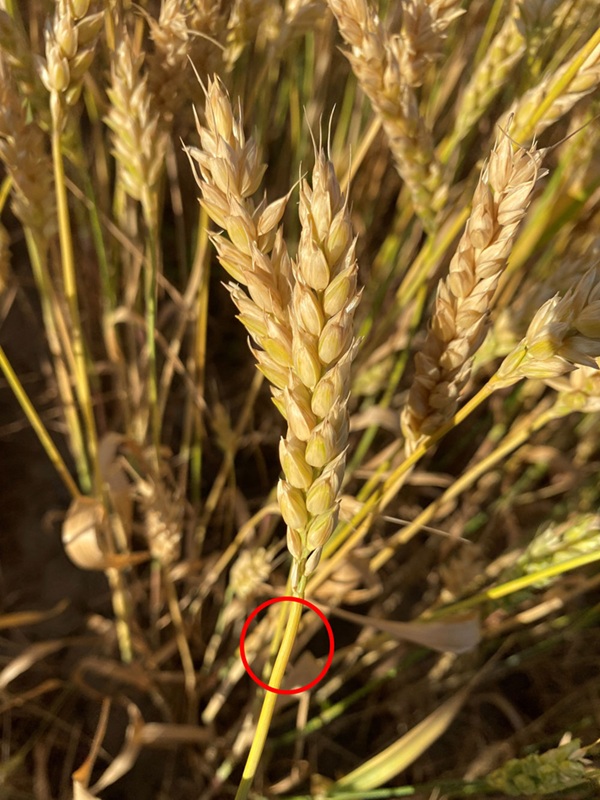
Winter wheat harvest will begin, as weather and crop stage allow, in the next couple of weeks in the deep southwest region of the province. As harvest begins, scout for fusarium-damaged heads in the field. Infected fields should be harvested first to limit continued toxin build-up in case of rain events or delayed harvest. Set the combine correctly to help blow out the lighter, infected kernels. Fusarium is showing up at low levels, sometimes only infecting a few florets on a few plants within a field. This might be due to T3 fungicides being applied at ideal timing for the majority of the field, while some tillers might have pollinated slightly behind the rest of the field.
The incidence of fusarium infections has been reduced over the past 20 years due to genetic improvements and the use of fungicides during pollination, T3 timing, to help control fusarium. This spring, a larger amount of the winter wheat crop was exposed to ideal conditions — think of the disease triangle for fusarium infection: susceptible host + pathogen + favourable environment — but farmer practices have helped manage the incidence of infection.
If winter wheat is harvested and yield and quality reductions due to high fusarium levels are experienced, be sure to contact Agricorp.
With the moisture seen last week and lodged wheat, sprouting could also be a concern, especially if the weather turns wet again. Keep an eye out for sprouts and harvest early. Review any delivery contracts and look for the grain specifications required for delivery. Ship grain that meets the required specifications that are signed off on. The most notorious inclusion on contracts is the base falling number requirement, which can be caused by rainy weather and sprouting or by high alpha amylase expression in the grain due to cold stress during grain fill.
With an early wheat harvest, double-crop soybeans are a common conversation in some areas. If aiming for double-crop soybeans, seed supply on early-season beans will be needed. The date of wheat harvest and the field location will determine a lot. Aim for seed maturity that is at least one full maturity group shorter but check with your seed dealer about what they suggest and what is available.
The seeding rate should be increased to at least 250,000 seeds per acre. The planting date should be considered, looking at frost dates, as the yield potential will drop considerably if soybeans are planted too late. Early to mid-July planting dates are ideal; be sure the soybeans are going into good conditions. The ideal planting dates for double-crop soybeans would be before July 10 in southwestern Ontario and before July 20 in the deep southwest, but there is a large risk at any date; the soybeans might yield or they might not.
Managing straw is critical, so be sure to spread straw and chaff evenly. If you are considering baling, realize that the time spent baling might keep you out of the field planting for a couple of days. If you plan to double-crop soybeans, plant to moisture, up to three inches in July, as they will push through. If there is no moisture at that level, aim for a one-inch planting depth and hope for rain.
The need for weed control in double-crop soybeans will be lower. In theory, one pass would still be needed to control weeds. Most annual weeds emerge during May and June, and if double-crop soybeans are planted in July, weed pressure should be considerably lower. Limit the investment in weed control, as the chance of good soybeans is less likely, with much relying on the weather co-operating for a good yield and harvest so late in the season.
4R and soil sampling
As winter wheat is harvested, it is a great time to complete soil samples to ensure the right rate of fertilizer is being applied at the right time, in the right form, and in the right place, following the 4R principles.
Cover crops
Cover crops have an important role in maintaining soil productivity and quality. After cereal crops are harvested, it can be an ideal time to plant cover crops. The Cover Crop Selector Tool uses Ontario-based research, supported by Grain Farmers of Ontario, to help farmers select the best cover crops and provide management support, including planting population, for their operation.
June 25, 2026
Timely rains have allowed grain crops across the province to flourish as the month comes to a close. With corn, soybeans, and spring cereals growing vegetatively, and winter wheat in the grain-fill stages, it is still important to actively scout fields for insects, disease, and weeds.
Corn
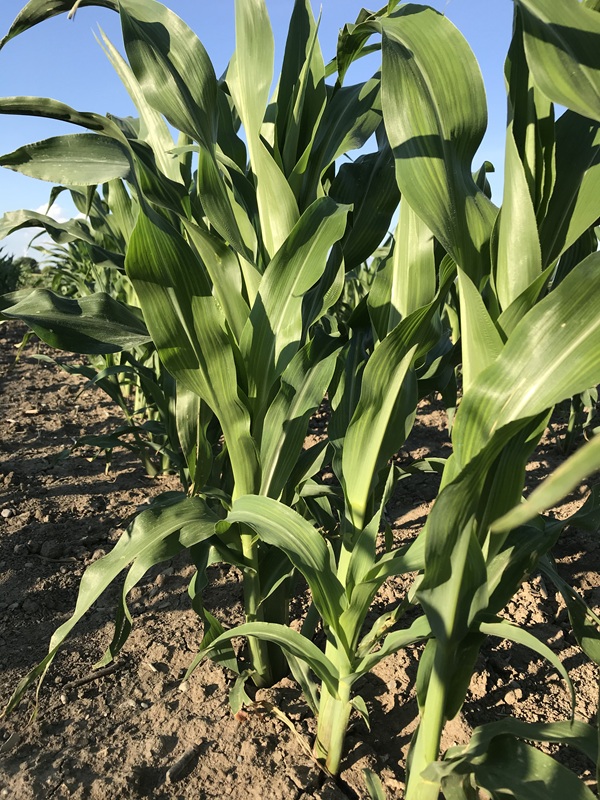
Rain and moderate temperatures over the past week have helped corn progress quickly. There is still a high degree of variability in crop staging across the province, from V1 to V9.
At about the V6 stage (six collars, or eight-leaf stage), the growing point emerges above ground level. The critical stage of ear development runs from this stage to about a week before pollination. Ear initiation begins, and kernel rows per ear are then determined. The number of kernels per row is determined as the ear elongates, before pollination. Stress in the coming weeks from a lack of nutrients or moisture will reduce grain potential through reduced kernel numbers. Stress can be caused by many factors, including populations that are too high, weed pressure, root pruning from machines or insects, lack of fertility, lack of rainfall, standing water, hail damage, and disease.
Rapid growth syndrome has been seen, and can continue to appear in fields experiencing shifts from cool conditions to high heat. The syndrome occurs when corn leaves do not unfurl properly, and the whorl becomes tightly wrapped and twisted.
Be aware of crop stage as resprays occur and consider that some plants may be more advanced than much of the field, which could increase the risk of herbicide injury.
Side-dressing and top-dressing are occurring. With recent heavy rains, there have been questions about nitrogen losses. Several factors can affect losses, and there is no firm answer on total loss potential.
- The greatest chance of nitrogen loss is in areas where water has been sitting in fields. The longer water has sat in a field, creating saturated conditions, the higher the chance of loss through denitrification.
- Cooler temperatures also come into play. Typically, there is less loss under cool conditions.
- If all nitrogen was applied pre-plant, losses will likely be higher than if some was side-dressed in the past couple of weeks. Overall, the consensus is that urea and UAN take one to three weeks to convert to nitrate, so the longer they have been applied, the higher the chance of loss.
- PSNT testing can help determine the level of nitrogen in the soil.
As fungicide timing approaches, be aware of the potential for tar spot and Gibberella ear rot, which can cause DON in corn. Scout fields for disease, as the plant is vulnerable to tar spot between V10 and R3 (milk stage). The Ontario Corn Committee shared the 2025 Ontario Corn Hybrid DON Screening Trials last fall. These trials may be helpful in determining how susceptible hybrids are to Gibberella ear rot and DON accumulation. Use them as a tool as fungicide spraying approaches. Tar spot has been identified in Indiana so far this year.
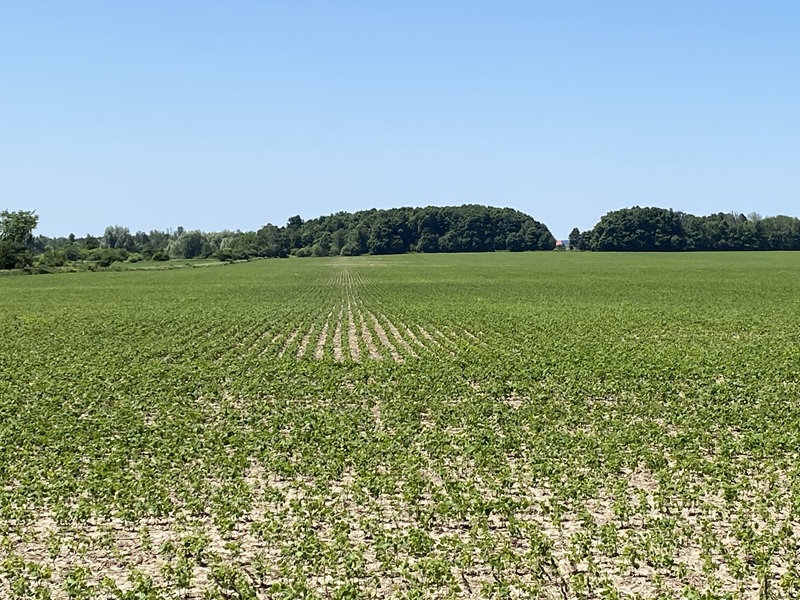
Soybeans
Soybean fields are staging from VE (emergence) up to beginning bloom (R1, when plants have at least one flower at any node). Soybean planting has mostly wrapped up in areas that struggled to plant earlier this year, and some replants are also occurring. Heavy rains last week caused ponding in some fields.
In the V3 to V5 stages, axillary buds develop into flower clusters near the top of the stem. In the coming days, flowering will begin, starting on the third to sixth nodes and continuing down the stem. At this point, the plant will transition into reproductive stages (R1) while continuing to grow vegetatively.
As resprays occur, be sure to mitigate drift. Both BeDriftAware.ca and a past Grain Farmers of Ontario GrainTalk webinar with Dr. Jason Deveau have valuable tips for spraying to help mitigate drift.
Agricorp planting deadlines and reporting of final acres for soybeans are due June 30.
Cereals
Spring cereals are in the stem elongation to boot stage.
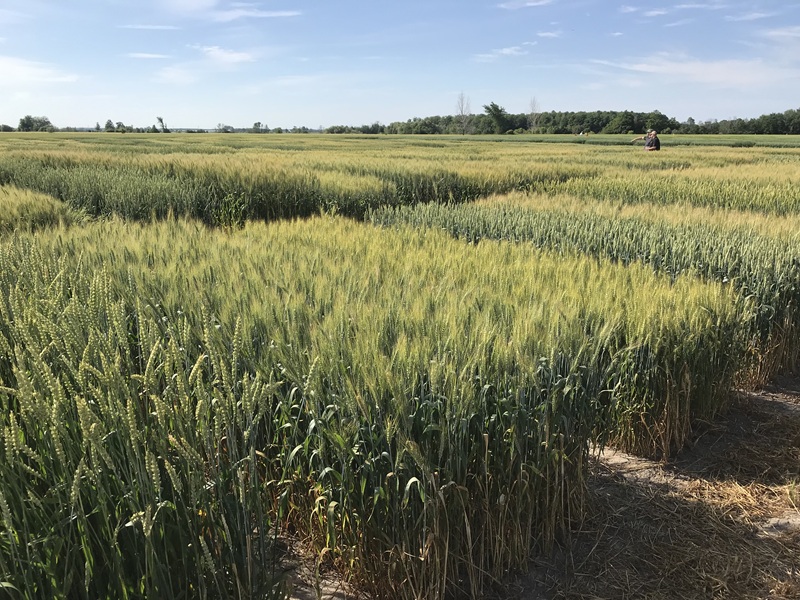
Winter wheat harvest will begin gearing up in the next couple of weeks in the deep southwest. As harvest approaches, scout for fusarium-damaged heads in the field. Infected fields should be harvested first to limit continued toxin buildup in case of rain events or delayed harvest. Set the combine correctly to help blow out the lighter infected kernels. Fusarium can show up even at very low levels after a T3 application, sometimes only infecting a few florets on a few plants within a field. This might be due to T3 fungicides being applied at the ideal timing for most of the field, while some tillers may have pollinated at a slightly different time. The incidence of fusarium infections has been reduced over the past 20 years due to genetic improvements and the use of fungicides during pollination (T3 timing) to help control fusarium. This spring, some regions of the province saw ideal conditions for fusarium development, while others did not. Think of the disease triangle for fusarium infection: susceptible host, pathogen, and favourable environment. Farmer practices have helped reduce the chance of infection.
Across much of the province, kernel fill is still occurring in the winter wheat crop (GS 73 early milk to GS 83 early dough). Over the past few weeks, grain-fill weather has been nearly ideal, with moderate temperatures and timely rains. Prolonged hot, dry weather would limit kernel fill, resulting in smaller kernels as water availability for the crop becomes limited, and the plant progresses rapidly through growth stages. Kernel abortion and dead heads could also be seen as the plant dies rather than matures if moisture becomes too limited during this period, often seen on sandy knolls within fields in past years.
Heavy rains affected parts of the province over the past week, causing lodged wheat in some cases. These fields should be prioritized for harvest, as lodged wheat can often create ideal conditions for disease.
Cereal leaf beetles, cereal aphids, and true armyworm have all been identified in Ontario fields, with some populations meeting thresholds. Scout for these pests, monitor, and control as needed. Keep pre-harvest intervals in mind, as wheat harvest is quickly approaching for some. More information on these pests can be found in past Field Observations.