
Closures and mergers pose a risk for ag-tech
What farmers should weigh before investing in ag-tech equipment and services
When ag-tech companies fail or change hands, farmers can be left with unsupported equipment, disrupted services, and costly decisions about what comes next.

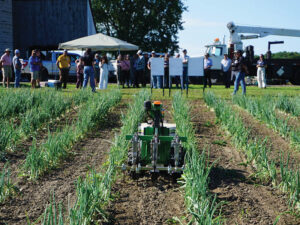
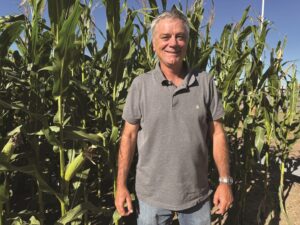
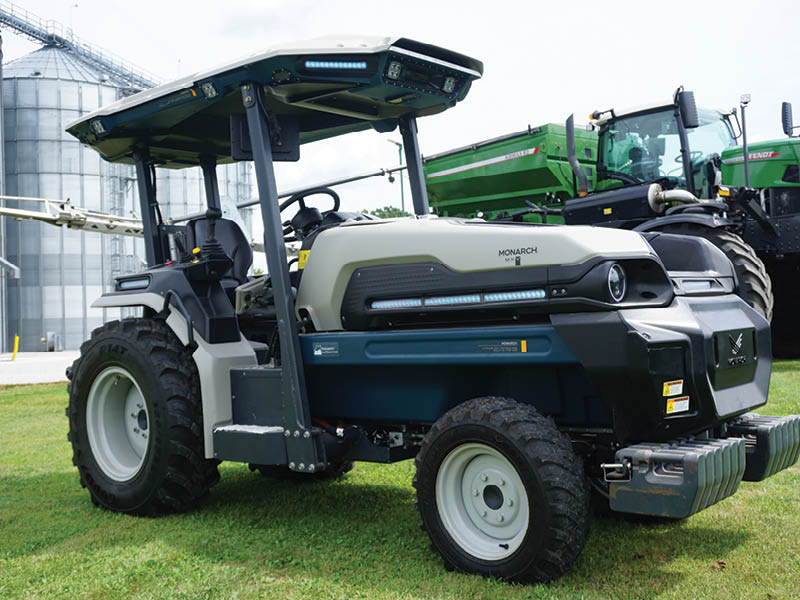
Chuck Baresich liked his fully electric, autonomous tractor. Now, with the parent company bankrupt, he has to reconsider what they can do with it.
It’s an unfortunate situation for Baresich and his colleagues at Haggerty Creek Ltd. in Bothwell, who spent hard-earned money on a product from what appeared to be a promising company. More unfortunately, it’s not the only instance in which a company’s bankruptcy or sale has affected the use of previously purchased equipment.
Together, these experiences highlight an endemic risk for those investing in agricultural technologies: investments made today could be unsupported tomorrow. It’s another reason automation and other technologies are adopted more slowly, or at least less seamlessly, than some advocates predicted.
BANKRUPTCIES AND ACQUISITIONS
For Baresich, lived experience trialling leading-edge agricultural equipment has made him quite concerned about the risks of business acquisitions, if not outright business failures, in the ag-tech space.
In the case of his autonomous-optional electric tractor – produced by what was the California-based company Monarch – Baresich says the product was “90 per cent of the way there,” and had been successfully employed for a number of different tasks at Haggerty Creek.
$300 million of investment money was not, however, enough for Monarch to get its design over the finish line.
“When it went bankrupt, all of their servers and everything shut down. So now, that tractor becomes a development platform. We are putting our own navigation system on it to bring it back to life in a different form,” says Baresich. “Just because a company is big doesn’t mean they can’t fail. Failures can happen for lots of reasons. Sometimes they grow too fast. Sometimes they spend too much money on glitz and glam and not enough on making sure the robot works.”
“In my opinion, I don’t even care if the robot has paint. As long as it works it doesn’t need to look beautiful. It just has to function.”
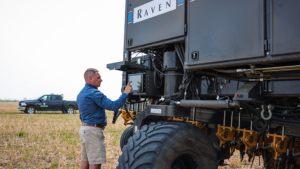
The autonomous U-shaped platform first known as DOT, then OMNiPOWER after its acquisition by Raven Industries, offers another example.
Baresich invested in the OMNiPOWER platform in 2020, and found it to be a very effective piece of kit. Haggerty Creek partnered with Raven in the years that followed to keep improving the diesel-powered autonomous tool. Then CNH Industrial acquired OMNiPOWER from Raven – and eventually mothballed the entire program.
“When the company bought that technology, it’s almost like they bought a Frankenstein and they were afraid of the monster they had created,” Baresich says.
“And that was actually an excellent robot … Case IH just could not figure out how to incorporate that into their engineering stack. They let me keep one for development purposes.”
Smaller companies or startups aren’t immune to financial trouble or takeovers, either. One of the first things Baresich asks technology developers is what their end goals are. If the reply is to be “bought out by John Deere,” he is unlikely to talk to them.
BUSINESS MODEL CONSIDERATIONS
John Sulik, associate professor of precision agriculture at the University of Guelph, says his experience suggests farmers are particularly averse to working with new tech companies because they are new, as opposed to longstanding, trusted names.
They are, in other words, more interested in reliability than innovation.
“It’s hard if you’re trying to change how to do things. They need specialized staff to fly the drones and process the data,” says Sulik, pointing to drone operations and his past experience with drone camera company MicaSense as an example.
“They can change how they do things, and get someone to operate the drone and process the data. Then if MicaSense goes bankrupt or runs out of venture capital and can’t support the camera, they’ve got the staff and changed how they do things, but don’t have the technical support, so they’re screwed.”
Fundamentally, Sulik believes much of the risk associated with technology adoption comes down to the business models of technology developers and whether farmers are willing to accept models that might clash with pre-existing views of ownership.
“Should it be provided as a service, leased, or sold? With robotics it’s tricky. Many companies offer a service, and that makes sense. But it doesn’t necessarily make sense to farmers,” Sulik says, reiterating that those developing the technology generally require recurring revenues through subscriptions or continued payments for updates and further development.
“Even if you buy it outright, you still need to pay for a subscription to update it…You could own it, but own it without support. If you’re in a situation where you bought something and don’t want to pay for support, you have to figure it out on your own.”
Sulik adds that the hardware component of a product can sometimes be a loss leader, instead acting as the means by which the company sells its service. All in all, he says, “there is no watertight business model for robotics or precision agriculture in general.”
“Whenever you change what you’re doing, there’s a transition cost,” says Sulik. “What is that cost, and how risky is it?” •