
Building an emergency fund for your farm
How much to save, where to keep it, and when to use it

Banking, Royal Bank of Canada
Q: HOW DO YOU DEFINE AN EMERGENCY FUND FOR A FARM BUSINESS?
A: An emergency fund is money set aside specifically for the unexpected – cash that’s available when something urgent threatens the day-to-day operation of the farm. It’s separate from your operating line of credit and different from the working capital you rely on throughout the year.
Having those funds available gives you options when something goes wrong, instead of forcing you to make financial decisions under pressure.
Q: WHY IS AN EMERGENCY FUND ESPECIALLY IMPORTANT FOR GRAIN FARMS?
A: Grain farming comes with a unique combination of risks. Weather can change a crop in a matter of days, commodity prices can shift without warning, and equipment has an unfortunate habit of breaking down when it’s needed most.
On top of that, income is seasonal while expenses continue year-round. Many grain operations also depend on a single enterprise, so they don’t always have other revenue streams to soften the impact of a difficult year. An emergency fund provides a financial buffer when one of those unexpected events happens.
Q: WHAT COUNTS AS A TRUE EMERGENCY?
A: A good question to ask is whether the expense was both unexpected and impossible to delay.
A major equipment failure during planting or harvest certainly qualifies. So do a weather-related crop loss that isn’t covered by insurance, an unexpected spike in input costs, the loss of key personnel, or a family medical emergency that affects the farm business.
Routine expenses don’t count as emergencies. Neither do annual insurance premiums, property taxes, scheduled maintenance, planned equipment purchases, or regular loan payments. These expenses should all be part of the farm’s financial plan.
Q: WHAT CATCHES FARMERS OFF GUARD MOST OFTEN?
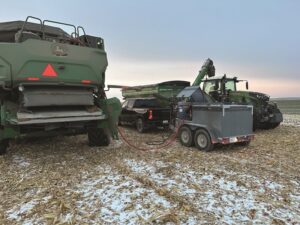
A: Equipment failures during harvest are probably the biggest one for grain farmers. Every hour of downtime matters, and repairs can add up quickly.
Other surprises include grain storage problems, pest or disease outbreaks that require immediate treatment, unexpected increases in fertilizer, fuel, or seed costs, drainage issues discovered during the season, or new regulatory requirements that create unplanned expenses. While every farm is different, these situations demand quick action and immediate access to funds.
Q: IS THERE A RULE OF THUMB FOR HOW MUCH SHOULD BE SET ASIDE?
A: A good starting point is enough cash to cover three to six months of operating expenses.
That calculation should include farm operating costs such as seed, fertilizer, crop protection products, fuel, utilities, and labour, as well as debt payments. If family living expenses depend on farm income, they should also be considered.
When setting a target emergency fund, farmers should also consider where the business is in its life cycle. Younger farmers or new operations often benefit from building larger reserves – sometimes enough for six to 12 months – because they may have higher debt loads, tighter margins, and less-established lending relationships. More established farms with stronger cash flow or diversified income may be comfortable with a smaller reserve of three to six months.
Q: BUILDING THAT KIND OF RESERVE SOUNDS DIFFICULT. WHERE SHOULD FARMERS START?
A: The key is to start somewhere. Setting aside even a small percentage from every commodity sale can make a surprising difference over time. Good years, or years with higher income, also present an opportunity to build financial resilience instead of allowing every extra dollar to disappear into new spending.
Improving efficiency, delaying discretionary purchases, and waiting until crop sales are paid before committing those dollars elsewhere are all practical ways to gradually build an emergency fund. Crop insurance payments or government programs can also help boost those reserves.
Q: WHERE SHOULD THE MONEY BE KEPT?
A: The money needs to be easy to access without sitting idle. One approach is to divide the emergency fund among accounts or savings tools that allow both immediate and near-term access. For example, allocate 30 per cent to a high-interest savings account or cashable guaranteed investment certificates (GICs) for immediate needs, while investing the remainder in short-term products, such as a GIC ladder. This allows the money to continue earning interest while remaining relatively accessible.
The goal is to strike a balance between liquidity and return. Investments that fluctuate significantly in value or lock money away for several years generally aren’t a good fit for emergency savings.
Q: WHEN DOES IT MAKE SENSE TO BORROW INSTEAD?
A: Borrowing and emergency savings can both make sense and work together. This hybrid approach is often the most realistic for farmers and could combine two to three months’ cash on hand with a prearranged line of credit for larger emergencies.
For many farm operations, the most practical strategy is to maintain enough cash to handle immediate needs while also having access to credit for larger, less frequent events.
Q: IF YOU COULD GIVE EVERY GRAIN FARMER ONE PIECE OF ADVICE, WHAT WOULD IT BE?
A: Start building your emergency fund in a good year, not during a crisis. Most farmers tell me they wish they’d started sooner. It’s not glamorous – it doesn’t expand acres or buy new equipment – but it can make the difference between weathering a bad season and limiting your ability to grow the farm. Emergency funds provide flexibility, reduce financial stress, and help ensure one difficult season doesn’t derail the operation’s long-term future.
I also advise farmers to speak with their adviser or agricultural lending specialist for guidance tailored to their operation. •