AI in agronomy: A tool, not a replacement
Applications are expected to be significant, but slow and steady
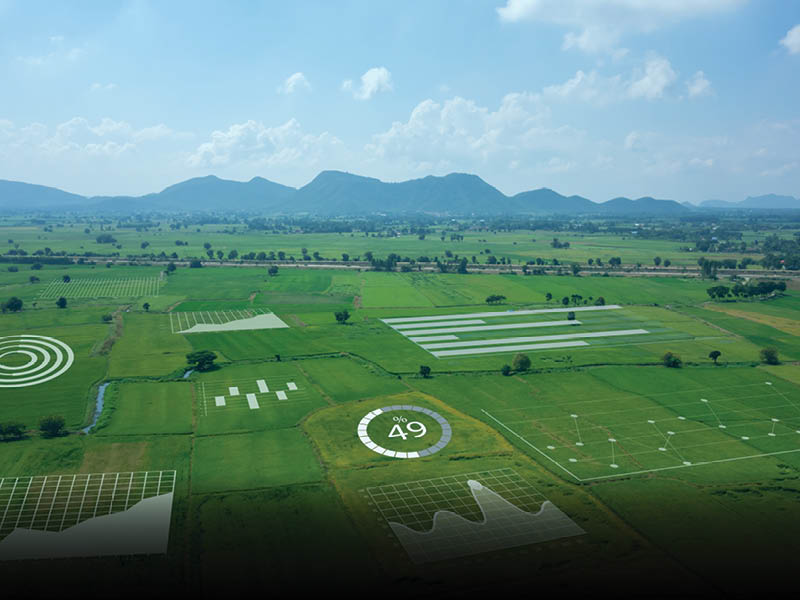
Crop advisors see the greatest near-term value in using AI to manage data, streamline workflows, and improve access to information, while stressing that reliable inputs, sound agronomy, and human judgment remain essential.

Artificial intelligence (AI) is now entrenched in society, business, and the written word. It is also a lightning rod for controversy, hailed as a saviour and a force for progress, while being demonized as a threat to jobs, lifestyles, and even humanity.
Although AI has not made sweeping changes in the agri-food industry, signs of its growing use include reports of farmers using it to track shifts in management practices, measure production, sort available data, and formulate potential actions.
Part of the challenge in forecasting AI’s effects on agronomy and the agri-food industry begins with its definition: What constitutes AI, and what is an established technology? Is the ability to dictate goals and aspirations into a recorder, then have those thoughts transcribed, an AI application? Do images obtained from drones or satellites fall under that definition? Robots and automated seeding platforms could be classified as AI, but do robotic milkers, which have been in use for more than 20 years, qualify?
Grain Farmers of Ontario asked three Certified Crop Advisers (CCAs) for their input and perspectives on the topic, including definitions, applications of the technology and its potential effects.
Greg Kitching
Precision ag specialist, Premier Equipment
Starting with a definition, Kitching says there are many legacy systems, and although they may be technical, they don’t qualify as “AI.” Instead, he says, it should be identified as a technology based on inputs that can be collected or accessed, and that can generate an output related to the task at hand, typically in real time.
There is also a distinction between AI and machine learning to be considered.
“Being at the forefront of most emerging technologies – historically – has been beneficial,” adds Kitching. “Taking a sensible approach to AI, understanding its strengths and weaknesses will be important. It’s too big a change not to be involved with.”
Although employment will change for some, Kitching maintains that as efficiencies improve, people should be able to serve an expanded client base. The technologies will continue to improve at a faster rate and, over time, address any shortcomings they may have now. He believes AI will help with various aspects of agronomy and be a definite game changer.
“It’ll provide comprehensive access to resources in an efficient manner,” says Kitching, citing the ability to upload an image of a pest and having it identified almost immediately. “It definitely gives us quicker access to more information and makes agronomists more efficient and effective.”
More than that, it will enable advisors to monitor multiple settings at the same time, optimize them, address variability in crops, and increase the effectiveness of the specific operation being carried out. Since the technology learns on its own, the tools will become more important as they improve. That capability has not been available in the past.
If there’s a negative, Kitching points to the accuracy of some of the inputs. The information generated comes from sources that may or may not be accurate, and it must be assessed accordingly. Still, he believes it will improve as engagement in the technology continues to expand.
Paul Sullivan
P.T. Sullivan Agro Ltd.
Like the computer’s entrance into agriculture years ago, Sullivan agrees that AI is becoming more prevalent within the crop-advisory sphere. He concedes that defining the technology remains a challenge, asking whether SWAT maps are a form of AI, or whether precision ag technologies qualify. He and his wife Jean use QoD to help them with proposals and other written resources, but how involved or extensive is that definition?
“At one time, precision ag was “a catcher” – it caught people’s attention,” says Sullivan, adding that it also prompted more learning, be it from an article or a conference presentation on the subject. “To some extent, maybe that’s where we are now with AI – where it gets mentioned, and it gets people’s attention.”
Yet as quickly as it is being adopted and integrated into agronomy and advisory services, there needs to be recognition — as with many other innovations — that this is a tool, not a technology to replace people. Its success, notes Sullivan, remains dependent on a human handler’s interpretive skills and ability to use it. There has never been a singular “silver bullet” solution in agriculture, and AI — despite its potential reach and depth in so many aspects of the industry — remains another “tool in the toolbox.”
Human nature is another factor in the acceptance of AI. Most people, not just those in agriculture, are averse to change, something Sullivan concedes is a challenge for him. Yet he acknowledges AI’s many potential applications and says he has plenty to learn about the technologies available now and in the future.
“We need to maintain the agronomy fundamentals,” he adds. “It becomes a matter of asking the right questions, and I don’t think you can do anything with AI until you start to ask the right questions.”
Jonathan Zettler
Fieldwalker Agronomy Limited
Zettler also has high hopes for AI as a pattern-recognition model that can help manage workflows, identify relevant information, and pull together data to answer queries or build tools. However, he expects it to replace tasks, not people.
“You still need people to tell AI what to do,” says Zettler. “The technology will increase the work completed per unit of human labour compared to not using AI. While there are almost unlimited options to use on-farm, most farms already have constraints that many operators are aware of.”
Technological advances could one day help with tasks such as hybrid or variety selection by pulling yield data from trials and comparing a few products. But the decisions AI can make are only as good as the data available to it and the questions asked of it.
“Not all of the good data is publicly available,” notes Zettler. “Some of it rests within the minds of farmers, agronomists or other industry people. It’ll be hard to replace what a human sees in the field in a given situation. The more specific you can be, the better the outcome you’re likely to have.”
If there’s a particular challenge for AI within the cropping sector, it’s in the “one-and-done” reality of a growing season. Like a first impression, growers usually have one chance to make the right decision on the crop they’re growing. But that’s where historical data adds real value.
“Where I see AI being a bigger help is with data entry and workflow,” says Zettler. “Instead of worrying about using it to make decisions about the crop, use it to pull together the soil sample history, rank fields in groups for fertility recommendations, and analyze different fertilizer programs. It should make a farmer or advisor using AI more efficient and effective, allowing them to focus on higher-value tasks.” •