From the CEO’s desk – September 2026
From the CEO's desk

Ontario grain farmers play a major role in Canada’s food export success, but continued growth depends on policies that support risk management, innovation, and market access.
As summer winds down and corn and soybean harvest is on the horizon, it’s a good time to step back and think about what this season really represents.
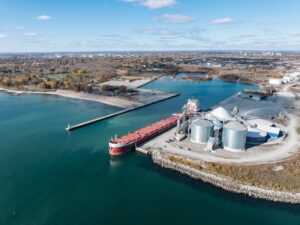
Canada is often viewed as a small country because of our population. We make up only about 0.5 per cent of the world’s people, yet we are consistently among the world’s leading food exporters. According to the World Trade Organization (WTO), Canada ranks fourth in volume of food exported, behind the United States, Brazil, and China.
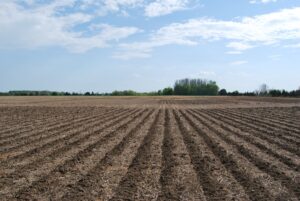
Grain farmers in Ontario are major contributors to Canada’s export success. The most recent Census of Agriculture, conducted in 2021, shows that, per acre, Ontario produces more grain than other provinces, and we consistently match or exceed yields in the U.S. Corn Belt.
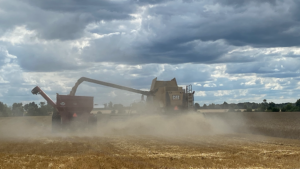
Harvest is when this is most visible. Ontario farmers produce an impressive amount of high-quality grain, but strong productivity alone doesn’t guarantee success. To keep growing grain and feeding people here and abroad, we need a solid framework around us: policies that help manage risk, encourage research and innovation, and support access to markets.
That is where the federal-provincial-territorial (FPT) agricultural process comes in. Recently, agriculture ministers met in Halifax to discuss priorities for the next agriculture policy framework, which will come into effect in 2028 at the conclusion of the Sustainable Canadian Agricultural Partnership.
In simple terms, the framework is the structure for how farmers, the wider agricultural sector, and governments will work together over the next five years. When that structure is strong and aligned with farmers’ needs, it helps ensure we can keep doing what we do best — growing grain and putting food on the table.
Grain Farmers of Ontario has been closely engaged in this process. We submitted a comprehensive set of priorities for the next policy framework, outlining what our members need to remain competitive and resilient. Those priorities include effective and predictable risk management tools, long term research funding, support for trade and market access, and recognition of the economic and environmental contributions of grain farming.
Our full submission is available on our website, www.gfo.ca, under the Government Relations tab for anyone who wants to see the detail behind that work. When we get this framework right, it helps farmers manage risks they can’t control, adopt new practices and technologies, and remain competitive in a global marketplace. It helps ensure that a country like ours, with a small population and relatively small land base, can continue to play a large role in feeding the world. September also means we are looking ahead to our Annual General Meeting.
This year’s meeting will be held at a new venue, the Arden Park Hotel in Stratford, which offers more space to welcome our farmer-members. The annual meeting is an important opportunity to hear directly from you, report on the work we’re doing on your behalf, and discuss the issues that will shape the next policy framework and the future of our sector. I hope you’ll be able to join us.
Our annual report will be available on our website ahead of the annual meeting. It provides a detailed look at our activities over the past year, from research and market development to policy and member services. It shows how we are working to ensure Ontario grain farmers can continue to thrive in a changing world.
As harvest progresses, thank you for the work you do, the risks you take, and the food you produce. Grain Farmers of Ontario will continue to be at the table with government and industry partners, making sure your voice is heard and your contribution is recognized. •