Farm safety can’t stand still
Modern farms bring modern risks, and experts say prevention must evolve with them
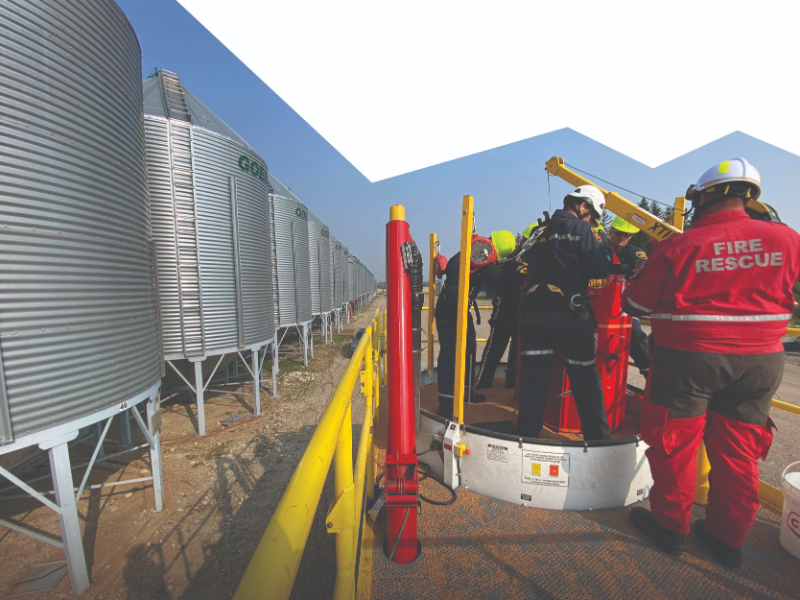
Experts from CASA and WSPS say producers need practical, farm-specific training, planning, and prevention strategies to protect themselves, their families, employees, and visitors.

The ideal farming environment is one where production and performance are relatively free of hazards, allowing producers to excel in their chosen sectors. Yet between markets, fuel and fertilizer prices, and the weather, growers often find their attention diverted from the inherent risks of the job.
Unfortunately, injuries or fatalities do occur on farms and, in the aftermath, it’s often acknowledged that greater attention should have been paid or the hazard should have been recognized. The discussions may lead to greater vigilance, yet farmers become so engrossed in “getting things done” that heightened awareness of the dangers of the job can fade.
What’s needed is a more proactive stance on farm safety, which is where agencies like the Canadian Agricultural Safety Association (CASA) and Workplace Safety and Prevention Services (WSPS) can help. Courses and programs are available to counter the more obvious scenarios on the farm.
THE HARD TRUTHS
According to statistics from Canadian Agricultural Injury Reporting (CAIR), there were 624 on-farm fatalities from 2011 to 2020, an average of 62 per year. Machinery rollovers accounted for 28 per cent of fatalities, while vehicle runovers accounted for 33 per cent.
What can be more distressing is the notion that rural emergency services are handy and available. But budget cutbacks in rural districts are limiting accessibility and training within volunteer fire departments. Many who are involved with EMS and farm safety contend that education and planning are the pressing needs, and primary producers must increase their awareness of what can happen. For example, they need site maps with utility shut-offs, clear access points, and an emphasis on advance practice to help themselves and EMS attendees.
What makes this a daunting task is the increasing size and complexity of many farms, often adding buildings that require training for working at heights, lockout/ tagout procedures, or wearing personal protective equipment (PPE).
“To me, on-farm safety is the prevention of physical injury, illness, and long-term harm for everyone who lives, works, or visits a farm,” says Sandy Miller, executive director of CASA. She adds that it covers all activities, all stages of production, and all phases of life. “That makes it intentionally all-encompassing because modern agriculture is complex and constantly evolving.”
It extends beyond planting or harvest. Farm safety now includes mental health, emergency preparedness, fire prevention, and sustainability. It’s a more proactive approach geared to prevention and anticipation instead of reacting to a hazardous situation. Miller offers a stark reminder that it takes less than 10 seconds to become entrapped by flowing grain and less than 60 seconds for full engulfment. Once trapped, self-rescue is extremely unlikely.
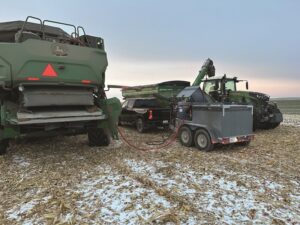
That’s just grain entrapment; there are also electrical hazards, dangers involving biogas, and risks related to handling hay bales. It’s a taller order, especially with economic challenges, changes in legislation, and other aspects that add to the many priorities farmers must manage.
“Farmers need to be able to manage their workloads safely,” she says. “We encourage people to take advantage of safety courses in their downtime. Farm safety should meet farmers where they’re at, including acknowledging busy seasons and a farmer’s availability.”
Time constraints have led CASA to develop digital courses, allowing producers to complete them in their own time frames when their tasks allow. In terms of grain handling, there’s a Firefighter BeGrain Safe training program offered by the association, along with free introductory courses on grain handling and storage hazards.
INDUSTRIAL RENAISSANCE?
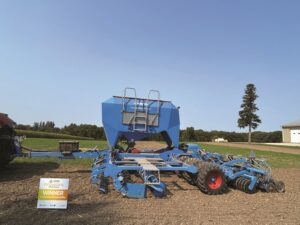
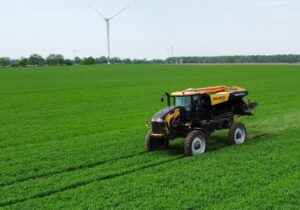
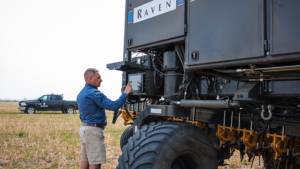
Committing to increased productivity and profitability almost mirrors a return to the Industrial Revolution in the late 19th century. At least that’s the analogy Kristin Hoffman uses with farm safety. Agriculture is undergoing a revolution in many ways, with emerging technologies that may not keep pace with health and safety requirements.
“The one example I have is the tractor,” says Hoffman, senior sector specialist in agriculture with WSPS. “Whether it’s an older tractor without power steering or an autonomous unit, the safety risks are similar if they’re not managed with strong health and safety practices.”
Her position — and that of WSPS — is that technology must be integrated safely, with proper training, risk assessment, policies, and updated procedures. Health and safety must be modernized as the sector and its technologies are updated.
It’s one of the reasons Hoffman cites recent changes in legislation that recognize the importance of health and safety regulations meeting evolving conditions on Ontario farms. Updated rules from the provincial Ministry of Labour, Immigration, Training and Skills Development better reflect realities on the farm and help clarify responsibilities.
“The regulators are a little closer to understanding where there is a need for more implementation of health and safety, and agriculture is one of them,” says Hoffman. “There are a few more rules now that they can utilize, if and when the ministry visits, inspects, or investigates a farm.”
It needs to be emphasized that these regulations are not meant to punish or restrict growers, but to protect them — not just on the farm or on the ground, but to create greater awareness of road safety, working at heights, and electrical procedures. The key is to take every reasonable precaution, with training, signage, and planning. More regulations may not be needed, provided practices are updated.
“WSPS is expanding its consulting, training, and resources to support these operations,” says Hoffman. “Effective training goes beyond simple warnings; it has to be practical, farm-specific, and easy to apply, or it won’t be used.”
ISOLATION AND DISTANCE
She points to mental health as another example: 10 years ago, it wasn’t well acknowledged within the industry. Today, it’s a key component of health and safety on the farm. The challenges are the isolation among farmers, the long distances they must travel for treatment, and the difficulty in finding a therapist who’s familiar with today’s farm stresses.
Farmers and their families can help themselves by watching for signs, creating a safe space to talk about mental health, and turning to agencies like WSPS and CASA for direction.
“There is so much in this sector that is out of the control of the farmer,” says Hoffman, referring to everything from growing a crop to dealing with the stress of the world. “The best we can plan, the best we can do with some of those tasks that aren’t so split-second oriented — that bit of preventative maintenance — that’s better for you to help manage some of the adjustments we might need to make.”
It comes down to taking the time to get the training that safeguards farmers, their families, and their employees. To acknowledge many of the changes taking place in agriculture that weren’t part of the landscape 20 to 30 years ago, Hoffman points to training programs through WSPS and changes that acknowledge different cultures coming to the farm and their need to understand their rights and safe practices. One hundred and fifty-nine courses are taught in English, 72 in French, and three of the most basic programs are available in Spanish and Mandarin.
“They need that same level of information on health and safety for their protection, so that’s another emerging factor, and there are definitely more to come,” says Hoffman. •