
How much broadcast potash fertilizer is safe for soybeans?
Agronomic information from Ontario's crop specialists
Despite its importance to soybean health, visible potassium deficiency symptoms appear in many fields across the province each year. The issue is primarily driven by two compounding factors: the soybean plant’s exceptionally high potassium demand, and the inability of soybean roots to effectively take up the nutrient when soils are dry.
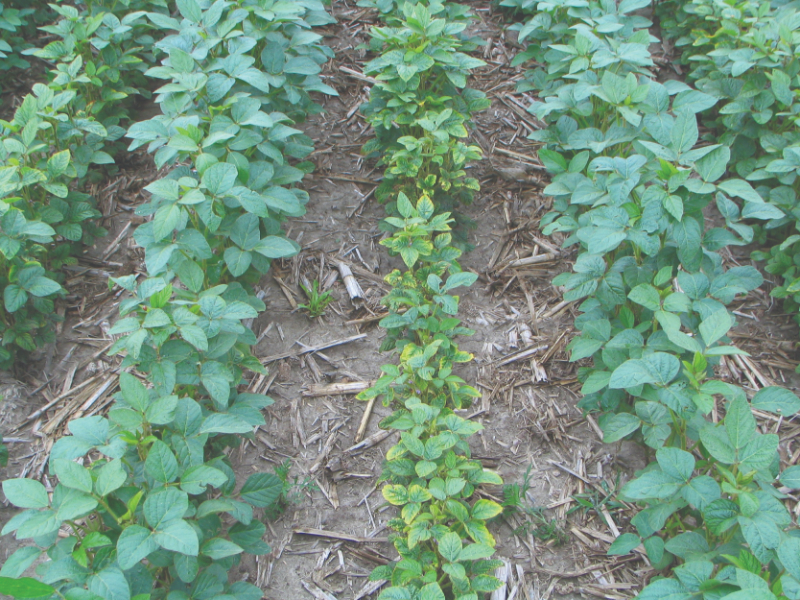
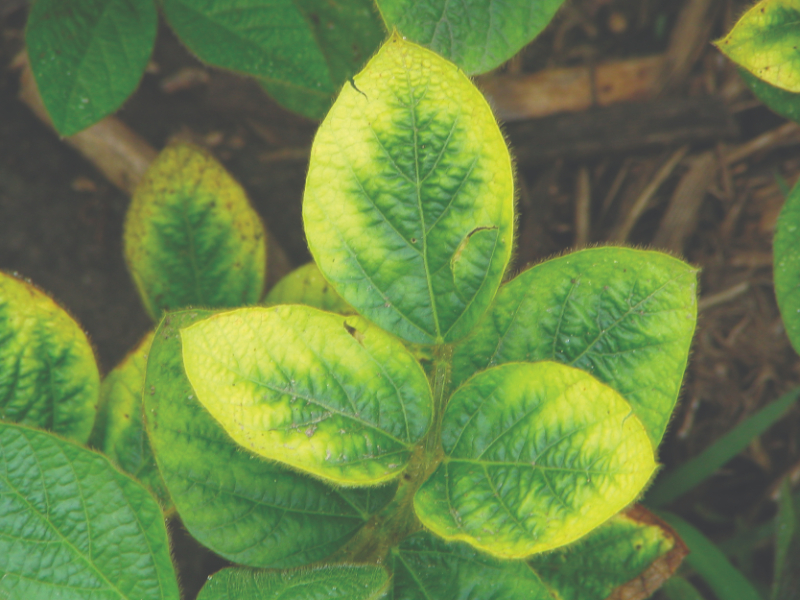
When deficiency occurs early in the growing season, it typically appears as distinct yellowing, followed by browning, along the margins of older leaves (see Figure 1).
A lack of adequate potassium also worsens other crop stresses. For example, soybean aphid feeding and reproduction rates increase significantly when aphids infest potassium-deficient plants (see Figure 2). In late August or September, soybean plants naturally remobilize internal nutrients to feed developing seed. As this happens, potassium deficiency symptoms can move from older leaves and become evident at the top of the crop canopy, especially in fields already low in potassium.
The most cost-effective agronomic treatment for potassium deficiency is granular muriate of potash (0-0-60, potassium chloride), which is often referred to as potash. However, managing potash requires attention to application safety. Because potash is almost 50 per cent chloride by weight, it has a high salt index. If it is applied at high rates or close to the seed, this high salt index can severely burn vulnerable seeds or emerging young plants.
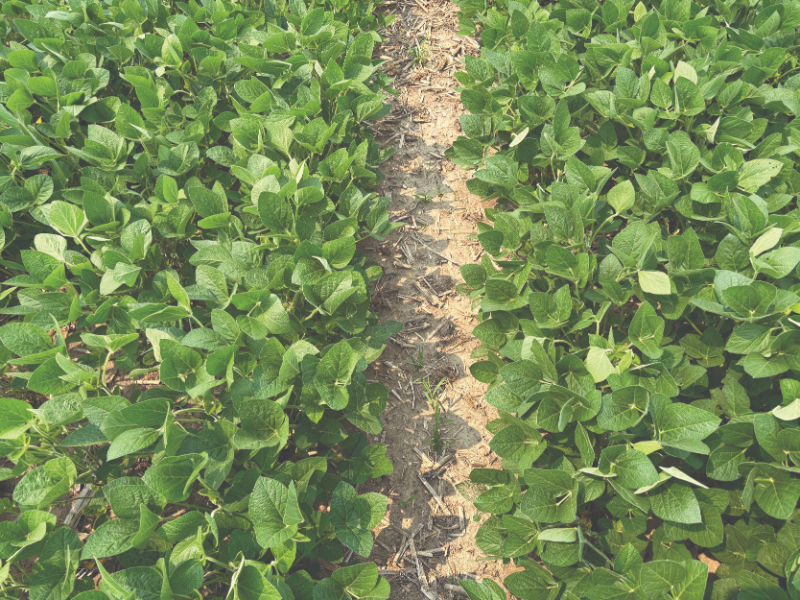
To prevent crop injury, potash should not be placed in-furrow in direct contact with the seed. The high amount of chloride added to the soil can also harm soybean plants. Soybean plants may appear stunted and lighter in colour with high rates of spring-applied broadcast potash (see Figure 3).
While some agronomists recommend low spring broadcast rates and limiting application timing to a few weeks before seeding to eliminate any risk from potash, newer field research offers considerable flexibility. The Ontario Ministry of Agriculture, Food and Agribusiness (OMAFA) has conducted field trials over the past five years to evaluate safe broadcast application rates before soybeans. To date, these trials have consistently shown no yield reductions at broadcast potash rates of up to 300 lbs/ acre, even when the fertilizer is broadcast immediately before planting. This gives growers a proven, safe upper limit for spring broadcast programs without risking the health of their soybean crop. For additional safety on sandy soils, lowering the upper limit to 200 pounds per acre may be advisable.
It is important to note that these upper safe rates do not necessarily provide the highest economic rate of return. The expected yield increase is closely tied to the soil test level. At potassium soil test levels above 120 parts per million, no economic yield gains were found in these trials. •