Field Observations
FALL 2026
September 24, 2026
The fall season is upon us, and soybean harvest is ramping up. Corn has reached maturity and is drying down in some areas, while in others, the milk line is progressing toward black layer. Winter wheat planting is moving quickly behind the soybean harvest.

Corn
DON in corn
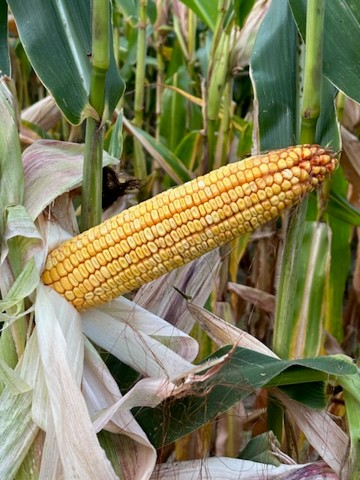
Corn ranges from black layer to half milk line in most areas. Warm days over the past couple of weeks have helped advance the crop, and moderately warm days in the forecast will help it continue toward maturity and dry down. In exceptionally warm, dry weather, grain moisture could decrease by one percentage point per day. The long-range forecast suggests some areas of the province will receive very little rain, while others could see a rainy start to fall. As October approaches, cooler weather and showers often mean it takes an average of about three days to remove one percentage point of moisture.
Do you have lodged corn plants in your fields? Was corn grown in the same fields last year? Are the roots small or pruned? Now is the time to diagnose why the crop might not look as good as it should. Corn rootworm, poor root development caused by compaction, and poor hybrid selection can lead to standability concerns. Take time to determine which factor is affecting corn stands so you can make better choices for next year. Learn more about managing corn rootworm resistance in this fact sheet. Assess your fields for stalk strength by consulting this Grain Farmers of Ontario fact sheet on stalk integrity.
Gibberella ear mould has appeared, or may begin to appear, in some locations, particularly those that have experienced heavy dew or rain over the past two to three weeks and where wet conditions are expected to continue. Much of the crop appeared free of ear mould until now. The crop is often infected during pollination, when moderate temperatures and humidity favour infection through the silk channel. That may be the case in some fields this year, although other factors may also be involved. Conditions after infection determine whether the visible symptoms of ear mould develop, and those symptoms are only now being observed.
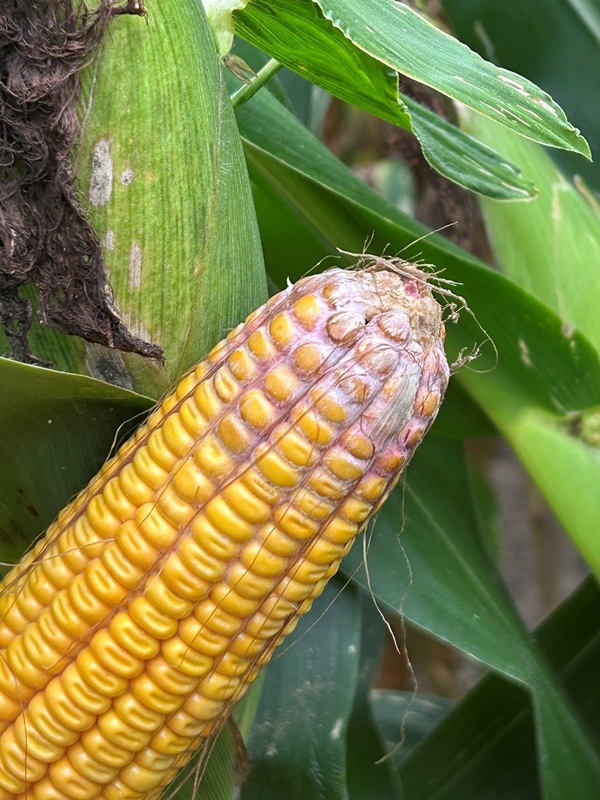
As noted above, mould development may involve more than favourable weather at pollination. Increased pressure from corn rootworm beetles clipping silks, along with feeding by western bean cutworm, corn earworm, and other pests, has been observed in several cornfields. This feeding creates wounds in the cob where mould-causing pathogens can enter.
Morning fog and heavy dew over the past few weeks have increased humidity in the canopy, fuelling disease development. Areas where fields do not dry quickly, such as those near tree lines and buildings, should be scouted first. Fields and hybrids with open husks will have drier conditions, which can limit disease growth. Check tight-husked plants for mould. Identify fields of concern, prioritize them for harvest, and dry the grain quickly to limit DON production. Wet, cool conditions favour DON production. Read more about DON in corn.
Sound sampling protocols for testing for DON are crucial to obtaining consistent, accurate test results.
As noted in previous editions of E-News, tar spot may also be appearing, but given the crop stage, it should have little effect on yield in most cases.
Soybeans
Field Progress, Grain Farmers of Ontario’s weekly estimate of planting and harvest progress by district across the province, reports that soybean harvest was four per cent complete as of Wednesday, Sept. 23, 2026.
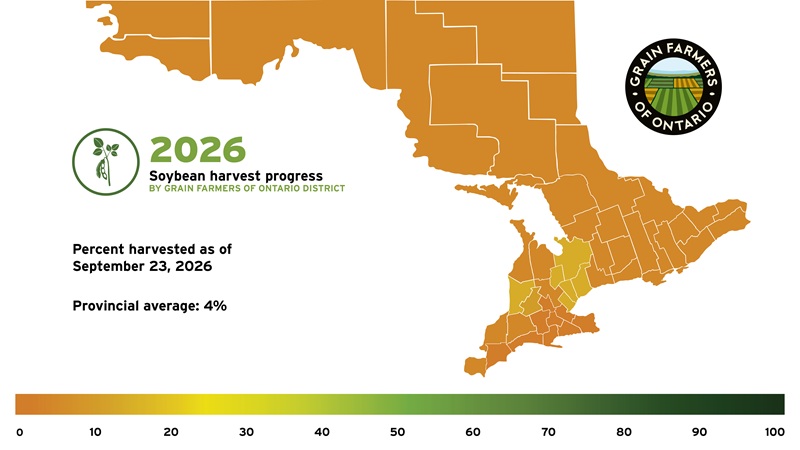
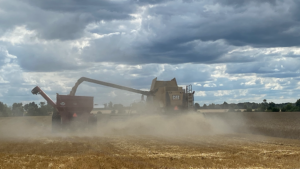
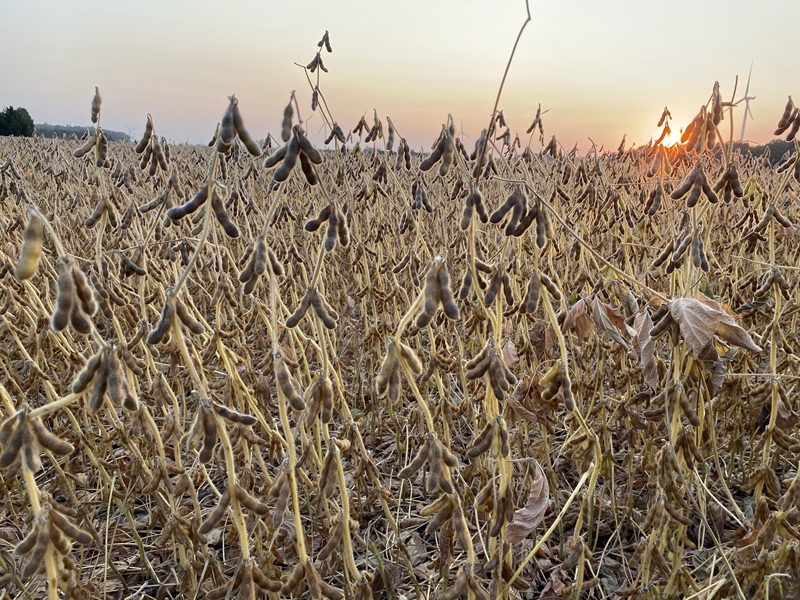
Soybean harvest is underway across the province as weather and crop maturity allow. The extended hot, dry period leading up to harvest could result in soybeans being harvested below 13 per cent moisture. Harvesting below the optimum moisture level can reduce revenue through lower delivery weights, shatter loss, and splits. Timely rain, should it arrive, can help soybean seeds return to a more desirable harvest moisture.
Ensure chaff is spread evenly from the combine. Several harvested fields have a very uneven spread pattern, and an even residue spread is essential for good winter wheat establishment.
Early harvest offers several advantages, including timely wheat planting, less soil compaction than is typical in wetter fall soils later in the year, earlier fall tillage, and the ability to switch to corn harvest sooner.
Some grain-growing areas of the province have been under frost warnings. So far, it appears that most have received only light frost.
The SCN Coalition has designated Oct. 5, 2026, as National Nematode Day to raise awareness of this yield-robbing pest. To learn more about soybean cyst nematode, visit the SCN Coalition.
Cereals
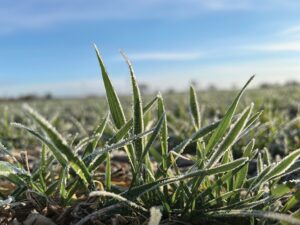
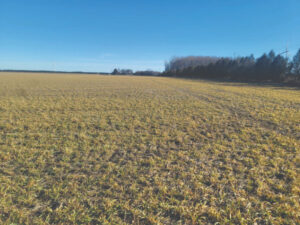
Field Progress reports that winter wheat planting was five per cent complete as of Wednesday, Sept. 23, 2026. Overall, conditions are close to ideal for planting. However, some areas may be a little too wet, while others may be too dry. A timely rain could help provide enough moisture for wheat to germinate, especially in drier areas.
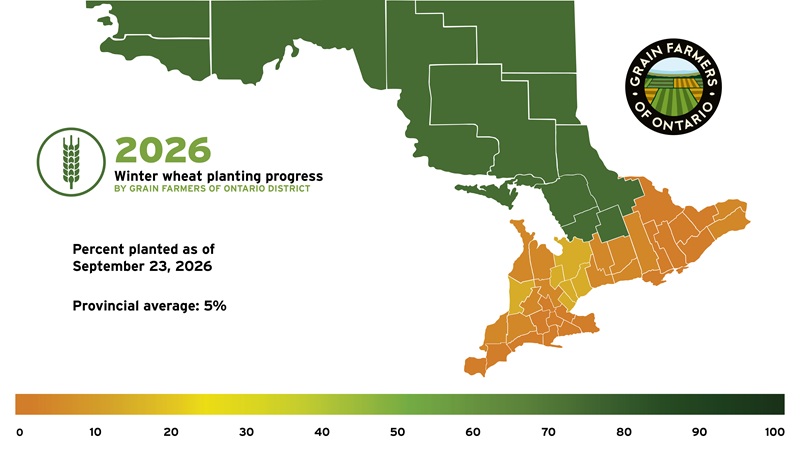
In several regions, the optimum planting date has passed, while in others, it is approaching. As the optimum date approaches, seeding rates should increase. For early planting, the recommended rate is 1.4 million to 1.6 million seeds per acre. Add 200,000 seeds per acre for each week of delay after the optimum date, to a maximum of 2.2 million seeds per acre. The later winter wheat is planted, the fewer tillers it will develop, and a higher seeding rate will help compensate for reduced fall tillering.
Spring cereal harvest has mostly wrapped up, with just a few acres remaining.
Driving around the countryside, it is apparent that many fields have volunteer wheat that will need to be managed. Read more here.
Watch the recently recorded GrainTALK webinar, Reflecting on 2026: Setting the stage for the 2027 winter wheat crop. Joanna Follings of OMAFA reviews the 2026 season and explains how to prepare for planting winter wheat this fall, with a focus on mitigating and managing barley yellow dwarf virus, optimizing planting dates and seeding rates, and more.
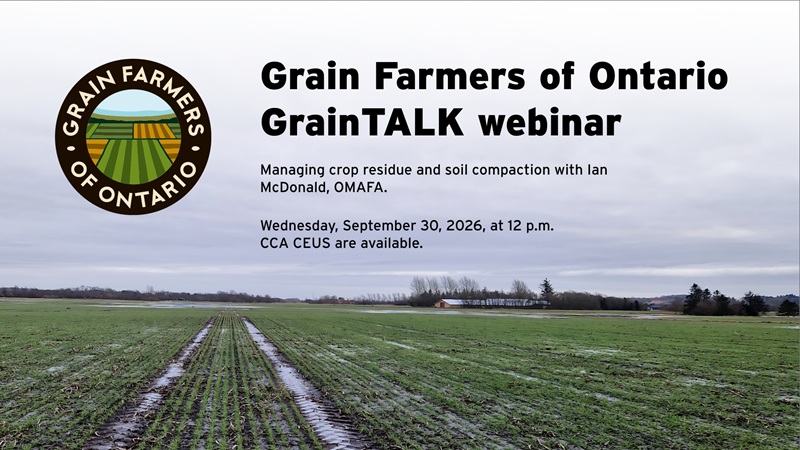
Join OMAFA’s Ian McDonald on Wednesday, Sept. 30, at noon as he shares insights on managing crop residue and soil compaction this fall. Register now.
Research helps Ontario farmers stay ahead of herbicide-resistant weeds
Herbicide-resistant weeds pose a major threat to Ontario crop production, with potential losses estimated at up to $1.6 billion annually if they are left unmanaged. Dr. Peter Sikkema, now retired, Dr. Isabelle Aicklen, and other collaborators have spent years studying herbicide-resistant weeds, with funding from Grain Farmers of Ontario and other partners. Through more than 3,000 field experiments in grain crops and dry beans, as well as more than 500 presentations to farmers, researchers have provided practical, science-based strategies to control resistant weeds, protect yields, and reduce economic losses. Ongoing research continues to help Ontario farmers respond to emerging weed challenges and maintain a resilient, productive crop sector. The University of Guelph recently published an article describing some of the effects of herbicide-resistant weed research across the province. Read more here.